

Developed by General Motors Worldwide (GMW), the “GMW 3205 Determination of Resistance of Interior Materials to Odor Emission” standard is an engineering standard used to evaluate the odor emission behavior of automotive interior materials. This standard determines whether a material develops or emits an unpleasant odor when exposed to conditions representing the high temperature and humidity conditions that might occur inside a vehicle.
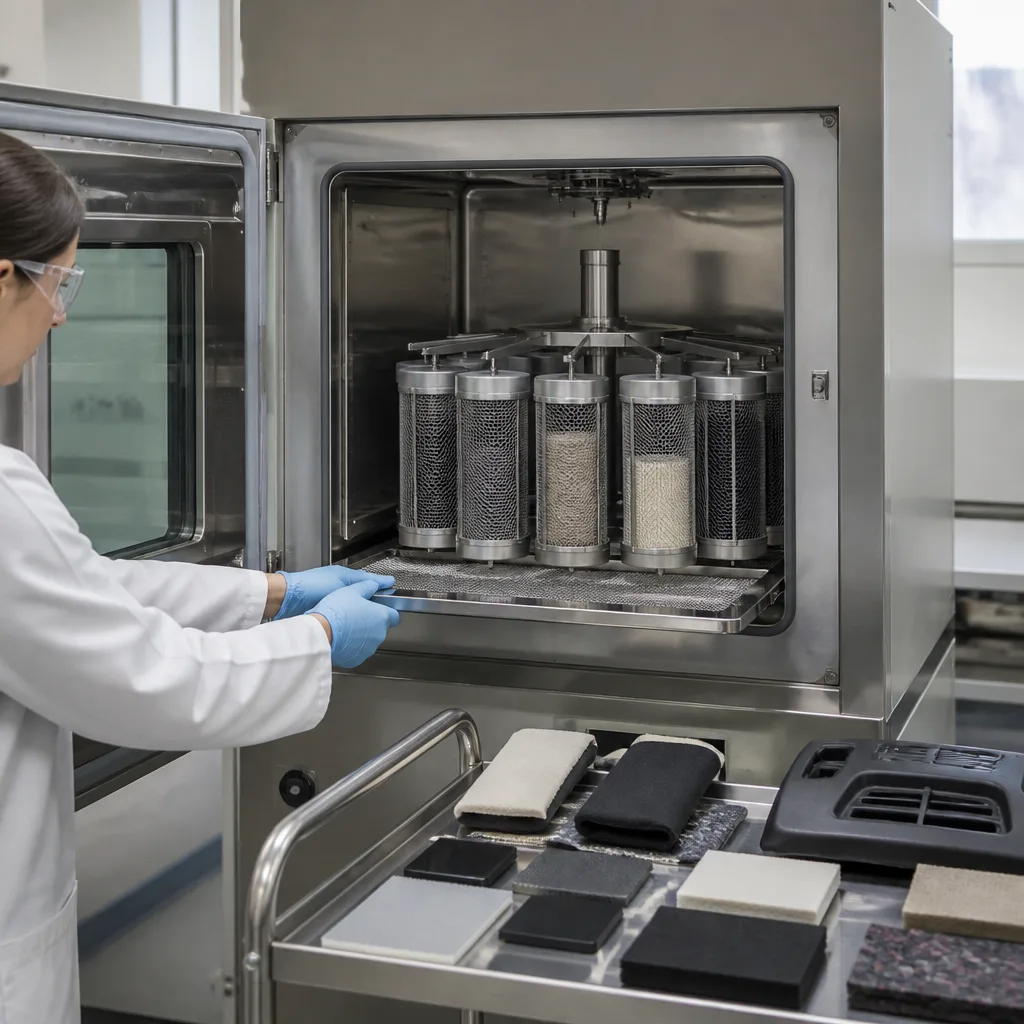
Odor performance is a significant aspect of vehicle interior quality. Materials used in seats, carpets, instrument panels, insulation, upholstery, and other interior components may contain volatile substances that become more noticeable when the vehicle interior becomes warm and humid.
The primary purpose of the GMW 3205 standard is to determine the tendency of automotive interior materials to produce or emit odors under high temperature and high humidity conditions.
This test aims to provide an objective and repeatable method for evaluating whether a material might contribute to an unpleasant indoor odor. This is particularly important because a material that appears acceptable at room temperature may produce a significantly stronger odor after exposure to heat and humidity.
The GMW 3205 standard is applicable to a wide variety of automotive interior materials, including:
This standard specifically covers plastic roll products and applicable material types include PVC, PUR, and TPO.
The basic principle of the test is to expose a representative test sample to a controlled environment containing heat and humidity, depending on the specified conditions. Following exposure, the sample is allowed to cool and its odor is evaluated.
In short, the test conditions are as follows:
Using a closed or controlled test container is important because it allows sufficient accumulation of volatile odor-producing substances released from the material for sensory evaluation.
The GMW 3205 standard may include different environmental conditions. In a commonly described application, the dry condition involves placing the sample in the test vessel without direct contact with water, while the wet condition involves adding distilled water to the vessel while keeping the sample afloat. This distinction is important because moisture can affect the release of volatile compounds and therefore alter the perceived odor of a material.
After processing, the odor is evaluated by a trained sensory panel. Higher scores correspond to less unpleasant odors, and lower scores correspond to stronger or more unpleasant odors. For example, it defines ratings ranging from 10 (odorless) to intermediate classifications and extremely unpleasant odor levels. Therefore, the evaluation is not simply a chemical measurement; it is a sensory assessment of the odor perceived from the treated material.
The described test method generally follows these steps:
The GMW 3205 standard is important because interior odor is directly related to perceived vehicle quality. Customers can immediately notice strong or unpleasant odors, especially when the vehicle is parked in hot conditions. This standard helps manufacturers in the following areas:
Odor testing complements other interior emission tests. For example, laboratories list the GMW 3205 standard alongside aldehyde/ketone emissions, organic emissions, and fogging standards, indicating that odor is considered a separate aspect of vehicle interior material performance.
The GMW 3205 standard should not be considered solely as a VOC concentration test. While VOC testing typically focuses on determining or quantifying volatile chemical emissions, the GMW 3205 standard focuses on the odor perceived from the material after specified environmental conditioning. Therefore, a material may have acceptable chemical emission characteristics but still produce a noticeable odor, or it may contain volatile compounds that do not cause a particularly unpleasant sensory odor. Thus, odor testing and emission testing can provide complementary information in the automotive material qualification process.
For automotive interior material suppliers, the GMW 3205 standard can be a crucial part of material development and validation programs. Material formulation, adhesives, plasticizers, coatings, foams, pigments, and other components can influence odor behavior. Testing during development can help suppliers identify problematic formulations before components reach vehicle-level validation. Meanwhile, because the GMW 3205 standard relies on sensory odor assessment, foreign odors from containers, equipment, handling materials, or the surrounding environment can affect the result.
In conclusion, the aim of the GMW 3205 standard is to determine the resistance of interior materials to odor emission when exposed to high temperature and high humidity conditions. This method is applicable to numerous interior materials, including fabrics, carpets, foams, felts, plastics, coated materials, and interior coverings. By combining controlled environmental exposure with sensory odor assessment, the standard helps manufacturers identify materials that may negatively impact the perceived quality of a vehicle's interior.
For many years, our organization, with its competent and experienced staff, has been understanding the needs of its clients, providing the advanced testing services they require, and assisting them in the establishment, implementation, and improvement of management systems. Within this framework, we also provide testing services in accordance with the GMW 3205 standard.
To get an appointment, to get more detailed information or to request an evaluation, you can ask us to fill in our form and reach you.

