

The “Ford FLTM BI 112-02 Tukon paint hardness” standard, developed by Ford Motor Company (FORD), describes a test method used to determine the microhardness of paint. This method is performed by creating an indentation in the paint film using a standard Knoop indentation tool with the application of a 25 g load.
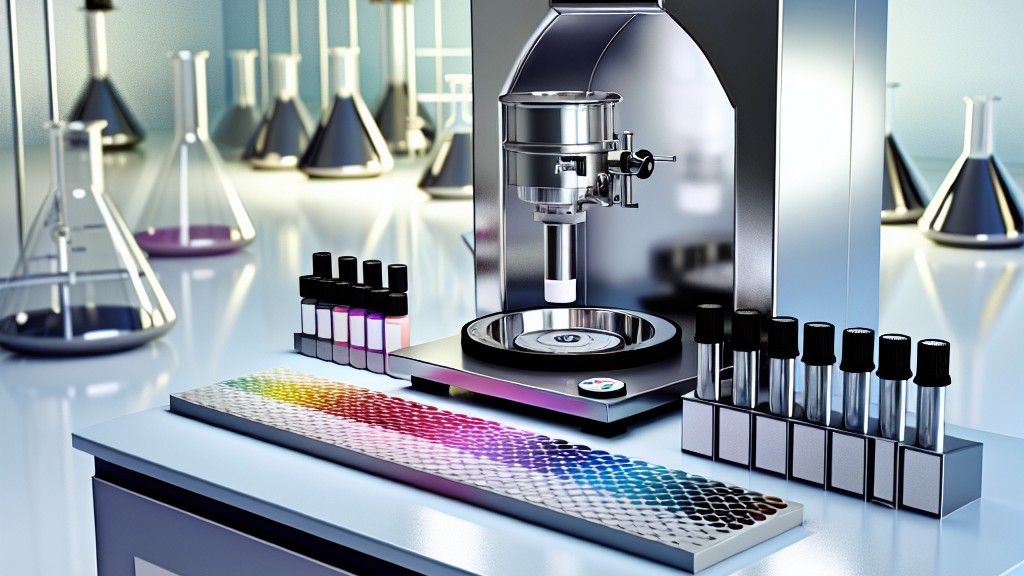
The Tukon hardness test is a test method for determining microhardness using a Knoop diamond indenter or a Vickers square-bottom pyramid indenter.
Hardness, applied to most materials and particularly metals, is a widely used mechanical test in various forms over the years. The information obtained from a hardness test is complementary and is often used in conjunction with other material verification techniques such as tensile or compression to provide critical performance information.
Paint, like any solid surface, has a certain hardness. Simply put, this refers to the force required to scratch the surface. A very soft paint will scratch easily, but it will also be easier to polish. A hard surface will not scratch as easily, but it will be harder to polish.
The hardness of paint can be caused by a number of different things, such as the way it dries, the thickness of the paint layer, the type of paint used, or the chemicals used in the paint. It is very difficult to say why one car's paint is harder than another. More importantly, just like paint thickness, hardness can vary from one panel to another.
When polishing a surface, you are basically removing a very thin layer of the surface while trying to leave as smooth a surface as possible. When a surface is very hard, it takes a lot more time and effort to remove this layer. When the paint is very soft, this process is much easier. However, this also means that very hard paint needs a rougher polish and a polishing pad with more cutting pads. Knowing how hard the paint is helps to know when to stop polishing and start wet sanding.
There are essentially three main types of hardness measurement: scratch, indentation, and rebound. Each of these measurement classes has separate measurement scales. For practical reasons, conversion tables are used to convert between one scale and another.
One of these methods, the Tukon paint hardness method (scratch hardness method), is a measure of how resistant a sample is to fracture or permanent plastic deformation due to friction from a sharp object. The principle is that an object made of a harder material will scratch an object made of a softer material. When testing coatings, scratch hardness refers to the force required to cut the film into the substrate.
Knoop tests are mainly performed at test forces between 10g and 1000g. These tests are generally known as microhardness or micro-indentation tests and are best used on small test areas or brittle materials as minimal material deformation occurs in the short diagonal area.
In the world of paints and coatings, it’s not enough to just say a product is hard or very hard. Professionals need precise measurements to ensure they’re using the right products for their specific application.
Our organization has a strong staff that closely follows the developments in the world in the field of science and technology and constantly improves itself. Among the numerous tests, measurements, analyses and evaluation studies provided for businesses in various sectors, there are also testing services in accordance with the "Ford FLTM BI 112-02 Tukon paint hardness" standard.
To get an appointment, to get more detailed information or to request an evaluation, you can ask us to fill in our form and reach you.

