

Stellantis, an American automobile brand and division of Chrysler, developed the “Chrysler LP-463KC-04 Cleanability of Interior Upholstery Materials” standard, which incorporates a key laboratory testing procedure used in the automotive industry. This standard evaluates the cleanability of various interior upholstery materials, ensuring their resistance to everyday soiling and their ability to be effectively restored without damage or visible residue.
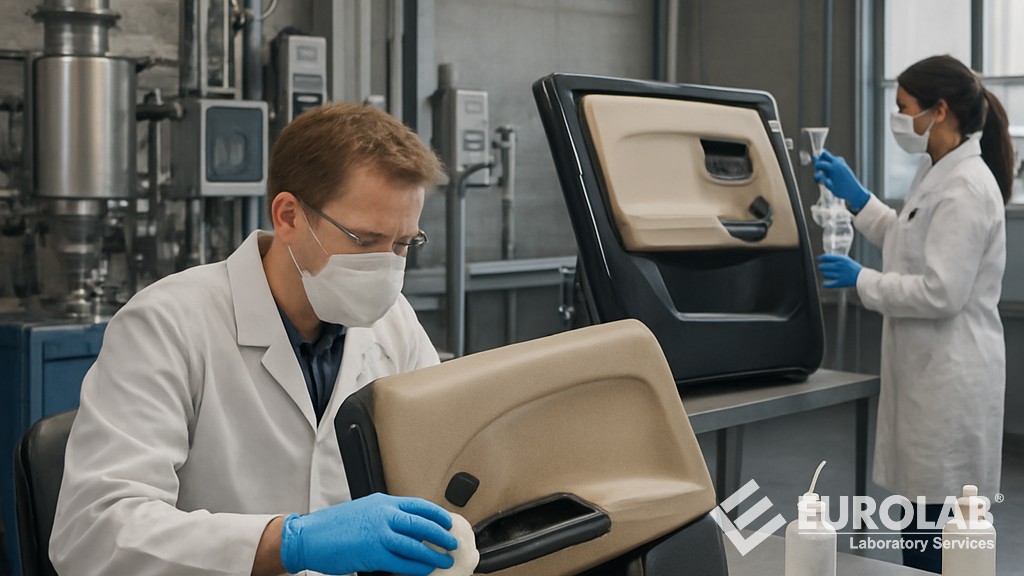
This standard defines methods for evaluating the stain resistance and response to cleaning of automotive interior materials such as fabrics, vinyls, leathers, coated fabrics, plastics, thermoplastic elastomers (TPEs), and other upholstery components. This standard is widely applied to upholstery, seat covers, door panels, headliners, and other cabin surfaces where appearance, durability, and maintainability are critical to vehicle quality and customer satisfaction.
This testing method simulates real-world contamination (e.g., food, oil, cosmetics, or dirt) and measures the effectiveness of specified cleaning procedures. It helps manufacturers and suppliers qualify materials that meet performance requirements for original equipment and aftermarket parts.
The Chrysler LP-463KC-04 standard is structured around multiple procedures, each targeting different contamination and cleaning challenges:
Materials are typically stained with controlled substances, then cleaned using approved substances (e.g., mild soaps, special solvents, or mechanical treatment such as rubbing). Performance is usually assessed visually using grayscale tests (e.g., AATCC grayscale for staining) or other criteria.
Commonly used tools in testing include:
This method is referenced in conjunction with the following relevant standards:
As interior materials face increasing demands for durability and ease of maintenance, this test ensures compliance with Stellantis (formerly FCA/Chrysler) material specifications.
This standard supports quality control in the production of seats, upholstery, and coverings, helping to prevent customer complaints about permanent stains or surfaces that are difficult to clean.
The Chrysler LP-463KC-04 standard is required in the automotive industry for various practical, commercial, and quality reasons. For interior trim materials, this standard is considered important for the following reasons:
Without good cleanability, stains become permanent or require aggressive and potentially damaging cleaning methods. This leads to visible deterioration, customer complaints, negative reviews, warranty claims, and low resale value. This standard directly supports long-term owner satisfaction by ensuring materials can be restored to their near-original appearance using simple, approved cleaning methods.
By mandating performance under controlled staining and cleaning (e.g., Procedure 1 for oil, Procedure 3 for friction and scrubbing), the test helps select materials that are resistant to soiling and recover well. This supports the industry's shift towards durable and easy-to-maintain interiors, which is particularly important for premium upholstery, leather, and light-colored fabrics.
Without such testing, inconsistent material performance can lead to production problems, recalls, or field failures.
In short, the LP-463KC-04 standard is not just a bureaucratic requirement, but a practical tool to ensure automotive interiors remain attractive, functional, and low-maintenance throughout a vehicle's lifespan.
For many years, our organization, with its competent and experienced staff, has been understanding the needs of its customers, providing the advanced testing services they require, and assisting them in the establishment, implementation, and improvement of management systems. Within this framework, we also provide testing services in accordance with the Chrysler LP-463KC-04 standard.
To get an appointment, to get more detailed information or to request an evaluation, you can ask us to fill in our form and reach you.

