

The “GMW 3232 Test Method for Determining the Flammability of Interior Trim Materials” standard, developed by General Motors Worldwide (GMW), is used to evaluate the horizontal combustion behavior of materials used in vehicle passenger compartments. This method determines how quickly a material burns after being exposed to a small flame. This standard is particularly important for automotive interior materials because limiting flame spread helps reduce the potential for a small ignition source to develop into a larger vehicle interior fire.
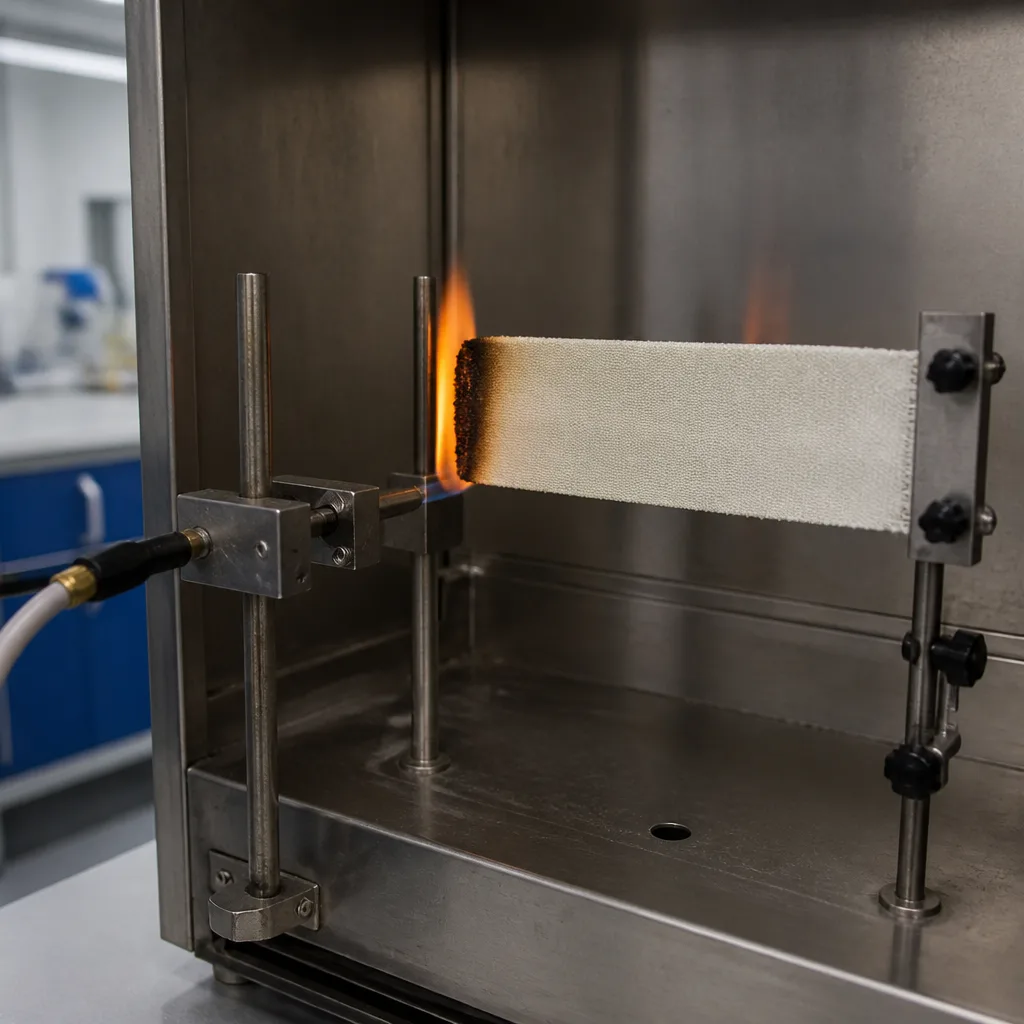
The primary purpose of the GMW 3232 standard is to determine the horizontal burn rate of an automotive material after brief exposure to a small flame. The flame is applied to one edge of the sample, and then the flame's progression is measured. This test can be applied to a variety of interior materials, including:
Testing laboratories list the GMW 3232 standard for materials such as coated textiles, leather, plastics, elastomers, foils, textiles, yarns, and foams.
In principle, the GMW 3232 standard involves a horizontal flammability test. A representative specimen is placed horizontally on a metal support frame. A small flame is applied to one edge of the specimen. After ignition, the flame is allowed to spread across the specimen. The distance traveled by the flame and the corresponding time elapsed are used to determine the rate of combustion, usually expressed in mm/min.
The testing process generally follows these steps:
According to the GMW 3232 standard, rectangular specimens are used whenever possible. The commonly stated ideal specimen size is approximately 355 mm x 100 mm, and the specimen thickness corresponds to the material or composite used in the vehicle, subject to the thickness provisions in the standard. For thicker materials, specimen preparation requirements may limit the test thickness. This standard also includes provisions for parts whose geometry does not allow for the production of ideal specimen sizes. Material orientation may also be important. For materials with a specific orientation, specimens may be taken in both longitudinal and transverse directions to evaluate directional differences in combustion behavior.
The primary characteristic measured by the GMW 3232 standard is horizontal flame spread or combustion rate. A simplified calculation is as follows: Combustion rate = Burning distance / Burning time.
The actual acceptance criteria, sample size, statistical processing, and reporting requirements are contained within the GMW 3232 standard. The test method itself should not be interpreted as a universal pass/fail limit for every material.
The GMW 3232 standard may apply to a wide variety of passenger compartment materials. Examples include:
The current definition specifically refers to applications such as seat cushion/heating mat combinations, seat ventilation components, adhesive-bonded wrapped underlays, upholstery-covered intermediate or top pads, and applied sound/vibration tapes or isolators.
A key aspect of the GMW 3232 standard is the processing of composite and multilayer materials. Materials can be supplied as monolithic materials or as multilayer structures produced by lamination, bonding, or other processes.
The current scope also distinguishes between properly bonded composite structures and those that are merely overlapping or mechanically attached layers. For example, in some mechanically bonded textile/foam combinations, each layer may need to be certified separately. This distinction is important because the way materials are bonded can significantly affect flame spread.
A laboratory performing tests according to the GMW 3232 standard typically requires appropriate equipment for horizontal flammability testing. This includes:
According to the requirements of the relevant standard and laboratory quality system, the equipment must be maintained and calibrated.
The GMW 3232 standard is closely related to the FMVSS 302 standard, which is a U.S. federal requirement regarding the flammability of interior materials. While the GMW method provides a General Motors-specific test procedure and requirements framework for evaluating interior materials, applicable government regulations remain mandatory. However, the GMW 3232 standard does not replace existing laws and regulations. Therefore, compliance with the GMW 3232 standard should not be interpreted as automatically replacing regulatory certification requirements.
GMW 3232 standard is considered important for the following reasons:
The GMW 3232 standard belongs to a broader group of automotive interior flammability methods. Other standards used in the industry include:
Consequently, the GMW 3232 standard is applicable to a wide variety of materials, including textiles, leather, plastics, foam, coated materials, and multilayer structures.
For many years, our organization, with its competent and experienced staff, has been understanding the needs of its clients, providing the advanced testing services they require, and assisting them in the establishment, implementation, and improvement of management systems. Within this framework, we also provide testing services in accordance with the GMW 3232 standard.
To get an appointment, to get more detailed information or to request an evaluation, you can ask us to fill in our form and reach you.

