

The “PSA D10 5495 Quantification of VOCs emitted by vehicle materials” standard, developed by the Peugeot automotive company , describes a procedure for assessing the amount of volatile organic compounds (VOCs) emitted by materials in the vehicle cabin. The results are expressed as µg toluene equivalent per gram of material.
Depending on the manufacturer, it should be checked in the specification which compounds need to be determined and whether substances greater than 1 µg/g need to be fully identified.
For all materials except foams (polyurethane seat and headrest), the items to be quantified are:
For foams (polyurethane seat and headrest), the products to be quantified are:
For all materials, only substances with a content higher than 1 µg/g toluene equivalent are identified in gas chromatography-mass spectrometry (GC/MS). Other products can be measured upon customer request (must be confirmed in advance with the laboratory performing the analyses). The results obtained with this method cannot be used to make health assessments or to estimate the concentration of volatile organic compounds (VOCs) in a vehicle.
Quantitative analysis, which is in principle performed to assess only the amount of volatile organic compounds by passenger compartment materials, is performed using thermal desorption (TDS)/gas chromatography (GC)/mass spectrometry (MS) coupling. Analysis can also be performed by thermal desorption/GC/MS/FID coupling.
During thermal desorption, materials are heated to 30 degrees for 90 minutes. The emitted volatile organic compounds (VOCs) are then trapped in a cold trap of a specific composition to be concentrated and later analyzed by GC/MS.
Semi-quantification of volatile compounds is performed using an external calibration with toluene. Volatile organic compound concentrations are thus expressed as µg toluene equivalent per g of material.
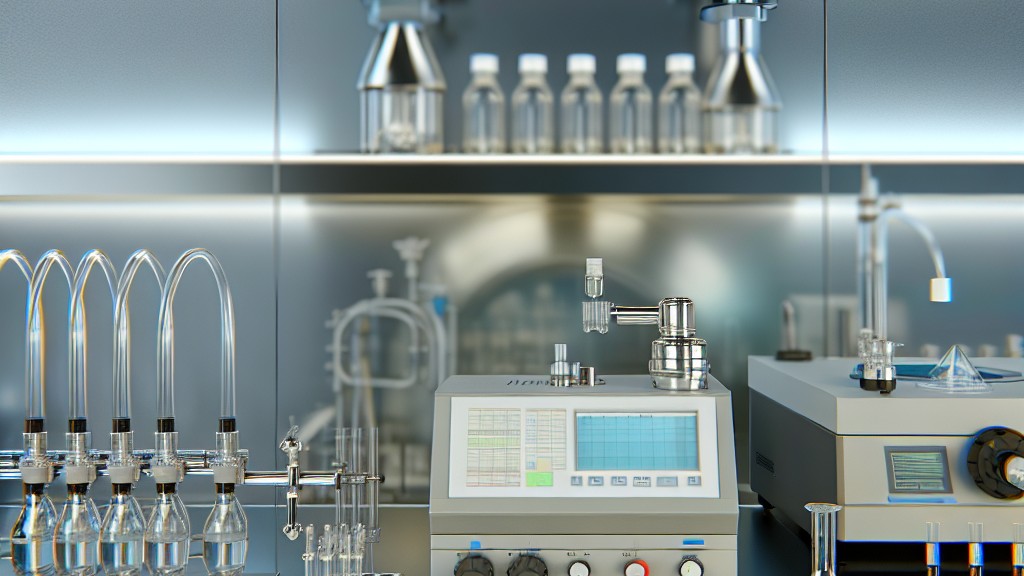
The thermal desorption device used in the tests consists of:
An analytical chain used in testing consists of:
To analyse standard solutions, tubes filled with Tenax TA are conditioned for 2 hours in an oven capable of heating at 5.0 degrees under an inert gas flow (minimum quality 300 nitrogen or helium). If preliminary tests have been carried out to prove the effectiveness of the conditioning, the conditioning period can be reduced to one hour. The oven ramps should be filled with tubes of the same construction. The tubes should have the same pressure drop in each ramp. Conditioning can also be carried out by heating the tubes at 300 degrees for 2 hours. After conditioning, Tenax tubes should be used within 15 days.
When preparing standard solutions, toluene is used and diluted in methanol, a mild solvent. A calibration line is performed to measure the volatile organic compound in µg toluene equivalent per gram of material.
Two standard solutions are prepared:
Solutions should be stored in a refrigerator between 4 degrees and 10 degrees. Solutions can be stored for three months.
For PSA Peugeot Citroen tests, test samples or specimens must be representative of the scale to be characterized. To ensure this representativeness, it is necessary to find out the basic characteristics of the population studied. The selection criteria for test samples or specimens must be specified in the test report in accordance with standard A10 0156.
When preparing samples, the quantities specified in this standard apply to a specific trap and a specific chromatographic column. In case of change of trap or column, these quantities and chromatographic conditions must be re-optimized.
In short, the PSA D10 5495 standard specifies the methodology for determining the amount of volatile organic compounds (VOCs) emitted by automotive interior materials. This standard applies to a wide range of materials, including:
Our organization, which has been trying to support businesses from every sector with its testing, measurement, analysis and evaluation studies carried out in a wide range for years, has a strong staff that closely follows the developments in the world in the field of science and technology and constantly improves itself. In this context, testing services in accordance with the "PSA D10 5495 Quantification of VOCs emitted by vehicle materials" standard are also provided to businesses.
To get an appointment, to get more detailed information or to request an evaluation, you can ask us to fill in our form and reach you.

