

The “Ford CETP 00.00-L-467 Accelerated Cyclic Corrosion Test” standard, developed by Ford Motor Company (Ford), describes an accelerated laboratory atmospheric corrosion test method. This test method has a similar effect to the salt load climatic portion of the Ford CETP 00.00-R-343 test site corrosion test procedure and yields similar results. The aim of this method is primarily to allow the evaluation of the corrosion resistance of metals in environments where chloride ions, such as marine-derived sodium chloride or winter road de-icing salts, are significantly effective. The laboratory test provides full exposure to the salt load and humidity environment. It does not attempt to simulate other etching factors such as mud loads, temperature stresses, or abrasion.
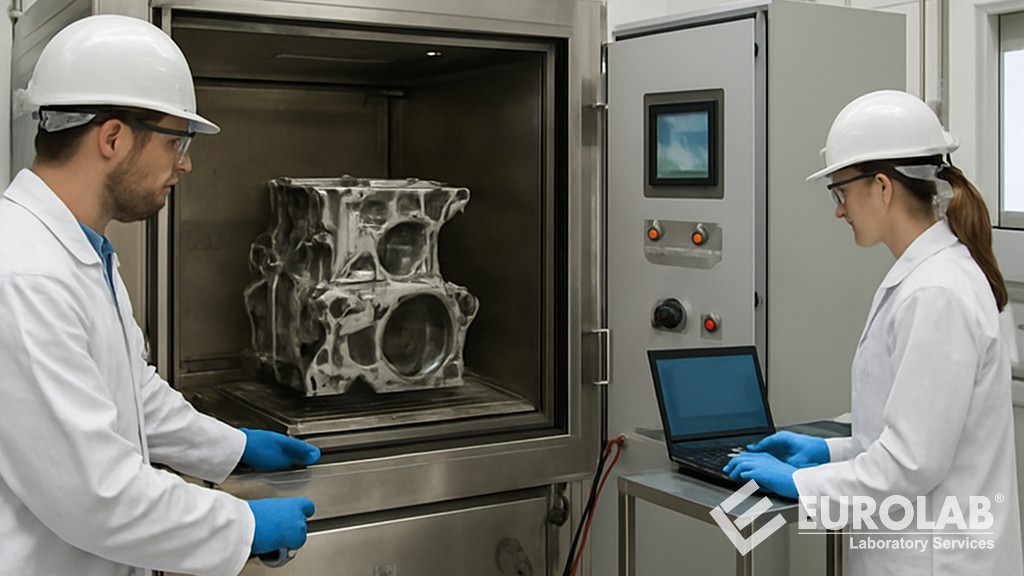
In the high-risk automotive manufacturing world, where vehicles must withstand harsh environmental conditions ranging from salty winter roads to humid coastal climates, ensuring material durability is paramount. To this end, Ford Motor Company has developed rigorous standards to simulate accelerated corrosion scenarios. One of these critical specifications is the Ford CETP 00.00-L-467 standard. This cyclic corrosion testing method serves as a benchmark for evaluating the corrosion resistance of metals, coatings, and components, helping engineers design vehicles that deliver longer-lasting and more reliable performance under real-world conditions.
This standard serves as a general-purpose atmospheric corrosion test and is applicable to a variety of materials, coatings, and material interactions, both as test specimens and designed components. The test can be used as a design verification method for the following purposes:
This standard specifies controlled conditions for equipment and procedures to ensure the test is performed with high repeatability and reproducibility. It is designed to be suitable for operation in various climate chambers, either as a fully automated procedure or with partial manual operation.
The Ford CETP 00.00-L-467 standard is an accelerated atmospheric corrosion test procedure in a laboratory designed to evaluate how materials behave when exposed to chloride ions from salt spray solutions. Unlike conventional continuous exposure tests, this standard uses a cyclical approach, mimicking the intermittent wetting and drying cycles that vehicles experience in nature. This makes it a better representation of real environmental degradation.
This standard serves as a general-purpose tool applicable to a wide variety of automotive components, including body panels, chassis parts, fasteners, and protective coatings. It defines precise conditions for temperature, humidity, and salt exposure to accelerate corrosion and maintain repeatability across test laboratories.
The main objectives of this standard are:
The Ford CETP 00.00-L-467 standard has its roots in earlier industry standards. This standard evolved from a modification of the SAE J2334 cyclic corrosion test and is largely inspired by Volvo's STD 423-0014 standard. It is also compatible with the ISO 16701 standard for automotive corrosion testing.
The Ford CETP 00.00-L-467 test method is performed in a special cyclical corrosion chamber where samples are subjected to a 24-hour repeating cycle over several days. The procedure's 11 distinct steps involve precise increases in temperature and humidity, intermittent salt spray, and dry periods to simulate daily fluctuations. Simply put, these cycles are as follows:
The salt solution (0,5% sodium chloride mixture) is atomized via an oscillating spray wand to ensure even distribution, a critical feature that distinguishes this standard from static fog tests. The chambers must be subjected to strict controls: humidity increases at specified rates and temperatures of plus/minus 2 degrees. A complete test typically takes 5 cycles (120 hours), but durations vary depending on the requirement.
Following exposure, samples undergo visual inspections, writing tests for creep measurement, and sometimes adhesion tensile tests to assess performance.
The Ford CETP 00.00-L-467 standard is an integral part of Ford's supply chain, mandating corrosion verification for thousands of parts annually. Beyond Ford, it is also adopted by suppliers to global original equipment manufacturers and is impacting electric vehicle designs where enhanced protection of lightweight alloys is required.
Although this standard is strong, it also faces some challenges:
For many years, our organization, with its competent and experienced staff, has been understanding the needs of its customers, providing the advanced testing services they require, and assisting in the establishment, implementation, and improvement of management systems. Within this framework, we also provide testing services to businesses in accordance with the "Ford CETP 00.00-L-467 Accelerated cyclic corrosion test" standard.
To get an appointment, to get more detailed information or to request an evaluation, you can ask us to fill in our form and reach you.

