Determining Weight Per Unit Area and Flooring Density for Ford FLTM BN 106
The “Ford FLTM BN 106 Determination of Weight Per Unit Area and Upholstery Density” standard, developed by Ford Motor Company (Ford), describes a test method used in automotive materials engineering to determine the mass per unit area (area weight) and density per unit area of interior upholstery materials such as textiles, coated fabrics, foams, and leather used in vehicle interiors. This standard generally focuses on the performance of interior upholstery materials, including their mechanical, physical, and durability properties.
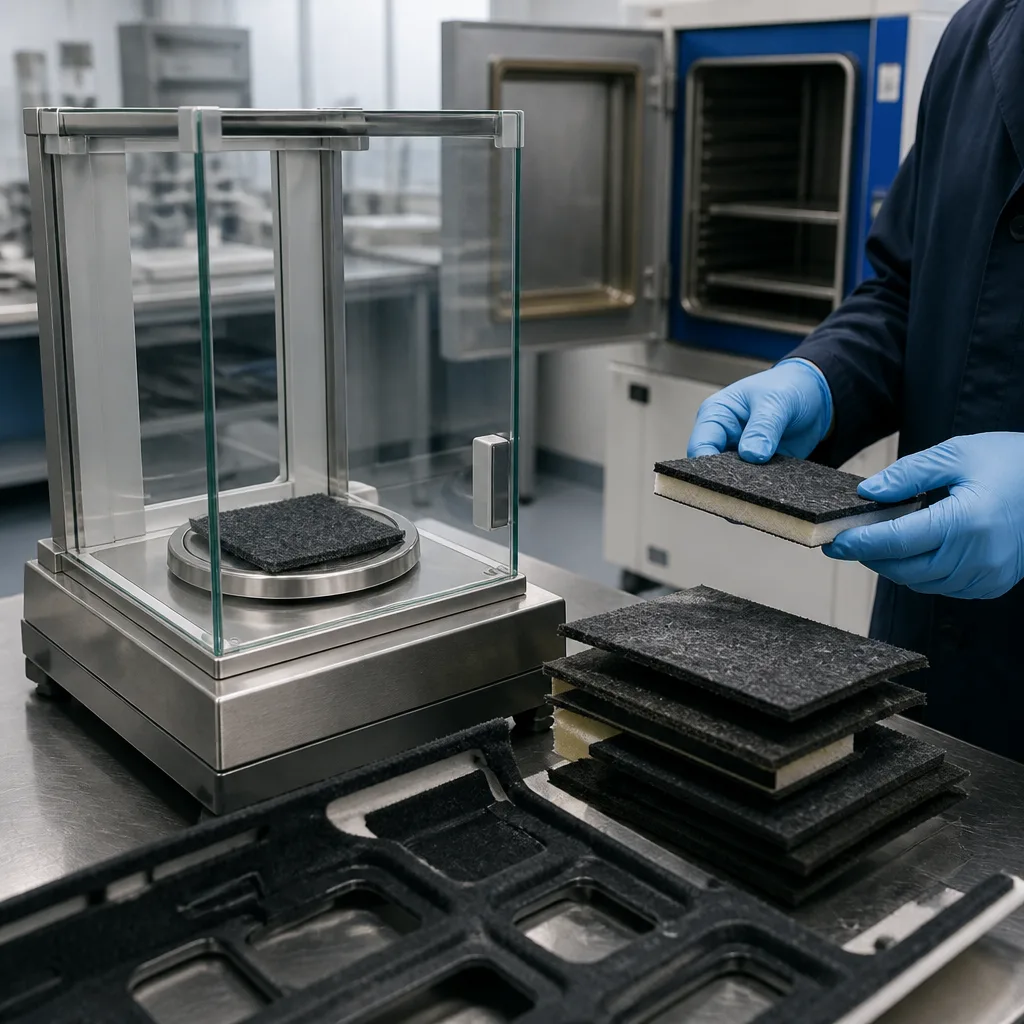
The primary goal of the Ford FLTM BN 106 standard is to ensure that interior materials used in vehicles meet stringent design and quality requirements through the following measurements:
- Weight per unit surface area
- Material consistency between production batches.
- Density-related properties of flooring components.
This is important because small variations in material weight can affect the following:
- Seat comfort and firmness
- Acoustic behavior (noise insulation)
- Fuel efficiency (overall vehicle mass control)
- Production consistency
The Ford FLTM BN 106 standard typically applies to the following materials:
- Automotive textiles (seat fabrics, headliners)
- Artificial leather / PVC coated materials
- Laminated flooring materials
- Foam-backed flooring materials
- Interior flooring composites
These materials are widely used in modern vehicles, where interior textiles constitute a significant portion of the total vehicle textile usage.
This method essentially follows these steps:
- A specific area of material sample is cut (usually standardized geometry).
- The sample is conditioned under controlled temperature and humidity.
- The sample is weighed using precision balances.
- Weight is calculated by normalizing it with area: Area weight = Area * Mass
- For multi-layer coatings, if thickness is measured, density can also be calculated.
This test method typically produces the following:
- Weight per unit surface area
- Material homogeneity values between samples
- Statistical variation (indicator of quality control)
- In some cases, derived density values
The Ford FLTM BN 106 standard is part of a broader family of interior material testing standards that are often used in conjunction with the following:
- BN 105: Shrinkage and dimensional stability.
- BN 107: Friction and wear behavior
- BN 108: Scratch and abrasion resistance.
- BN 112: Dirt and stain resistant.
Together, these factors ensure complete verification of interior trim performance.
The Ford FLTM BN 106 standard, Method A and Method V (or Method E in some documents, refer to different test procedures within the same standard family):
- Method A: This method is the primary measurement method. It is used to standardize area weight and sometimes density. It focuses on cutting and weighing a specific sample. It represents the standard conditioning method for interior flooring materials. Typical characteristics include:
- Flat, homogeneous samples
- Simple cutting + conditioning + weighing
- It is used as a reference method for quality control comparisons.
- It is applied to textiles, leather, foam, and coated fabrics.
In short, Method A is the standard laboratory reference method for weight per unit area.
- Method V (Method E): This method is not always consistently named in all sources. It is used when standard plain sampling (Method A) is not possible. It is designed for complex floor structures or multilayered materials. It may include:
- Different sampling geometries
- Corrections for thickness or structure.
- Customized conditioning or cutting procedures
The typical use of this method is as follows:
- Foam-backed textiles
- Laminated interior trim components
- Three-dimensional shaped or non-homogeneous materials
In short, Method V is an alternative/variant method for non-standard or complex materials.
The Ford FLTM BN 106 standard is important because it controls a fundamental but critical characteristic of interior materials: weight per unit area (and associated density behavior). While this may seem simple, it directly impacts performance, cost, and safety consistency in automotive engineering. This standard is considered important for the following reasons:
- Vehicle weight control (fuel efficiency + emissions): All types of weight in a vehicle matter. This standard ensures:
- Seat fabrics, foams, and upholstery do not exceed the target weight.
- Materials from different suppliers remain consistent.
Even small deviations add up across thousands of vehicles and affect:
- Fuel consumption
- Electric vehicle range
- Carbon dioxide emission targets
Interior comfort and perceived quality: Material weight is closely linked to how it feels.
- Heavier fabrics generally feel more premium and denser.
- Lighter materials tend to feel cheaper or less durable.
This standard helps to ensure the following:
- Seat softness consistency
- A sense of homogeneity among production batches.
- Absence of unexpectedly thin or heavy areas
Acoustic and thermal performance: Interior flooring materials also serve as insulation. The correct area weight ensures:
- Improved noise absorption (NVH performance)
- Consistent thermal insulation in doors, ceilings and seats.
If the weight changes:
- Cabin noise levels may vary.
- Thermal insulation performance becomes inconsistent.
Supplier quality control: Automotive manufacturers work with many suppliers globally. This standard ensures the following:
- A common language of measurement
- Standardized acceptance criteria
- Comparability between parties
Without this standard, each supplier could measure weight differently.
- Production and cost control: Material weight directly affects the following:
- Raw material usage (fabric, foam, coating)
- Shipping cost
- Production cost per vehicle
This standard helps to identify the following:
- Excessive use of materials (increased costs)
- Low weight material (quality risk)
Process stability and error detection: Sudden changes in field weight may indicate the following:
- Incorrect coating thickness
- Change in foam density
- Production line problems
- Material substitution
Therefore, this standard functions as an early warning quality tool.
In short, this standard is important because it ensures that the weight of interior materials remains consistent, which in turn protects:
- Vehicle efficiency
- Indoor comfort
- Acoustic performance
- Supplier quality control
- Production cost stability
In conclusion, the Ford FLTM BN 106 standard is a key interior material characterization standard used to measure the weight per unit area and related density properties of automotive upholstery materials. This standard plays a vital role in ensuring consistency in material quality, vehicle comfort, and production efficiency.
For many years, our organization, with its competent and experienced team, has been understanding the needs of its customers, providing the advanced testing services they require, and assisting them in the establishment, implementation, and improvement of management systems. Within this framework, we also provide testing services compliant with the Ford FLTM BN 106 standard.



