

Fiat 50471 Resistance of Coated Materials to UV Rays and Artificial Weathering
Fiat 50471 Resistance of Coated Materials to UV Rays / Artificial Weathering
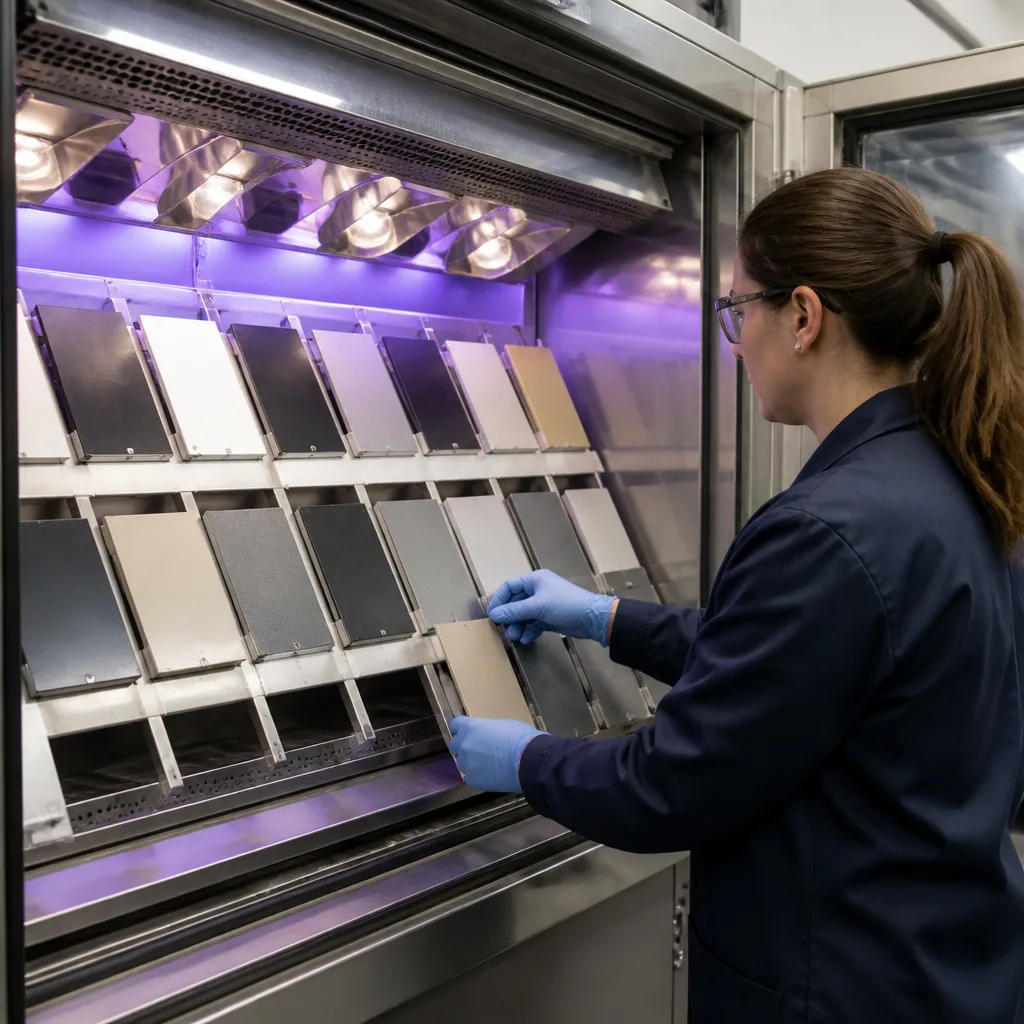
Developed by Fiat Chrysler Automobiles (FCA) (now Stellantis), an Italian-American automotive company, the “Fiat 50471 UV Resistance/Weathering of Coated Materials” standard is an automotive material and coating test specification that primarily focuses on the resistance of painted and coated surfaces to ultraviolet (UV) radiation and weathering. This standard is used in many Fiat engineering documents, often in conjunction with adhesion and aging standards, for evaluating automotive interior and exterior trim coatings.
The Fiat 50471 standard was developed to ensure that vehicle materials exposed to sunlight are protected against the following:
- Color stability
- Surface appearance
- Adhesion performance
- Shine protection
- Long-lasting durability
The following automotive components must withstand years of exposure to UV rays without unacceptable degradation:
- instrument panels
- interior trim
- Outer plastic parts
- Painted metal surfaces
- Decorative coatings
The Fiat 50471 standard is related to the following:
- Resistance to UV rays
- Accelerated exposure to artificial sunlight
- Assessment of surface aging.
- Adhesion test after UV exposure
- Brightness and color variation assessment
Typical defects observed during testing include:
- Fading
- yellowing
- Cracking
- Loss of brightness
- blistering
- Peeling
- Chalking on the surface
In general, the testing process follows these steps:
- Preparation of coated or painted test specimens.
- Exposing samples to artificial UV radiation
- Simulation of thermal and environmental aging cycles.
- Examination of visual and mechanical properties.
- Post-exposure adhesion verification is performed.
The Fiat 50471 standard is often referenced along with the following:
- Fiat 50461 Adhesion test
- Fiat 50457 Aging/Weather Resistance
- Fiat 50184 Moisture resistance
UV degradation is one of the leading causes of long-term cosmetic failures in vehicles. Materials exposed to continuous sunlight can deteriorate rapidly if not properly verified. This standard helps manufacturers ensure the following:
- Keeping the instrument panel colors consistent.
- Preventing peeling of painted coatings.
- Maintaining the appearance of exterior coatings.
- Maintaining a high level of perceived quality for the customer.
- The components must meet durability expectations throughout the vehicle's lifespan.
This is especially important for vehicles operating in the following environments:
- High temperature climates
- Regions with intense solar radiation
- Long-term outdoor exposure environments
The Fiat 50471 standard is generally implemented by the following:
- Automotive original equipment suppliers
- Paint and coating manufacturers
- Plastic component manufacturers
- Interior trim manufacturers
- Materials testing laboratories
This standard is typically part of the supplier qualification and production part approval process for Fiat vehicle programs.
The Fiat 50471 standard is important because it helps ensure that automotive materials and coatings can withstand prolonged exposure to sunlight, ultraviolet (UV) radiation, heat, and environmental aging without losing their appearance or performance.
Modern vehicles are constantly exposed to harsh external conditions. Without proper UV and weather resistance verification, components can degrade rapidly, leading to cosmetic defects and reduced durability.
The main reasons why this standard is necessary are as follows:
- Prevents color fading: Sunlight gradually breaks down pigments and dyes in plastics, fabrics, leather, and painted surfaces. This standard verifies that materials retain their original color after prolonged UV exposure. This is critical for instrument panels, door panels, exterior trim, painted components, and decorative finishes. Consistent color stability helps maintain vehicle quality and customer satisfaction.
- It preserves the surface appearance: UV radiation and heat can cause yellowing, loss of gloss, chalking, surface dulling, and cracking. This standard evaluates whether surfaces maintain their visual appearance throughout the vehicle's lifespan.
- Ensures coating durability: Automotive coatings must remain firmly adhered despite aging. This standard is often used in conjunction with adhesion standards to verify that coatings do not peel, bubble, flake, or separate into layers. Strong coating durability is essential for both protective and decorative functions.
- It simulates real-world environmental exposure: Vehicles operate in a wide variety of climates, including high-sunlight areas, desert environments, hot and humid regions, and cold regions with thermal cycling. This standard uses accelerated aging methods to recreate years of outdoor exposure in a controlled laboratory setting.
- It reduces warranty and quality issues: Poor UV resistance can lead to:
- Customer complaints
- Interior color fading
- Premature aging
- Surface cracking
- Warranty claims
Tests conducted according to this standard help suppliers identify weaknesses early and improve material formulations before the vehicle is launched on the market.
- Supports supplier qualification: Fiat suppliers must demonstrate that their materials meet durability requirements. This standard is commonly used in areas such as material approval, component verification, production part approval process qualification, and manufacturing quality control. This ensures consistency across the automotive supply chain.
In conclusion, the Fiat 50471 standard is a key automotive durability standard used to evaluate the resistance of coatings and materials to UV radiation and artificial weathering. By verifying color stability, adhesion, and surface integrity after prolonged exposure, this specification helps ensure the long-term appearance quality and durability of automotive components.
For many years, our organization, with its competent and experienced staff, has been understanding the needs of its customers, providing the advanced testing services they require, and assisting them in the establishment, implementation, and improvement of management systems. Within this framework, we also provide testing services in accordance with the Fiat 50471 standard.

