

The “Fiat 7-G2090 Vehicle Interior Components - Formaldehyde Emission Test - Acetylacetone Method” standard, developed by Fiat Chrysler Automobiles (FCA) (now Stellantis), an Italian-American automotive company, is an automotive materials testing standard used to determine formaldehyde emissions from vehicle interior components. This method is primarily applied to textiles, porous sound absorbers, wood fiber materials, leather, and other upholstery materials used in passenger compartments.
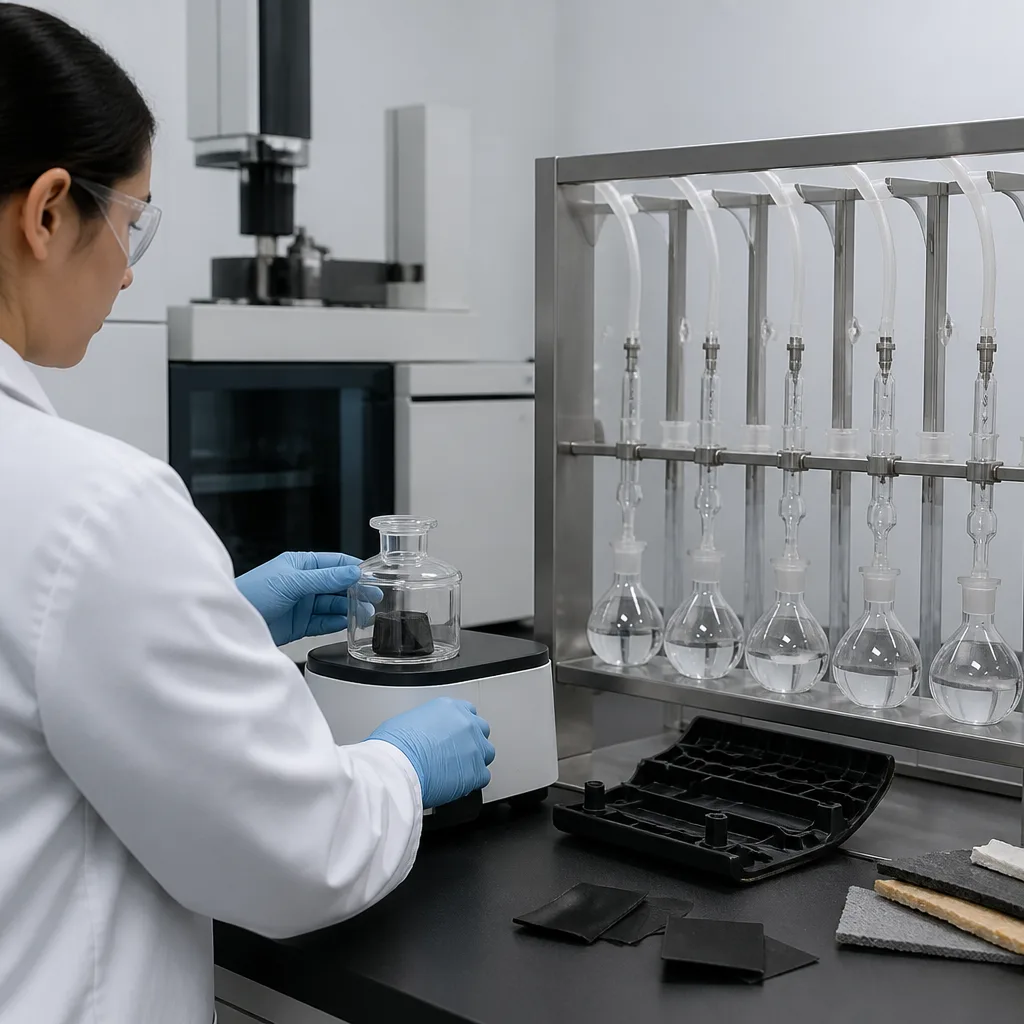
Vehicle interiors contain a variety of polymeric and fiber-based materials combined with adhesives, resins, coatings, and foams. Some of these materials can release volatile organic compounds (VOCs), including formaldehyde.
The Fiat 7-G2090 standard was developed for the following purposes:
This standard is particularly important because of the following problems that formaldehyde can cause:
This specification applies primarily to automotive interior materials such as:
The Fiat 7-G2090 standard generally categorizes materials as follows:
This standard, in principle, uses the acetylacetone method to measure released formaldehyde. The acetylacetone method is a chemical analysis technique used to determine the amount of formaldehyde present in air, liquids, or material emissions. It is widely used in the automotive, textile, wood, furniture, and construction materials industries because it allows for the accurate and reliable measurement of low formaldehyde concentrations. This method is commonly referenced in various automotive standards.
This method is designed to detect and quantify formaldehyde released from the following:
Since formaldehyde is a volatile organic compound that affects human health, manufacturers use this method to ensure their products meet emission limits. The method is based, in principle, on a chemical reaction occurring between formaldehyde, acetyl acetone reagent, and ammonium ions. Under controlled temperature conditions, formaldehyde reacts with acetyl acetone to form a yellow compound. The intensity of the yellow color is proportional to the amount of formaldehyde present. The concentration is then measured using a spectrophotometer.
In general, the testing process follows these steps:
This standard emphasizes controlled humidity and temperature conditions to ensure repeatability.
The Fiat 7-G2090 standard plays a significant role in modern automotive interior validation because customers increasingly expect the following:
Automotive manufacturers also face increasingly stringent global volatile organic compound regulations in many countries:
Consequently, formaldehyde emission testing has become a mandatory supplier qualification requirement for many original equipment manufacturers.
The Fiat 7-G2090 standard belongs to a broader family of automotive interior emission standards similar to the following:
Although the methods differ, they all aim to control indoor air pollution and material emissions.
This standard is necessary because untreated or inadequately controlled interior materials can release excessive formaldehyde over the life of the vehicle, especially when exposed to heat. If this test is not performed,
Testing according to the Fiat 7-G2090 standard helps manufacturers ensure that interior materials remain safe, low-emission, and suitable for long-term passenger exposure.
This standard is commonly used in the following areas:
In short, the Fiat 50496 standard is required to ensure that fabrics and textiles used in vehicle interiors are resistant to color bleeding, staining, or fading when exposed to water or moisture. This standard is considered important for the following reasons:
For many years, our organization, with its competent and experienced staff, has been understanding the needs of its customers, providing the advanced testing services they require, and assisting them in the establishment, implementation, and improvement of management systems. Within this framework, we also provide testing services in accordance with the Fiat 7-G2090 standard.
To get an appointment, to get more detailed information or to request an evaluation, you can ask us to fill in our form and reach you.

