

The “Ford FLTM BN 153-01 Liquid Repellent Coating Verification Test” standard, developed by Ford Motor Company (Ford), describes a procedure for evaluating the presence and effectiveness of liquid repellent coatings in interior seat fabric materials used in vehicles.
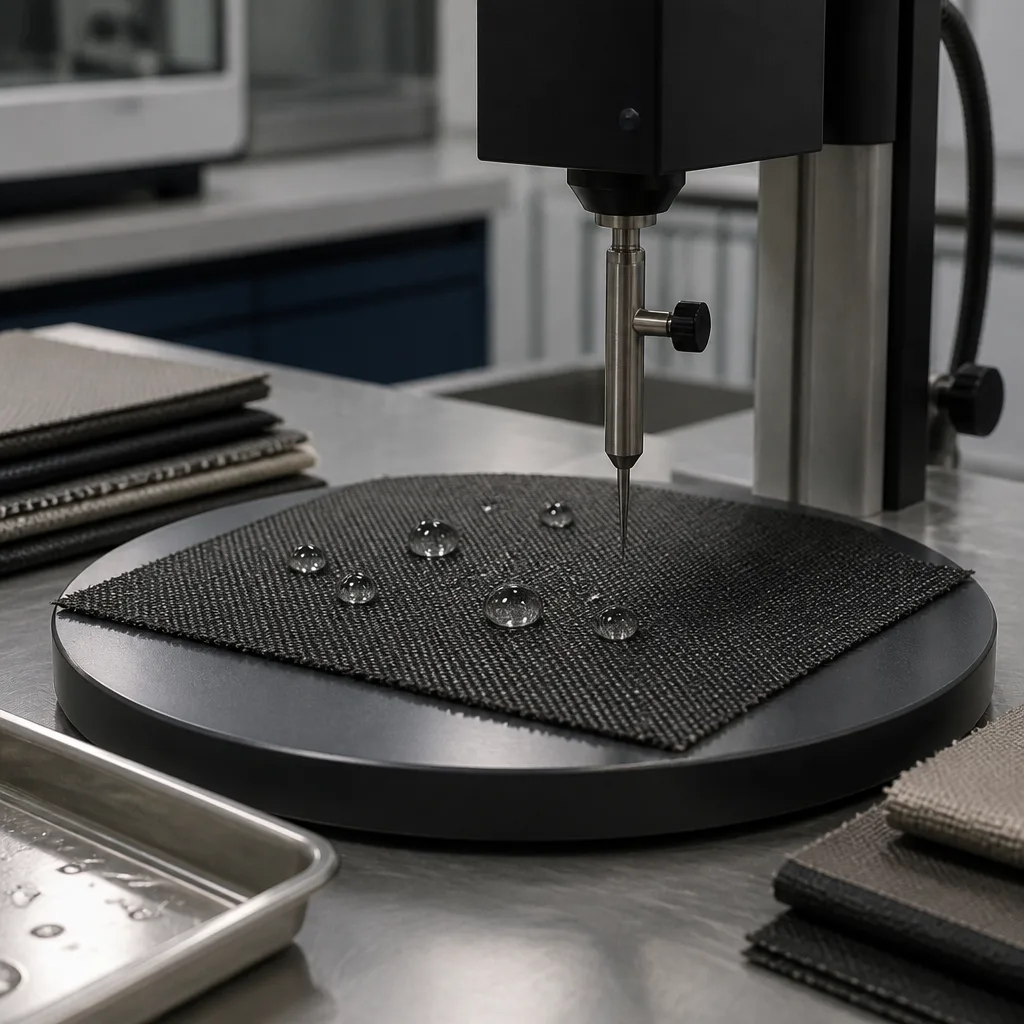
This standard is part of Ford’s broader quality control framework for automotive interior materials, ensuring fabrics meet performance, durability, and consumer comfort requirements. Liquid-repellent treatments (typically fluorochemical, silicone-based, or advanced nano-coatings) increase the fabrics’ resistance to stains from spills such as water, beverages, or oil, improving cleanliness and longevity in vehicles.
The primary purpose of this standard is to verify that a liquid-repellent coating is correctly applied to upholstery fabrics and performs as intended. It is generally applied to interior upholstery fabrics (woven, knitted, or nonwoven textiles). It focuses on the identification and qualitative/quantitative assessment of the coating's ability to repel liquids. This standard is critical for premium upholstery, performance vehicles, and families with children, where spill resistance enhances perceived quality and reduces maintenance costs.
The testing method essentially follows these steps:
In short, this test is used to determine whether liquid-repellent (hydrophobic) coatings are present and effective in automotive interior fabrics, particularly seat materials. The method is typically applied to:
It checks whether liquids (e.g., water-based or common contaminants) are properly repelled rather than absorbed by the textile surface.
The primary objectives of the Ford FLTM BN 153-01 standard are as follows:
Simply put, this standard checks whether water or similar liquids remain as droplets on the material or are absorbed by it.
This test is primarily used for the following:
This standard is particularly important for modern vehicle interiors where stain resistance and easy-to-clean surfaces are required.
In principle, this testing method relies on observing how a liquid behaves when applied to a treated surface:
A well-coated material should exhibit high repellency (low absorption).
Typical test evaluation criteria include:
The materials are evaluated as follows:
Relationship of the Ford FLTM BN 153-01 standard to other Ford standards:
Together, these standards ensure complete verification of interior upholstery performance.
The Ford FLTM BN 153-01 standard is required because it ensures that interior materials used in vehicles consistently meet expectations for spill resistance, longevity, and appearance retention. In automotive design, even minor variations in fabric upholstery performance can lead to visible stains, customer complaints, or long-term material degradation. This standard is considered necessary for the following reasons:
Therefore, the test protects not only technical performance but also perceived quality.
This standard ensures that the repulsion is stable over time, not just temporary.
In conclusion, the Ford FLTM BN 153-01 standard represents Ford's commitment to practical and high-performance interior materials. By verifying liquid repellency, it helps ensure that vehicle seats maintain their performance even after real-world use, such as snacks and daily wear and tear.
For many years, our organization, with its competent and experienced staff, has been understanding the needs of its customers, providing the advanced testing services they require, and assisting them in the establishment, implementation, and improvement of management systems. Within this framework, we also provide testing services to businesses in accordance with the Ford FLTM BN 153-01 standard.
To get an appointment, to get more detailed information or to request an evaluation, you can ask us to fill in our form and reach you.

