Toyota TSH1555G Corrosion Test - Test Method for Accelerated Corrosion in Complex Environment
The multifunctional composite salt spray test described in the standard “Toyota TSH1555G Corrosion test - Test method for accelerated corrosion in complex environment” developed by Toyota vehicle company is a complex environmental cycle corrosion test. During this test the salt spray/wetting/drying cycle is repeated every day. For this type of corrosion testing, one of the three methods described below should be used.
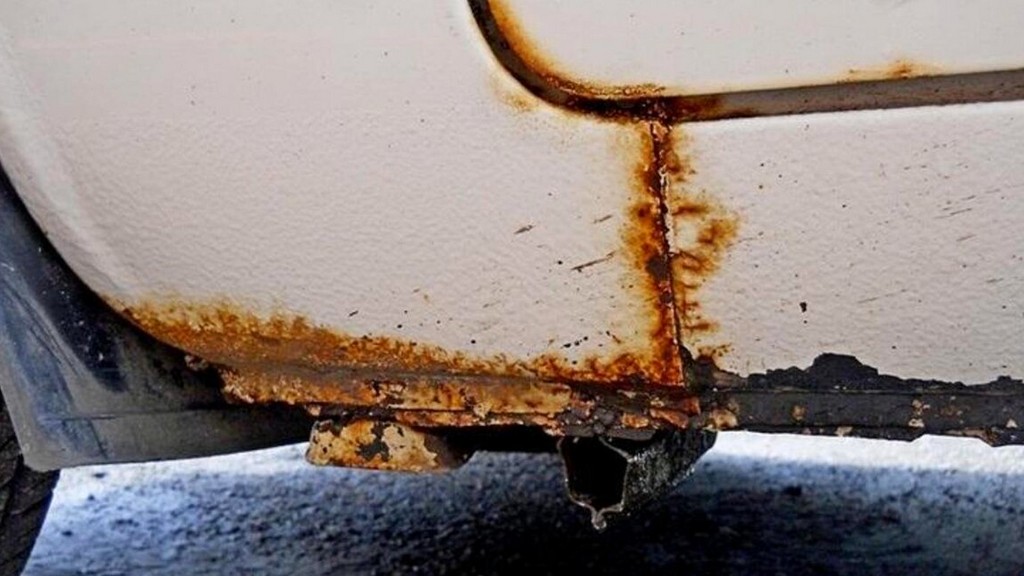
This testing procedure serves as a general-purpose atmospheric corrosion test and can be applied to a wide variety of materials, coatings, and material interactions. It was developed to enable the evaluation of the corrosion resistance of metals used in vehicle bodies, where chloride ions such as sodium chloride obtained from salt that dissolves road ice in winter have a significant effect. This testing is cyclical in nature, meaning that test samples are exposed to changing climates over time.
During testing, test samples are placed in a closed chamber and exposed to changing climate. The test consists of three alternating 24-hour single cycles of methods A, B and C:
- Method A includes salt water spraying for 17 hours, forced drying for 3 hours, salt water immersion for 2 hours, and finally natural drying for 2 hours.
- Method B includes salt water spraying for 1 hour, soaking for 16 hours, forced drying for 4,5 hours, salt water immersion for 1 hour, and finally natural drying for 1,5 hours.
- Method C includes salt water spraying for 4 hours, forced drying for 5 hours, soaking for 12 hours, forced drying for 2 hours, and finally natural drying for 1 hour. Essentially this method includes the following 24 hour profile:
- Salt water spraying for 50 hours at 4 degrees
- Mandatory drying for 70 hours at 30 degrees temperature and relative humidity below 5 percent
- Soaking for 50 hours at 85 degrees temperature and 90-12 percent relative humidity
- Mandatory drying for 70 hours at a temperature of 30 degrees and relative humidity below 2 percent, and
- 1 hour natural drying under ambient conditions
The number of loop iterations and thus the testing time is variable.
This test is also referred to as cyclic corrosion testing.
Additionally, these testing methods allow for a 30-minute transition period between each of the steps.
Alternative cyclic corrosion test conditions include:
- Salt water spraying: This operation should be carried out according to the conditions shown in the table in the Toyota TSH1552G standard. During testing, the temperature inside the brine preheater, humidifier and sprayer must be maintained at 50 degrees plus/minus 1 degree at all times.
- Soaking in salt water: After the sample is placed in a plastic container, the container is filled with salt water prepared in accordance with the TSH1552G standard until the sample is completely submerged in water. The container is covered with a lid and placed in a constant temperature heating oven with the temperature controlled at 50 degrees plus/minus 1 degree. The brine temperature should reach 50 degrees plus/minus 1 degree when the sample is immersed.
- Forced drying: The sample is placed in a dryer equipped with a ventilation fan so that the sample can be dried easily. Under the influence of the fan, the temperature of the dryer is increased from room temperature (15-20 degrees) to 70 degrees and the temperature is maintained at 70 degrees plus/minus 1 degree and the humidity at 30 percent or less for the specified period of time.
- Natural drying: The sample is stored in the room where it will dry easily. Although there are no special ventilation requirements during the test, it is recommended to keep the room temperature at 20-30 degrees.
- Wetting conditions: During the specified period, the sample is exposed to a temperature of 50 degrees plus/minus 1 degree and a relative humidity of 85-90 percent.
The test duration (number of cycles) should be determined as necessary, taking into account the corrosive environment of the parts. If the workpiece lifespan is also to be evaluated, additional test samples should be prepared specifically for this purpose.
Meanwhile, there are ASTM G85-19, ASTM B117-19, ASTM B 368-97, ISO 16701, ISO 11997, SAE J2334, GMW 14872, GMW 3172, Volkswagen PV1208, Volkswagen PV1210 and other similar corrosion test standards.
Among the numerous testing, measurement, analysis and evaluation studies it provides for businesses in various sectors, our organization also provides testing services defined in the "Toyota TSH1555G Corrosion test - Test method for accelerated corrosion in complex environments" standard, with a trained and expert staff and advanced technological equipment.



