

The “GMI 60266 Automotive Interior Trim Resistance to Cleaning Agents” standard, developed by General Motors International (GMI), is a materials testing standard that specifies a laboratory method for evaluating the resistance of automotive interior trim parts to cleaning agents. This standard was developed to ensure that interior trim materials maintain their appearance, color, texture, and functional performance after repeated exposure to approved cleaning products used during vehicle maintenance. However, this standard is not applicable to new designs and has been replaced by the “GMW 14334 Chemical Resistance” standard for future General Motors programs.
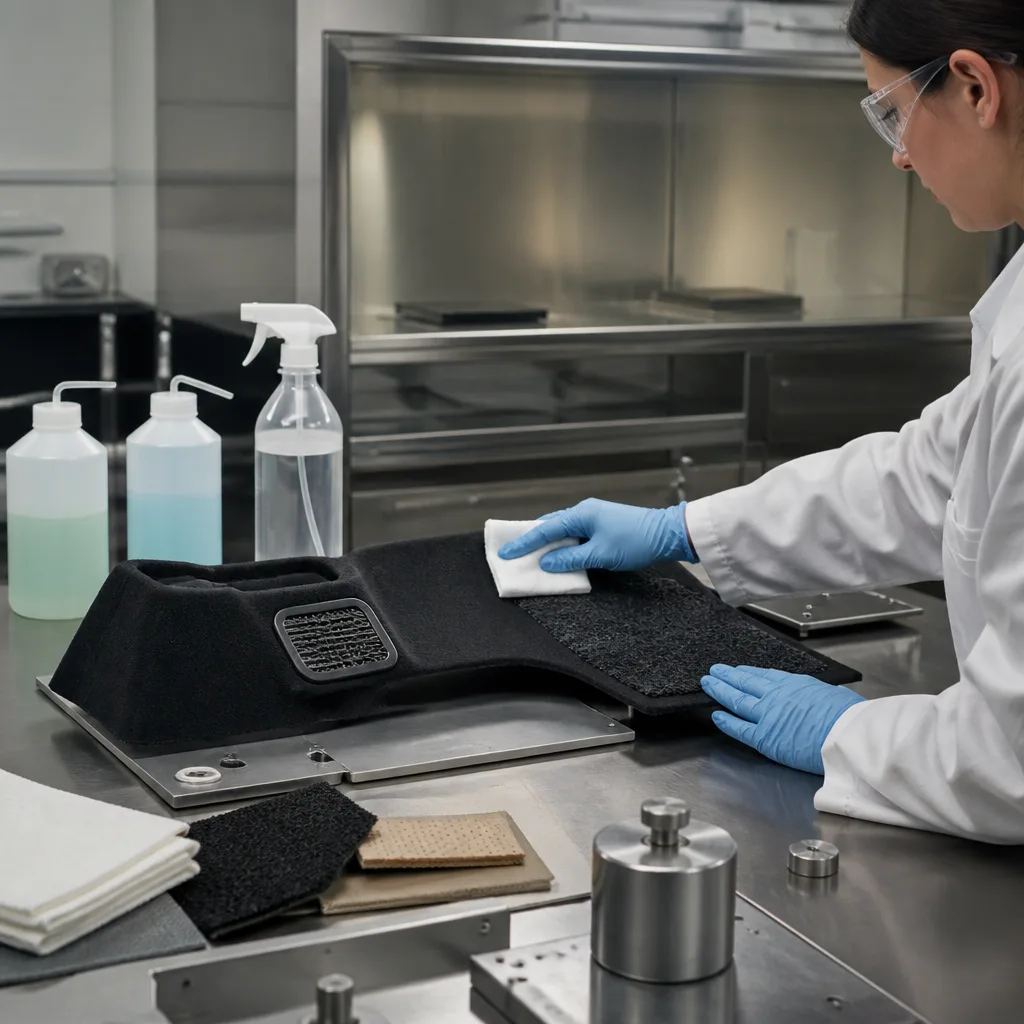
The primary purpose of the GMI 60266 standard is to determine whether automotive interior trim materials can withstand exposure to cleaning chemicals without undergoing unacceptable changes. This standard helps engineers assess whether cleaning agents cause:
This test ensures that the appearance of vehicle interiors is maintained throughout their lifespan.
The GMI 60266 standard applies to numerous automotive interior trim materials, including those listed below:
Although primarily designed for interior upholstery, this procedure can also be applied to other automotive components that require resistance to cleaning chemicals.
In principle, this testing method simulates routine vehicle cleaning by exposing samples to approved cleaning agents under controlled laboratory conditions. Generally, the procedure involves:
This standard aims to reproduce the effects of normal cleaning during vehicle ownership, rather than accidental chemical spills.
Depending on the vehicle program, typical cleaning agents may include:
In quality testing, generally only approved fluids specified in the engineering specifications are used.
Following exposure, samples are examined for defects. The evaluation criteria are as follows:
Acceptable limits are generally defined by the relevant General Motors engineering materials specification.
Interior surfaces are cleaned frequently throughout a vehicle's lifespan. Poor chemical resistance can lead to:
The GMI 60266 standard helps manufacturers verify that flooring materials will remain durable under realistic maintenance conditions. This standard is commonly used by:
Accredited laboratories for automotive materials testing continue to list the GMI 60266 standard among the supported legacy General Motors methods.
The GMI 60266 standard belongs to a family of General Motors material durability standards that includes the following:
Together, these standards assess the resistance of automotive materials to mechanical, environmental, and chemical stresses.
The GMI 60266 standard has been replaced by the “GMW 14334 Chemical Resistance” standard. This standard expands the assessment beyond cleaning agents to include a wider range of automotive fluids such as sweat and other chemicals. The GMW 14334 standard provides a consistent global testing method for qualifying upholstery materials used in new vehicle programs.
The use of the GMI 60266 standard offers several advantages:
It helps ensure customer satisfaction by maintaining the appearance and durability of interior components.
In conclusion, the GMI 60266 standard has become an important standard for evaluating the chemical resistance of automotive interior trim components to cleaning agents. By simulating real-world cleaning conditions, it has helped manufacturers ensure that plastics, coatings, and decorative surfaces remain visually appealing and functionally reliable throughout a vehicle's lifespan. Although it has been superseded by the GMW 14334 standard for new GM vehicle programs, the GMI 60266 standard remains valid for older platforms, historical documentation, and the verification of current components.
For many years, our organization, with its competent and experienced team, has been understanding the needs of its clients, providing the advanced testing services they require, and assisting them in the establishment, implementation, and improvement of management systems. Within this framework, we also provide testing services compliant with the GMI 60266 standard.
To get an appointment, to get more detailed information or to request an evaluation, you can ask us to fill in our form and reach you.

