

Fiat 7-M8603 Textile Floor Mats and Wheelbase Panels - Abrasion Resistance Test

Fiat 7-M8603 Textile Floor Mats and Wheelbase Panels - Abrasion Resistance Test

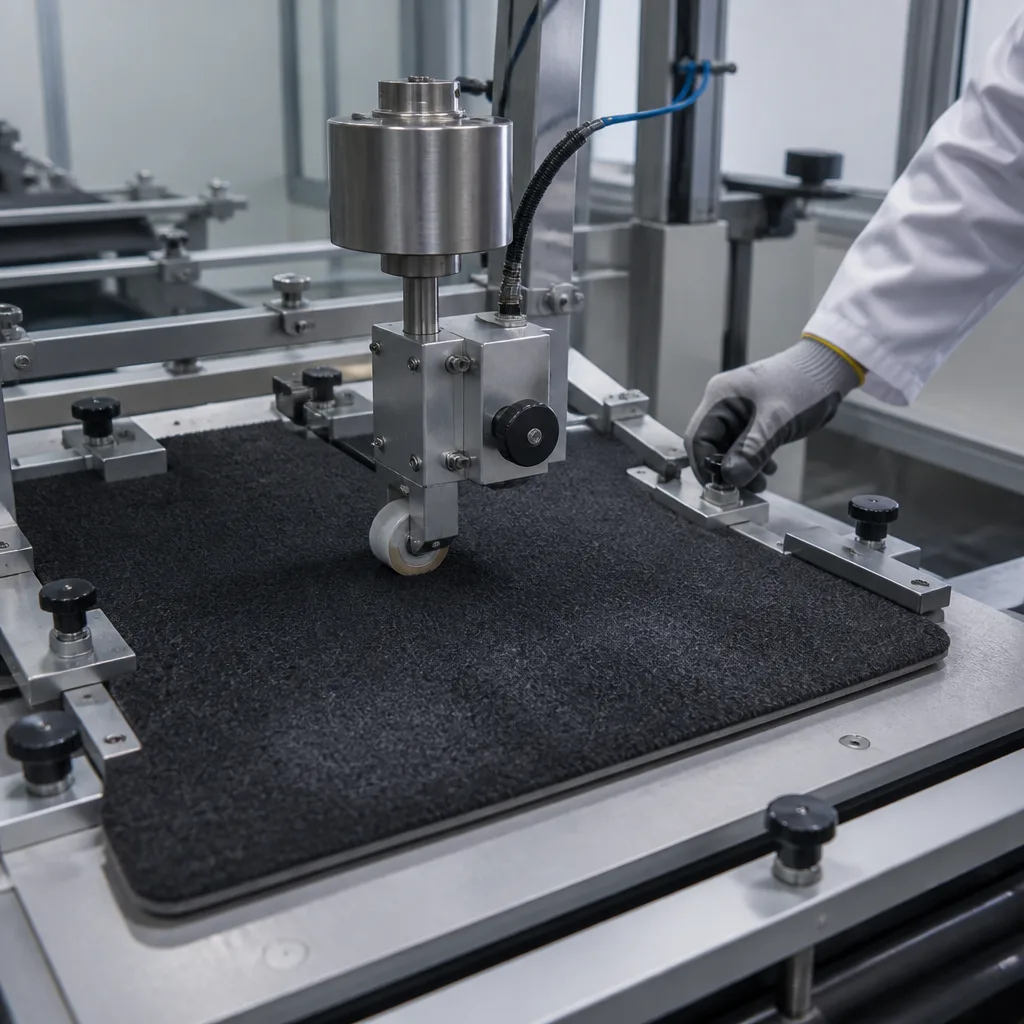
The “Fiat 7-M8603 Pre-shaped textile floor mats and wheel well panels made of composite sound insulation material - Abrasion resistance test” standard, developed by Fiat Chrysler Automobiles (FCA) (now Stellantis), an Italian-American automotive company, is an internal automotive material testing standard. This standard describes the method for determining the abrasion resistance of pre-shaped textile floor mats used in vehicle interiors.
Fiat 7-M8603 Textile Floor Mats and Wheelbase Panels - Abrasion Resistance Test

This standard is commonly referenced in FCA procurement and material qualification documents for the following products:

  • Floor carpets
  • Needle-punched textile mats
  • Wheel arch covers
  • Acoustic insulation panels
  • Luggage compartment linings
  • Composite textile interior parts

Vehicle interior textile components are commonly exposed to the following:

  • Constant pedestrian traffic
  • Dirt and abrasive particles
  • Load friction
  • Mechanical friction
  • Moisture and cleaning agents

The Fiat 7-M8603 standard is designed to evaluate how resistant these materials are to wear during prolonged vehicle use. This test ensures that interior textile systems maintain the following:

  • Surface appearance
  • Yapısal bütünlük
  • Acoustic performance
  • Quality as perceived by the customer.

This standard is particularly relevant to pre-shaped textile mats and wheel well panels made from composite sound insulation material.

The method described is primarily designed for the following purposes:

  • Pre-shaped carpet systems
  • Automotive fabrics punctured with needles
  • Composite textile-acoustic components
  • Thermoformed indoor mats
  • Nonwoven insulation materials

These materials are widely used because they provide the following:

  • Hafif yapı
  • Noise reduction
  • Cost efficiency
  • Passenger comfort
  • Thermal insulation

The Fiat 7-M8603 standard evaluates wear resistance against the following:

  • Wear
  • Surface degradation
  • Fiber loss
  • Layer separation
  • Visible damage
  • Tissue breakdown

FCA acceptance criteria generally require the fabric to be free from abrasion, which affects its surface structure properties.

Some FCA specifications refer to test conditions such as the following:

  • 1 kg applied load
  • 1000 wear cycles

The Fiat 7-M8603 standard is used for many types of automotive textiles, including:

  • Non-woven fabrics
  • Needlepoint rugs with a velvet effect
  • Twisted textile surfaces
  • Fluffy looped fabrics
  • Acoustic felt composites
  • Polypropylene carpet systems

The Fiat 7-M8603 standard is frequently used in conjunction with related FCA standards, including:

  • Fiat 7-M8601: Tensile strength determination
  • Fiat 7-M8606: Dimensional stability assessment
  • Fiat 7-M8607: Corrosion resistance test
  • Fiat 7-G2000: Combustion resistance of non-metallic materials.
  • Fiat LP-7M004: Wear resistance procedure reference.
  • Fiat LP-7M005: Lightfastness and weather resistance.
  • Fiat LP-7M028: Paint transfer and water resistance.

Together, these standards create a complete durability and quality verification system for FCA automotive interiors.

The described test method generally follows these steps:

  • Preparation of textile samples
  • Application of controlled abrasive action.
  • Samples subjected to repeated abrasion cycles
  • Examination of visual and structural damage.
  • Comparison of results with FCA acceptance criteria.

The following equipment is used during the test:

  • Wear wheels
  • Friction pads
  • Oscillating wear devices
  • Controlled mechanical loading

Materials approved using the Fiat 7-M8603 standard can be found in the following:

  • Passenger cars
  • SUVs
  • Vans
  • Commercial vehicles
  • Cargo area coverings
  • Indoor acoustic systems

This standard is becoming increasingly important as car manufacturers use more lightweight composites, recycled textiles, and integrated acoustic flooring systems.

The Fiat 7-M8603 standard is essential because it provides a standardized method for evaluating the abrasion resistance of automotive textile materials used in vehicle interiors. Without such testing, manufacturers would struggle to predict how carpets, floor mats, wheel arch liners, and acoustic insulation materials will perform over a vehicle's lifespan. This standard is considered important for the following reasons:

  • Ensures long-term durability: Indoor textile components are subjected to continuous mechanical stress due to the following reasons:
    • Passenger foot traffic
    • Load movement
    • Dirt and abrasive particles
    • Entering and exiting the vehicle repeatedly

This standard verifies that these materials can withstand repeated wear without excessive degradation, helping to prevent premature failure.

  • It preserves the vehicle's appearance: Customers often assess vehicle quality based on the condition of the interior. Excessive wear and tear can lead to:
    • Worn fibers
    • Surface abrasions
    • Tissue loss
    • Visible damage

This standard helps ensure that interior materials maintain an acceptable appearance throughout the vehicle's expected lifespan.

  • Maintains acoustic performance: Many automotive textile materials serve a dual purpose, acting as both decorative surfaces and sound-absorbing components. Excessive wear can negatively impact sound insulation, vibration damping, and cabin comfort. Tests conducted under this standard ensure that acoustic materials continue to perform effectively even after prolonged use.
  • It establishes consistent supplier requirements: Automotive manufacturers source materials from numerous suppliers worldwide. This standard ensures the following:
    • A common testing methodology
    • Standard admission criteria
    • Comparable performance data

This allows Fiat to consistently evaluate materials regardless of their supplier position.

  • Reduces warranty and quality issues: Prematurely worn materials can lead to customer complaints, warranty claims, replacement costs, and damage to brand reputation. By making compliance with this standard mandatory before production approval, Fiat can identify unsuitable materials in vehicles even during the development phase.
  • Supports lightweight and recycled materials: Modern vehicles are increasingly using lightweight nonwoven fabrics, recycled fiber composites, and advanced acoustic materials. These materials must provide comparable durability to conventional products. This standard helps verify that new material technologies meet the necessary wear performance standards.
  • Improves vehicle lifecycle performance: This standard contributes to the protection of:
    • Indoor quality
    • Material integrity related to security
    • Customer happiness
    • The remaining value of the vehicle over its lifespan.

In conclusion, the Fiat 7-M8603 standard is a specific automotive wear resistance testing standard for pre-shaped textile floor mats and interior composite materials. This specification plays a critical role in verifying the durability, appearance, and long-term performance of automotive interior textile systems. By establishing consistent wear resistance requirements, this standard supports vehicle quality assurance and supplier material qualification across both Fiat and FCA vehicle platforms.

For many years, our organization, with its competent and experienced staff, has been understanding the needs of its customers, providing the advanced testing services they require, and assisting them in the establishment, implementation, and improvement of management systems. Within this framework, we also provide testing services in accordance with the Fiat 7-M8603 standard.

WhatsApp

