

The “GMW 14701 Resistance of Coatings to Chemical Abrasion and Deterioration” standard, developed by General Motors Worldwide (GMW), defines test procedures for evaluating the resistance of automotive paint coatings and films to chemical attack, abrasion, degradation, and discoloration. This standard is specifically designed for coatings exposed to assembly plant chemicals and harsh outdoor conditions.
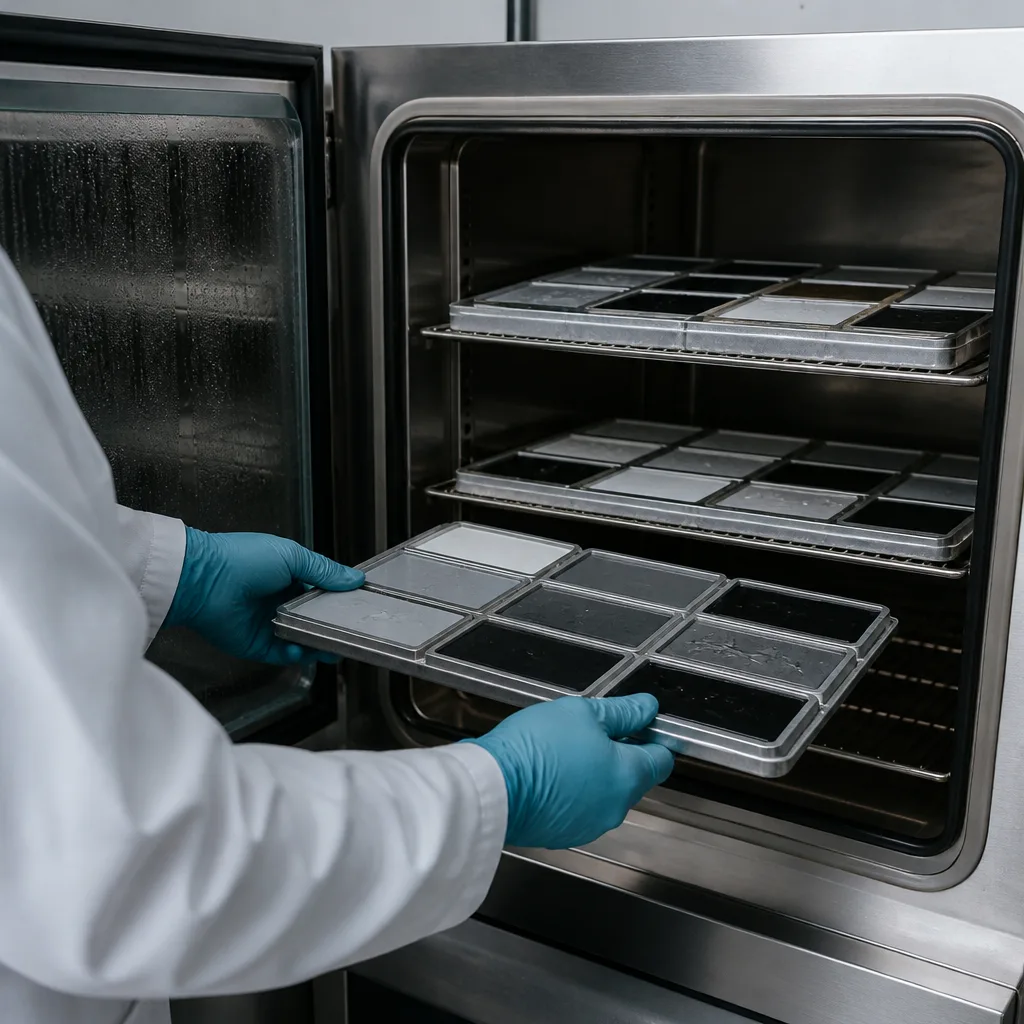
Automotive exterior coatings are exposed to many potentially aggressive substances during manufacturing, vehicle operation, cleaning, and environmental exposure. These may include:
The GMW 14701 standard is designed to determine whether this type of exposure leads to unacceptable changes in a coating. The main effects evaluated are:
The goal is to ensure that a coating maintains its required appearance and protective performance when subjected to representative chemical stresses.
The GMW 14701 standard applies specifically to paint coatings and films used on automotive components that may come into contact with chemicals during production or service. This standard defines the applicability of coatings that are particularly exposed to assembly plant chemicals or harsh outdoor conditions. This makes testing particularly important for the following areas:
The general principle is to expose a coated test specimen to specified chemical environments under controlled conditions and then evaluate the resulting surface condition. Chemical exposure can be carried out at different temperature conditions. This standard defines the following test methods:
Method 2 is defined as a chemical drop test at room temperature, while Method 3 is defined as a chemical drop test at high temperature.
The standard includes details such as specific chemicals, concentrations, exposure times, temperatures, sample preparation, and grading requirements.
Typical examples of chemical exposures reported in GMW 14701 standard applications include:
For example, a published coating study uses the GMW 14701 standard to evaluate the resistance of coated aluminum to acid rain, sulfuric acid, sodium hydroxide solution, engine oil, windshield washer fluid, brake fluid, and other automotive chemicals.
One of the key features of the GMW 14701 standard is its ability to evaluate chemical resistance at different temperatures.
In the room temperature method (Method 2), the coating is exposed to the specified chemical at room temperature. This represents chemical contamination occurring without significant additional heat. The test may reveal:
In the high-temperature method (Method 3), the coating is exposed to the specified chemical at a high temperature. This provides a more severe condition as the temperature can accelerate the interaction of the chemical with the coating. This is particularly useful for evaluating situations where a chemical contaminant comes into contact with a hot vehicle surface.
Following chemical exposure, the test specimen is examined for signs of coating degradation. Depending on the applicable procedure and specification, the assessment may include the following visual evaluations:
The goal is not simply to determine whether a chemical reacts with the coating, but to determine whether the resulting change is acceptable for an automotive coating system.
The GMW 14701 standard is important because automotive coatings must maintain their appearance and performance throughout the vehicle's lifespan. A vehicle's exterior may be exposed to the following chemicals:
Without adequate chemical resistance, a coating can develop permanent stains, abrasion, discoloration, or surface deformation. Therefore, the GMW 14701 standard helps manufacturers and suppliers in the following areas:
The GMW 14701 standard is particularly useful during the development and qualification of automotive paint systems. If a coating shows poor performance, engineers can examine the following:
This makes the standard useful not only for final quality control, but also for coating development and verification.
Meanwhile, materials supplied for testing under the GMW 14701 standard must comply with the requirements of the GMW 3059 standard, which includes requirements for restricted and reportable substances.
The main advantages of the GMW 14701 standard are as follows:
In conclusion, the primary purpose of the GMW 14701 standard is to determine whether exposure to specified chemicals (at room temperature or high temperature conditions) causes corrosion, deterioration, discoloration, or other unacceptable changes. Therefore, this standard plays a significant role in automotive paint development, supplier qualification testing, durability testing, and appearance quality control.
This standard is considered a chemical resistance and appearance durability test rather than a general corrosion test. In short, it helps answer the question: will the coating maintain an acceptable appearance when exposed to aggressive automotive and environmental chemicals?
For many years, our organization, with its competent and experienced staff, has been understanding the needs of its clients, providing the advanced testing services they require, and assisting them in the establishment, implementation, and improvement of management systems. Within this framework, we also provide testing services in accordance with the GMW 14701 standard.
To get an appointment, to get more detailed information or to request an evaluation, you can ask us to fill in our form and reach you.

