

The ASTM D2570 Standard Test Method for the Analysis of Chloride and Other Anions in Engine Coolant by Ion Chromatography, developed by the American Society for Testing and Materials (ASTM), describes a test method that evaluates the effect of circulating engine coolant on metal test specimens and automotive cooling system components under controlled, essentially isothermal laboratory conditions. This test method specifies the accepted test material, cooling system components, coolant type, and coolant flow conditions specific to current automotive use.
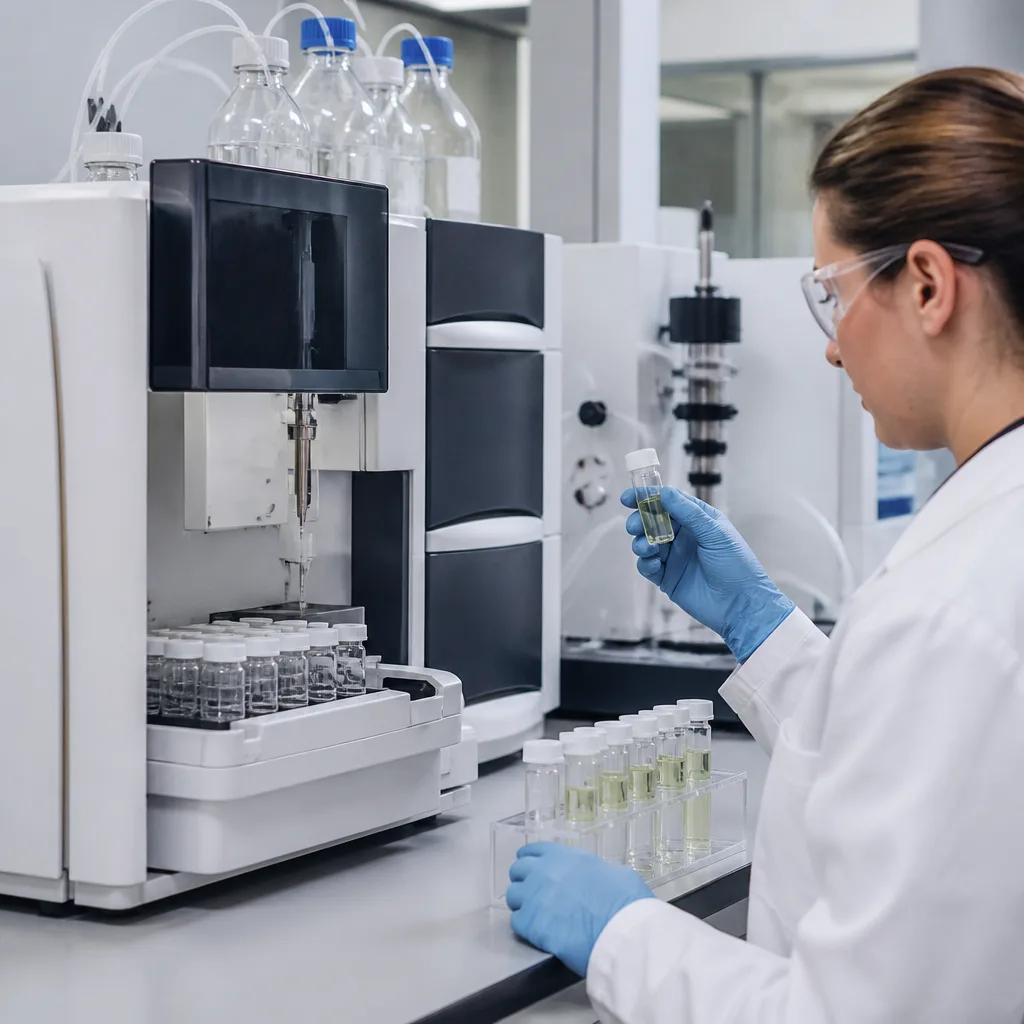
This testing method, by providing a closer approach to engine cooling system conditions, allows for better evaluation and selective screening of engine coolants compared to glassware testing (ASTM D1384 standard). The improvement is achieved through controlled coolant circulation, the use of automotive cooling system components, and a higher ratio of metal surface area to coolant volume.
While this test method provides better differentiation, it cannot accurately predict satisfactory corrosion prevention and service life. If greater assurance of satisfactory performance is desired, this should be obtained from full-scale engine testing (ASTM D2758 standard) and actual field testing in service (ASTM D2847 standard).
The ASTM D2570 standard incorporates an internationally accepted laboratory testing method. This standard evaluates the corrosion protection performance of engine coolants under simulated operating conditions very similar to those found in automotive cooling systems. It is widely used by coolant manufacturers, automotive original equipment manufacturers, testing laboratories, and chemical suppliers to assess the ability of antifreeze formulations to protect engine metals from corrosion.
Unlike simple immersion or glassware corrosion tests, the ASTM D2570 standard makes the results more representative of real-world engine operation by circulating coolant through a test setup that includes actual cooling system components.
The primary objectives of the ASTM D2570 standard are as follows:
This standard is designed as a screening and comparison test, rather than a complete prediction of field performance. Full engine and field tests may still be required for final product qualification.
Modern automotive cooling systems incorporate numerous metals, including:
Without effective corrosion inhibitors, coolant degradation can lead to the following:
The ASTM D2570 standard helps manufacturers verify that their coolant formulations provide adequate protection against these failure mechanisms.
The described test method evaluates corrosion by circulating test coolant through a laboratory device that replicates the operating environment of an engine cooling system. The circulating coolant is in constant contact with metal samples and actual cooling system components while operating under controlled temperature and flow conditions. At the end of the test, the metal samples are cleaned and weighed to determine mass loss due to corrosion. Visual inspection is also performed to determine the following:
A combination of quantitative and qualitative evaluation provides a comprehensive assessment of coolant performance.
The following test equipment is typically used in the tests:
The system is designed to maintain stable operating conditions throughout the test.
The ASTM D2570 standard evaluates metals used in automotive cooling systems. For example,
Samples are carefully prepared before testing and weighed with high precision before and after exposure.
This test method is generally used to check the following:
Tight control of these variables ensures reproducible and comparable results across laboratories. Corrosion performance after exposure is evaluated as follows:
The ASTM D2570 standard is widely used in the following areas:
The ASTM D2570 standard is widely used, along with various related coolant standards, including:
The ASTM D2570 standard is valuable in many industries:
In conclusion, the ASTM D2570 standard is one of the most important laboratory methods for evaluating the corrosion protection performance of engine coolants under simulated service conditions. By circulating coolant through a controlled test system very similar to an automotive cooling circuit, it provides a more realistic assessment than simple static corrosion tests.
For many years, our organization, with its competent and experienced team, has been understanding the needs of its clients, providing the advanced testing services they require, and assisting them in the establishment, implementation, and improvement of management systems. Within this framework, we also provide testing services in accordance with the ASTM D2570 standard.
To get an appointment, to get more detailed information or to request an evaluation, you can ask us to fill in our form and reach you.

