

Developed by Fiat Chrysler Automobiles (FCA) (now Stellantis), an Italian-American automotive company, the “Fiat 50451 Accelerated Aging in Sunlight” standard is an automotive materials testing specification designed to evaluate the resistance of vehicle interior materials to accelerated sun exposure. This standard is widely used in the automotive industry to simulate long-term sun aging effects on components such as plastics, fabrics, leather, coated surfaces, and interior upholstery materials. It helps manufacturers ensure that the appearance, color stability, and mechanical performance of vehicle interiors are maintained throughout the vehicle's lifespan.
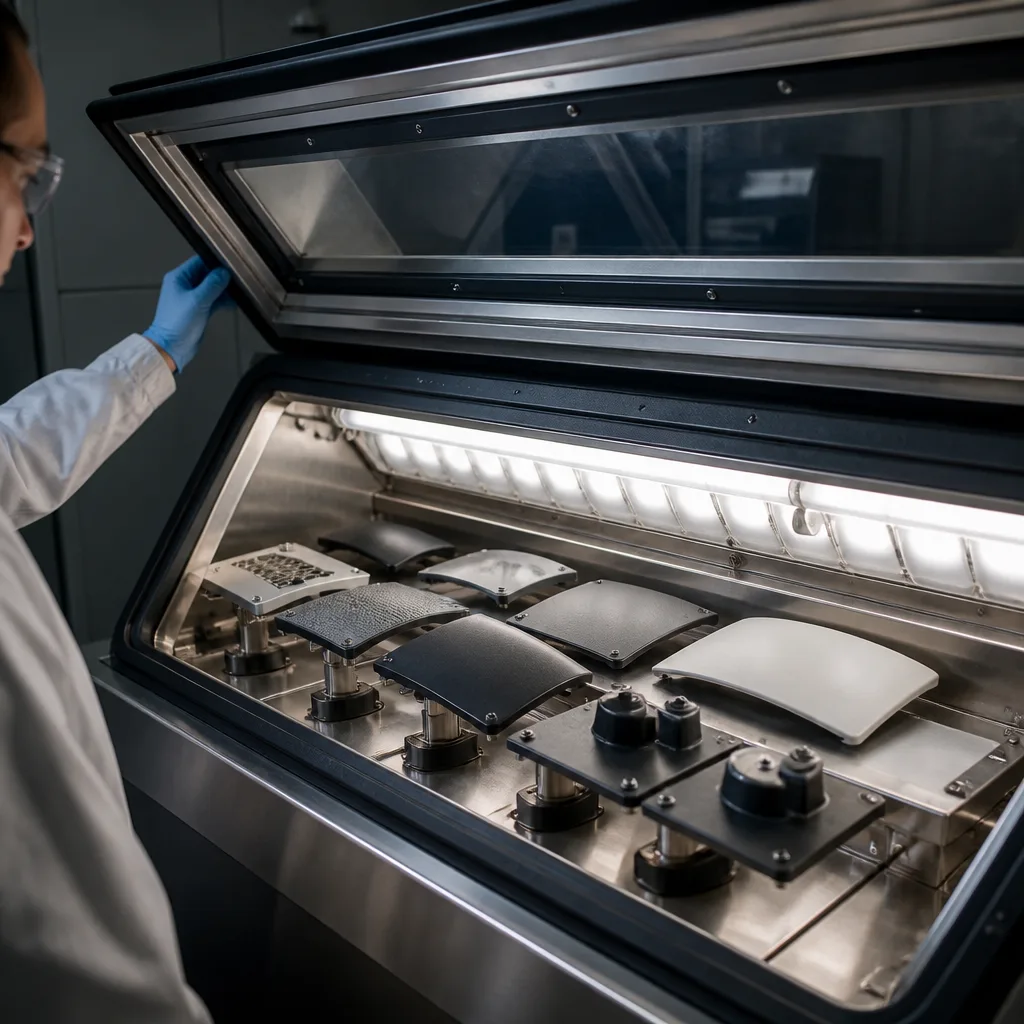
Vehicle interiors are constantly exposed to sunlight, heat, ultraviolet (UV) radiation, and humidity. Over time, these environmental conditions can cause:
The Fiat 50451 standard was created to reproduce these aging effects in controlled laboratory conditions over a much shorter period than natural outdoor exposure. This allows engineers and suppliers to assess material durability before mass production.
This standard applies primarily to:
This standard is generally referenced along with other Fiat automotive material specifications for the verification of complete internal systems.
The Fiat 50451 standard includes accelerated aging procedures using artificial light sources that simulate solar radiation. Two main commonly used methods are defined:
Test conditions vary depending on the component's location within the vehicle and the expected exposure intensity. Typical exposure times are as follows:
The environmental factors monitored during the test were as follows:
The intensity level is selected according to the intended use of the material.
After exposure, materials are examined for the following:
Color variations are generally evaluated using grayscale comparison methods or spectrophotometric measurements. Materials must remain within acceptable limits as defined by Fiat engineering requirements.
The Fiat 50451 standard is comparable to various international automotive weather resistance standards, including:
Many xenon weather resistance test chambers are specifically designed to support the Fiat 50451 test.
The Fiat 50451 standard is necessary because automotive interior materials are constantly exposed to harsh environmental conditions, particularly sunlight, ultraviolet (UV) radiation, and heat. Without proper validation testing, vehicle interiors can rapidly deteriorate during normal use. The main reasons why this standard is important are as follows:
In conclusion, the Fiat 50451 standard is a critical automotive environmental durability standard used to evaluate how interior materials withstand prolonged exposure to sunlight. By simulating years of UV and thermal aging under laboratory conditions, this standard helps automotive manufacturers ensure long-term appearance preservation, material stability, and customer satisfaction. This standard remains a fundamental validation method for automotive interiors and coated components used in modern vehicles.
For many years, our organization, with its competent and experienced staff, has been understanding the needs of its customers, providing the advanced testing services they require, and assisting them in the establishment, implementation, and improvement of management systems. Within this framework, we also provide testing services in accordance with the Fiat 50451 standard.
To get an appointment, to get more detailed information or to request an evaluation, you can ask us to fill in our form and reach you.

