

The “Ford FLTM BN 115-07 Compression Permanent Deformation of Polyurethane Foam” standard, developed by Ford Motor Company (Ford), describes a test method used to determine the compression permanent deformation of seat-grade polyurethane foam. This method measures the ability of foam materials to recover their original thickness after being compressed for a specific period under controlled conditions. It is primarily applied to automotive seat cushions, headrests, armrests, and other interior foam components.
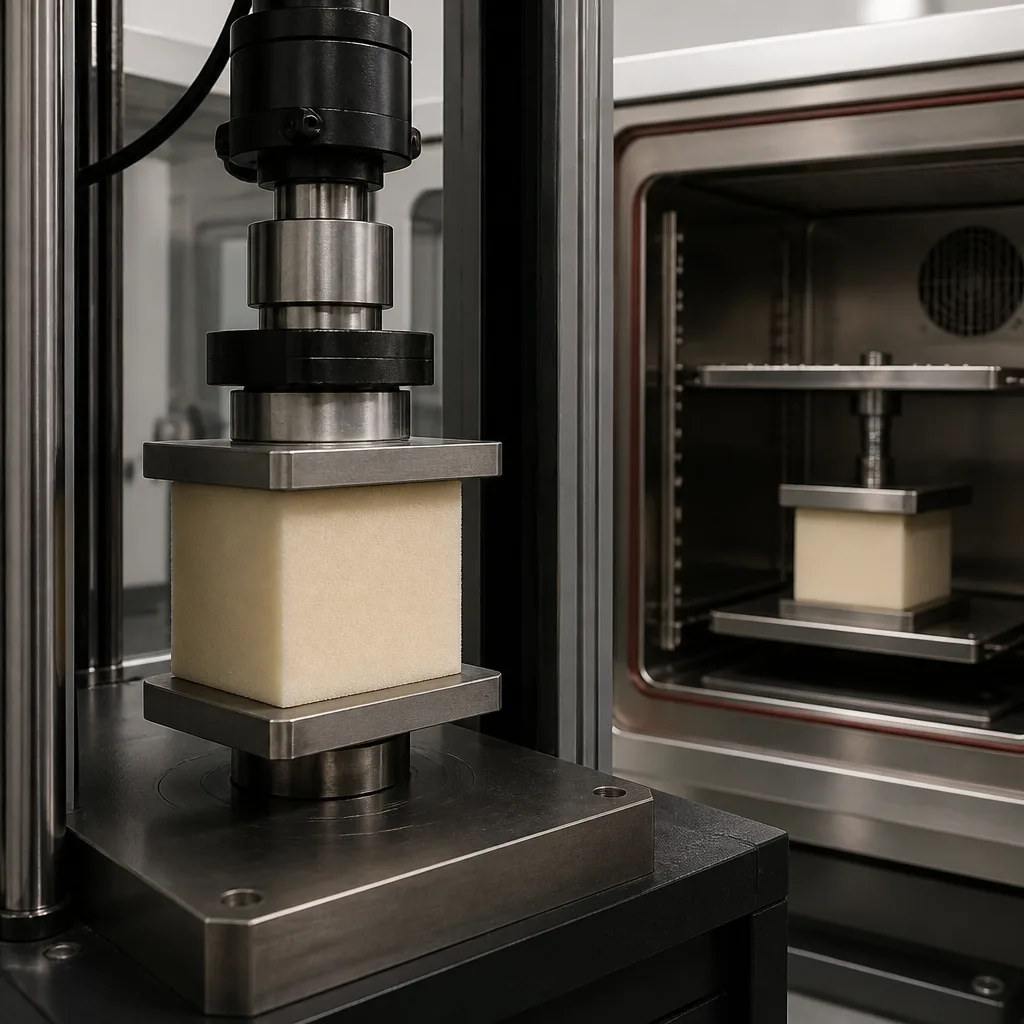
Polyurethane foam is widely used in vehicle seat systems due to its comfort and energy-absorbing properties. During vehicle use, the seat foam is repeatedly subjected to the weight of the passenger and prolonged loading. If the foam does not return to its original shape properly after compression, it can become permanently deformed, reducing comfort and support.
The Ford FLTM BN 115-07 standard evaluates the following aspects:
In this method, a foam sample is compressed to a predetermined deflection and held in this state for a specific time and temperature. After the load is removed and the sample is allowed to return to its original state, the remaining deformation is measured. The result is reported as a percentage of the compression residual deformation, representing the amount of residual deformation relative to the original deflection. A lower compression residual deformation value indicates better recovery and higher material elasticity.
Typical evaluation parameters include:
The Ford FLTM BN 115-07 standard is commonly used in the following areas:
The Ford FLTM BN 115-07 standard is often used in conjunction with other foam evaluation methods, such as those listed below:
Together, these tests provide a comprehensive evaluation of the performance of polyurethane foam in automotive seat applications.
The Ford FLTM BN 115-07 standard is considered important because it evaluates whether foam materials can regain their original shape after prolonged compression. This standard verifies the flexibility and recovery properties of polyurethane foam used in automotive interiors. In automotive seating systems, this property directly affects comfort, durability, and perceived vehicle quality. This standard is considered necessary for the following reasons:
This standard helps ensure that the seat foam remains comfortable for the life of the vehicle.
This testing method identifies materials that are likely to deform during use by measuring the permanent thickness loss after compression.
In conclusion, the Ford FLTM BN 115-07 standard is a critical quality and durability test for automotive seat materials. By measuring the remaining permanent deformation after controlled compression, this method ensures that polyurethane foams maintain their comfort, flexibility, and structural integrity throughout the vehicle's lifespan. This standard plays a vital role in material qualification, supplier verification, and long-term seat performance validation.
For many years, our organization, with its competent and experienced staff, has been understanding the needs of its customers, providing the advanced testing services they require, and assisting them in the establishment, implementation, and improvement of management systems. Within this framework, we also provide testing services to businesses in accordance with the Ford FLTM BN 115-07 standard.
To get an appointment, to get more detailed information or to request an evaluation, you can ask us to fill in our form and reach you.

