

The standard "VW PV 3919 Non-woven and PUR foam sound insulation - Determination of compressive stress," developed by Volkswagen Automobiles, describes the procedure for determining the compressive stress (cushion gap) and thickness reduction of sound insulation and sound-absorbing materials after a load is applied. This standard places particular emphasis on non-woven fabrics bonded with fusible fibers (optionally with foam particles) and sandwich sound-absorbing systems with or without a self-adhesive coating (e.g., thick-film non-woven fabric).
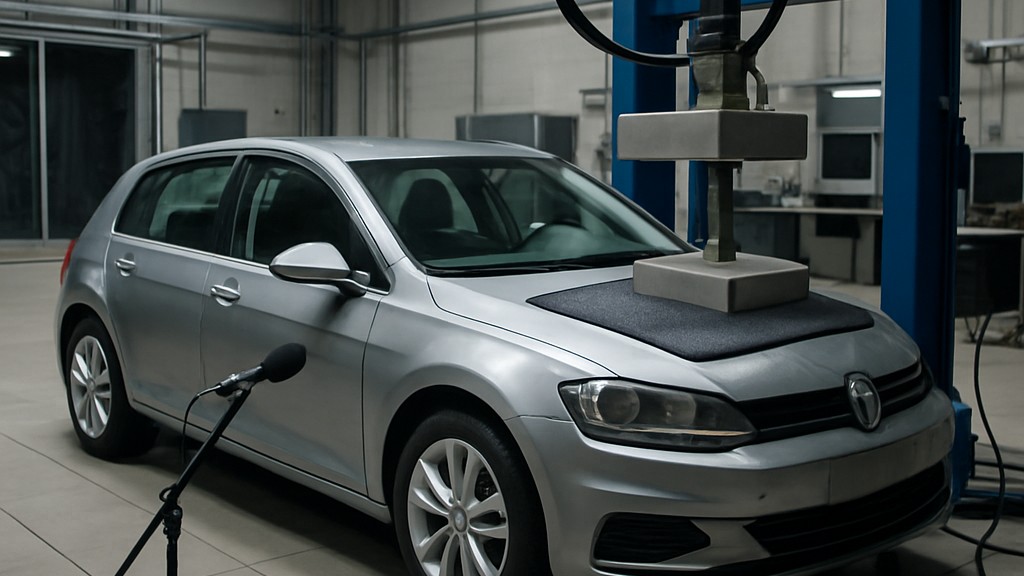
This standard is also applicable to polyurethane (PUR) foams and foam-backed sandwich designs (e.g., heavy ply, foam-backed).
Compressive stress also shows the functional dependence between the compressive load and the deformation (change in thickness or height) resulting from pressure.
This is a measure of both the load-carrying capacity when stepped on and the absorption behavior required for acoustic reasons. For compressive stress testing, three test methods can be used, depending on the type of specimen used:
The preferred testing method is non-destructive testing on the entire part. If insufficient material is available for testing the entire part, testing on a segment of the part (composite material) is used. This must be noted in the test report.
This standard is applicable to prototype parts and production conformity monitoring tests.
Volkswagen's PV 3919 standard is a critical testing specification used in the automotive industry to assess the suitability of nonwoven fabric materials used for vehicle sound insulation. This standard focuses specifically on determining the compressive stiffness (also called compressive stress) and thickness reduction of nonwoven fabric components. These properties are essential to ensure that materials used for sound dampening in vehicles, such as interiors or underbody components, meet Volkswagen's stringent performance and durability requirements.
Nonwoven fabrics are widely used in automotive applications to provide acoustic insulation by reducing noise, vibration, and harshness in the vehicle cabin. The PV 3919 standard ensures that these materials can withstand mechanical stresses such as compression while maintaining their structural integrity and acoustic performance. By measuring compression stiffness and thickness reduction, this standard verifies that the materials can withstand the physical demands of automotive environments, including the repeated loading and unloading during vehicle operation.
The main objectives of the PV 3919 standard are:
The PV 3919 standard outlines a precise procedure for testing nonwoven fabric samples. Samples are typically 30 mm x 30 mm in size and have a minimum thickness of 10 mm. To ensure statistical reliability, a minimum of five samples are tested. Samples are prepared according to Volkswagen's specifications and shipped to testing facilities with detailed instructions to ensure consistency. Testing on samples is permitted only after consultation with the purchaser. For all tests, samples must be conditioned for at least 24 hours in a standard atmosphere (23 degrees Celsius and 50 percent relative humidity) in accordance with VW 50554 before testing.
The test procedure was determined as follows:
This standard specifies environmental conditions, such as temperature and humidity, to ensure consistent and reproducible results. Depending on the specific application of the material, deviations from the standard test conditions may be specified in Volkswagen technical supply specifications or drawings.
The PV 3919 standard is a vital component of Volkswagen's quality assurance process for automotive materials. Nonwovens tested under this standard are typically used in:
By adhering to this standard, manufacturers can ensure their materials meet Volkswagen's performance expectations, contributing to improved noise, vibration, and harshness characteristics, enhanced vehicle durability, and compliance with industry regulations.
Consequently, the VW PV 3919 standard plays a key role in ensuring the quality and durability of nonwoven fabrics used for sound insulation in automotive applications. Through compression stiffness and thickness reduction tests, this standard verifies that materials can withstand mechanical stress while maintaining their acoustic performance. Accredited testing facilities worldwide support manufacturers in meeting these requirements, contributing to the production of high-quality vehicles with superior noise, vibration, and harshness characteristics.
Our organization, which has been serving for many years and meticulously following global developments in science and technology, employs a team of experienced professionals and a broad infrastructure to conduct testing, measurement, and analysis in a wide range of areas for businesses across all sectors. In this context, we also provide testing services in accordance with the "VW PV 3919 Non-woven and PUR foam sound insulation - Determination of compressive stress" standard.
To get an appointment, to get more detailed information or to request an evaluation, you can ask us to fill in our form and reach you.

