

The “Fiat CS-A0228 Odor Assessment of Parts, Components and Assemblies” standard, developed by Fiat Chrysler Automobiles (FCA) (now Stellantis), an Italian-American automotive company, describes an odor assessment test method for parts, components, and assemblies used in vehicle interiors and other applications. This standard focuses specifically on evaluating and controlling unpleasant odors (volatile organic compounds, VOCs) that materials may emit, particularly under conditions of heat, humidity, or aging. This is crucial for passenger comfort and brand perception in modern vehicles.
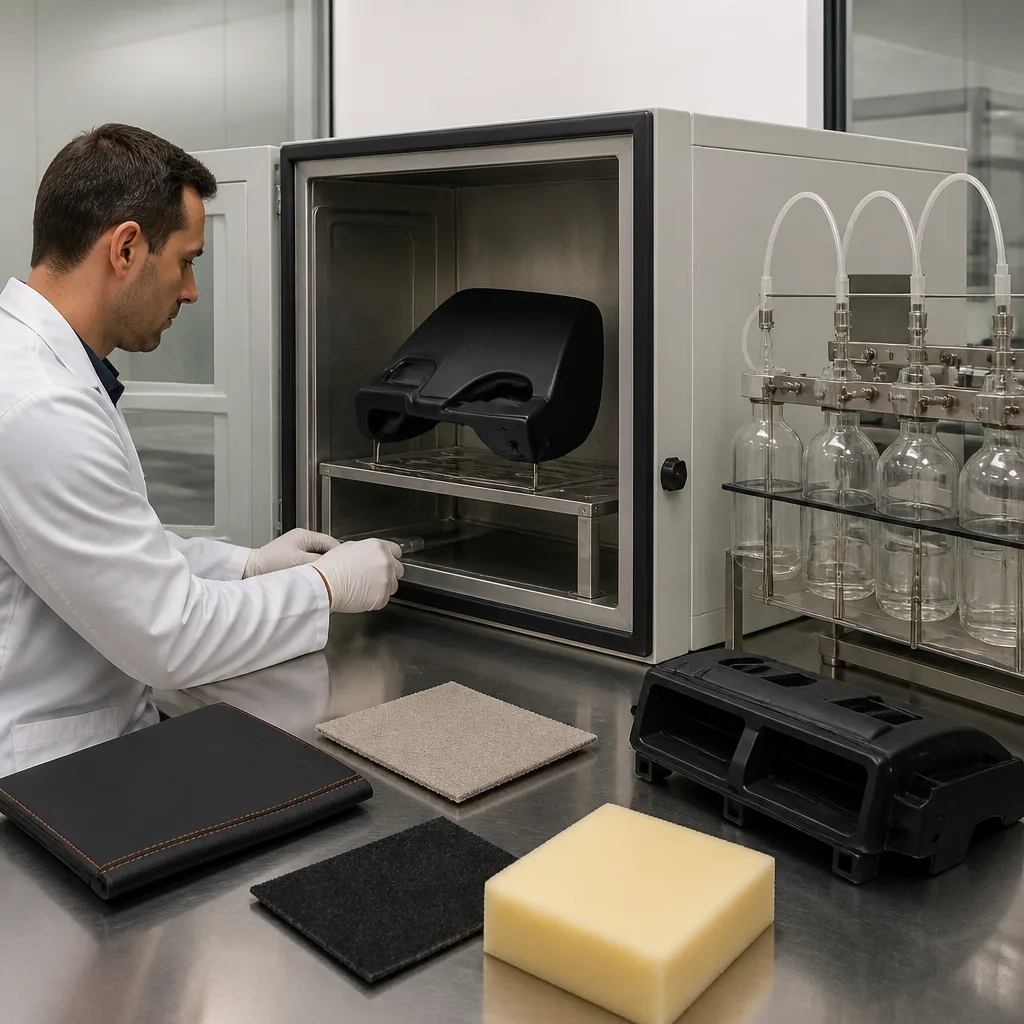
Vehicle interiors contain many materials such as plastics, foams, adhesives, fabrics, and coatings. These can emit odors over time, especially in warm climates or when they are new. The Fiat CS-A0228 standard establishes a standardized method for these:
This standard is commonly referenced in material approval processes for interior trim, instrument panels, seats, headliner, and other cabin components.
This method essentially follows these steps:
Because olfactory perception cannot be fully measured solely through instrumentation, human sensory panels are often used. Evaluators may score samples according to the following criteria:
The interior quality of a vehicle greatly influences customer perception. Even if a vehicle meets all mechanical and safety requirements, unpleasant interior odors can negatively affect the perceived quality.
This standard often appears alongside the Fiat CS-A0806 standard (large bag odor assessment) and other original equipment manufacturers' odor protocols (e.g., VDA 270, GMW3205, SAE J1351 standards). Accredited laboratories for automotive testing list the Fiat CS-A0228 standard among their odor testing capabilities.
In short, the Fiat CS-A0228 standard is applied in material qualification and quality assurance processes to ensure that interior vehicle components do not create unpleasant or excessive odors in the passenger cabin.
Because modern vehicles contain large amounts of polymers, adhesives, foams, textiles, coatings, sealants, and composite materials, automotive odor standards have become increasingly important. These materials can release volatile organic compounds (VOCs) or semi-volatile compounds during manufacturing or vehicle operation, especially at high temperatures.
The primary purpose of the Fiat CS-A0228 standard is to evaluate the sensory impact of materials and components installed in vehicles. This standard helps manufacturers in the following areas:
This standard generally applies to the following:
The following material categories are commonly evaluated under odor standards such as Fiat CS-A0228:
Odor tests are generally used in conjunction with the following:
While VOC analysis utilizes laboratory instruments such as gas chromatography, odor assessment involves human sensory response, which the instruments cannot fully predict. However, odor testing presents several technical challenges:
Because of these factors, automotive manufacturers often use trained odor control panels and controlled laboratory conditions.
As automotive interiors increasingly utilize lightweight polymers, recycled materials, and bio-based compounds, odor control standards have become even more important. Electric vehicles also enhance odor sensitivity because quieter cabins make passengers more responsive to indoor environmental quality.
Therefore, standards like Fiat CS-A0228 directly contribute to the following:
The Fiat CS-A0228 standard is considered important because it helps manufacturers in the following areas:
In conclusion, the Fiat CS-A0228 standard is a significant automotive interior quality standard focusing on the odor assessment of vehicle components and parts. This specification supports passenger comfort, cabin air quality, and overall perceived vehicle quality by controlling undesirable odors originating from automotive materials. As vehicle interiors become more complex and reliance on synthetic materials increases, this and similar standards play a critical role in the automotive sector in terms of supplier competence, material approval, and long-term customer satisfaction.
For many years, our organization, with its competent and experienced staff, has been understanding the needs of its customers, providing the advanced testing services they require, and assisting them in the establishment, implementation, and improvement of management systems. Within this framework, we also provide testing services in accordance with the Fiat CS-A0228 standard.
To get an appointment, to get more detailed information or to request an evaluation, you can ask us to fill in our form and reach you.

