

Developed by General Motors Worldwide (GMW), the “GMW 15790 Assessment of Resistance of Plastics to Chemical Reagents” standard is a test standard used to evaluate the resistance of plastic materials to chemical reagents. This standard is particularly important for automotive plastics that may come into contact with fuels, cleaning products, cosmetics, lubricants, and other chemicals during vehicle manufacturing or servicing.
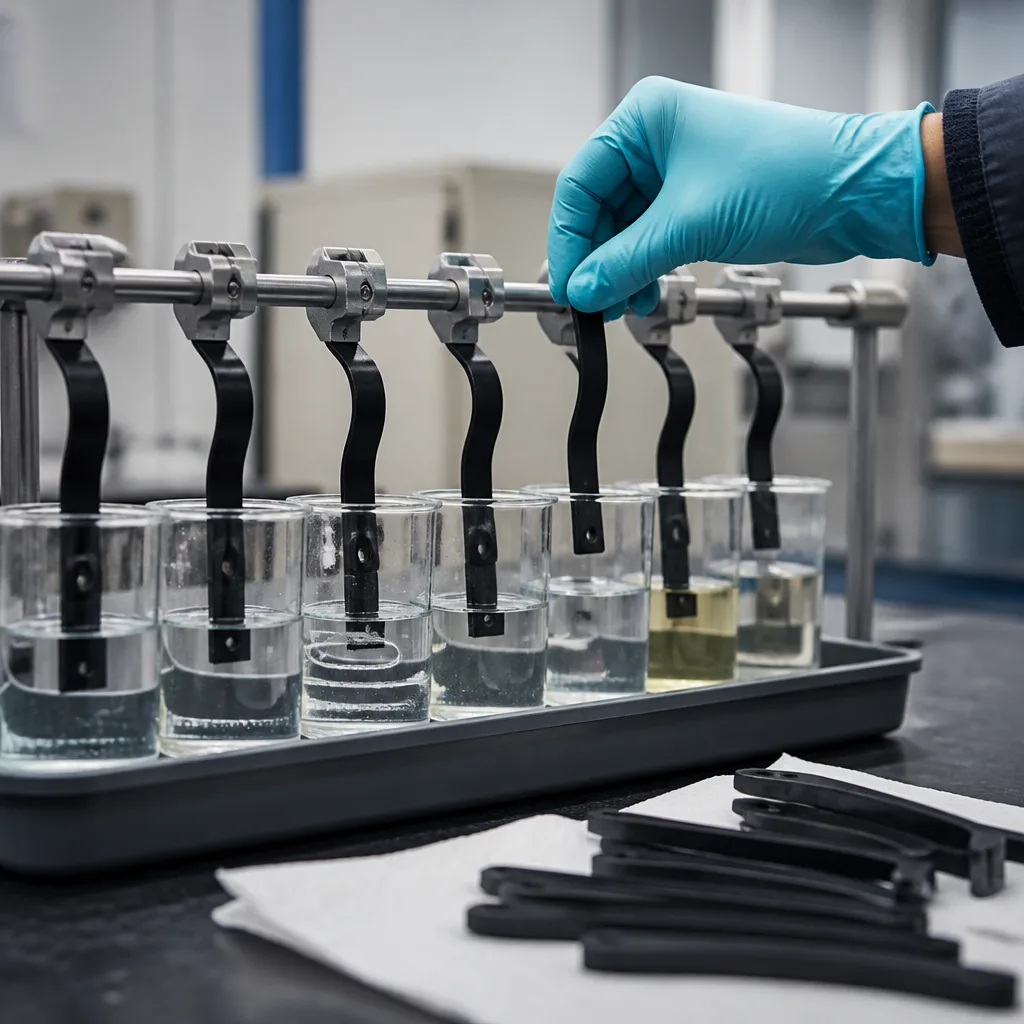
GMW 15790 standard is related to stress cracking using the twisted strip method and is closely related to ASTM D543 Standard practices for the assessment of the resistance of plastics to chemical reagents.
The primary purpose of the GMW 15790 standard is to determine whether exposure to specified chemicals causes degradation or environmental stress cracking in plastic materials. A plastic component may appear mechanically acceptable under normal conditions, but may crack when simultaneously exposed to the following factors:
Therefore, the test helps determine whether the plastic material is suitable for its intended automotive application.
During testing, the principle is to use a twisted strip configuration to subject the plastic sample to controlled tension. The stretched sample is then exposed to specific chemical reagents. Following exposure, the sample is examined for signs of chemical attack or stress cracking. Typical observations may include:
The twisted strip approach is particularly useful because it evaluates chemical resistance while the material is under mechanical stress. This combination can lead to environmental stress cracking.
The GMW 15790 standard primarily deals with plastic materials used in automotive applications. Depending on the applicable vehicle program or material specification, the procedure may be applied to plastics used for components such as:
The exact plastic grades, chemical reagents, exposure conditions, sample dimensions, and acceptance criteria are typically determined by the relevant General Motors material or component specification.
Automotive plastics can come into contact with many different chemicals during manufacturing, vehicle use, cleaning, and maintenance. Examples include:
A material that performs well in traditional mechanical tests may still crack after chemical exposure. The GMW 15790 standard aims to detect such failures.
One of the most important phenomena addressed by these types of tests is environmental stress cracking. Environmental stress cracking occurs when a sensitive material is exposed to a specific chemical while under tensile or residual stress, resulting in cracks forming in the polymer. The chemical does not need to dissolve the plastic. Instead, it can interact with the polymer, reducing its resistance to crack formation and growth.
This makes the GMW 15790 standard particularly important for molded automotive components, as injection molding, assembly, clips, fasteners, and service loads can apply stress to plastic parts.
In general, the testing process follows these steps:
Therefore, the process is not simply a chemical immersion test; the material is evaluated while being subjected to controlled mechanical stress.
The evaluation of the results generally focuses on whether chemical exposure has caused unacceptable damage to the plastic. Depending on the applicable specification, the evaluation may include visual inspection for the following aspects:
It is important to distinguish between chemical discoloration and stress cracking. While a material can change its appearance without structural damage, a seemingly small crack can represent a significant loss of strength.
The GMW 15790 standard is important because automotive plastics must remain reliable when exposed to both chemical substances and mechanical stresses. This standard helps manufacturers in the following areas:
Particularly for automotive interior components, chemical exposure can occur from cleaners, hand creams, cosmetics, food residues, and other substances. Exterior components, on the other hand, may come into contact with fuels, oils, lubricants, and environmental pollutants.
The GMW 15790 standard is related to the ASTM D543 standard. Therefore, testing laboratories define the procedure as GMW 15790 / ASTM D543, but both standards should not be automatically considered the same for every requirement.
General Motors standards may include automotive-specific requirements relating to sample preparation, exposure conditions, evaluation, or acceptance criteria. Consequently, if a drawing, material specification, or verification plan specifically requires the GMW 15790 standard, the relevant GMW standard requirements must be followed.
In automotive material development, the GMW 15790 standard can be incorporated into the material development process before a plastic is approved for manufacturing. A typical development sequence might include: material selection, chemical compatibility testing, stress crack assessment, mechanical testing, environmental testing, component verification, and manufacturing approval. This approach helps ensure that a plastic not only meets its initial mechanical requirements but also remains durable under realistic service conditions.
In conclusion, the importance of the GMW 15790 standard stems from the fact that automotive plastic components are often subjected to mechanical or residual stresses simultaneously with chemical exposure. The described test method, by intentionally combining chemical exposure with controlled stress, can reveal susceptibility to environmental stress cracking that might not be detectable by ordinary mechanical or chemical resistance tests. Therefore, for automotive manufacturers and suppliers, the GMW 15790 standard is a valuable tool for plastic material selection, chemical compatibility assessment, durability verification, and prevention of premature component failure.
For many years, our organization, with its competent and experienced staff, has been understanding the needs of its clients, providing the advanced testing services they require, and assisting them in the establishment, implementation, and improvement of management systems. Within this framework, we also provide testing services in accordance with the GMW 15790 standard.
To get an appointment, to get more detailed information or to request an evaluation, you can ask us to fill in our form and reach you.

