

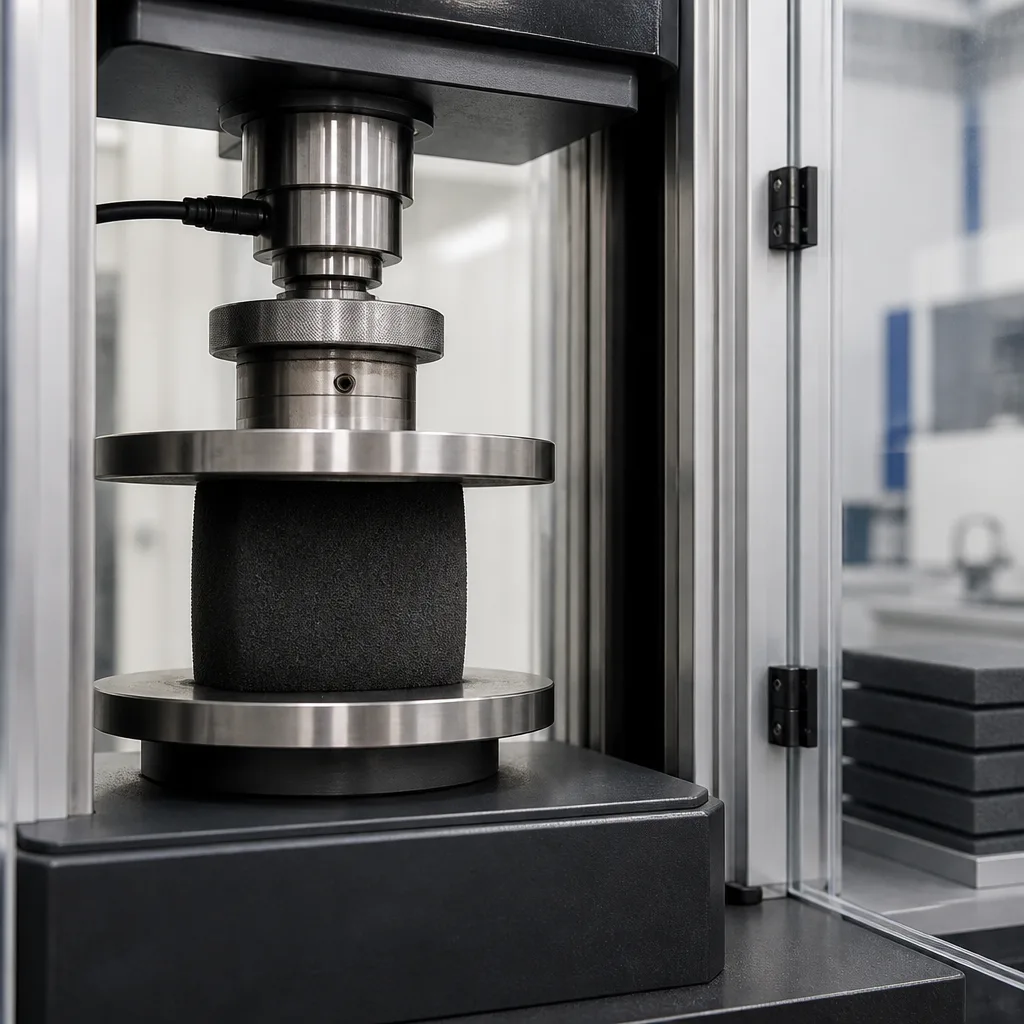
Developed by Fiat Chrysler Automobiles (FCA) (now Stellantis), an Italian-American automotive company, the “Fiat 50423 Compression-strain, compression/tensile permanent deformation and apparent density test of expanded cellular materials” standard is an internal technical standard designed to evaluate the physical and mechanical properties of expanded cellular materials (e.g., polyurethane foams, sponges, and other foam-based components used in automotive interiors, seats, seals, and fillings).
The most frequently referenced sections of this standard are:
Compression deflection is a common mechanical property evaluation method used in automotive, textile, foam, rubber, and polymer testing. This method involves a procedure to measure how a material deforms when subjected to a compressive load. This test is particularly important for:
Compression deflection measures the force required to compress a material by a specific percentage of its original thickness. This test evaluates the following:
Simply put, this test determines how soft or hard a material is under pressure.
Pressure testing is a procedure commonly used to evaluate how a material or component behaves when subjected to compressive force. Pressure testing is commonly used in the following areas:
The aim is to measure the mechanical response of a material under controlled loading conditions. This determines properties such as:
This method helps engineers understand whether a material can maintain its intended function during long-term vehicle use.
These tests help ensure that the materials used in vehicles (such as seat cushions, headrests, armrests, sound insulation, or sealing elements) maintain their comfort, durability, safety, and performance over time.
This standard is considered important in the automotive industry for the following reasons:
The Fiat 50423 standard is often listed in laboratory test menus along with other material specifications. For example,
This standard is part of Fiat’s broader material specification system and is often referenced in technical data sheets or supplier contracts. It is compatible with international standards such as ASTM D3575, but includes parameters specific to Fiat for automotive use.
For materials engineers, suppliers, and businesses developing foam products for the automotive industry, the Fiat 50423 standard ensures that materials meet the demanding requirements of modern vehicle manufacturing.
In short, the Fiat 50423 standard is one of the supplier-focused standards commonly used to verify the durability of materials, interior trim, coatings, plastics, adhesives, textiles, and components for Fiat vehicles. Fiat engineering standards generally serve the following purposes:
These standards are generally referenced in the following situations:
Compliance with the Fiat 50423 standard is crucial for suppliers because Fiat uses this standard to ensure components meet durability and quality expectations throughout the vehicle's lifecycle.
The Fiat 50423 standard is necessary because of the role each vehicle component plays in ensuring reliable operation throughout the vehicle's lifespan. This standard is crucial for automotive development, supplier management, and product validation. It is considered important for the following reasons:
In conclusion, the Fiat 50423 standard is Fiat's internal engineering standard and is used to define performance, durability, environmental resistance, or quality verification requirements for automotive components and materials. This standard plays a significant role in supplier qualification, vehicle reliability, and manufacturing consistency within the automotive industry.
For many years, our organization, with its competent and experienced staff, has been understanding the needs of its customers, providing the advanced testing services they require, and assisting them in the establishment, implementation, and improvement of management systems. Within this framework, we also provide testing services in accordance with the Fiat 50423 standard.
To get an appointment, to get more detailed information or to request an evaluation, you can ask us to fill in our form and reach you.

