

The “Fiat 50184 Environmental testing requirements for non-metallic materials (paints, enamels, etc.)” standard, developed by Fiat Chrysler Automobiles (FCA) (now Stellantis), an Italian-American automotive company, describes the following four methods:
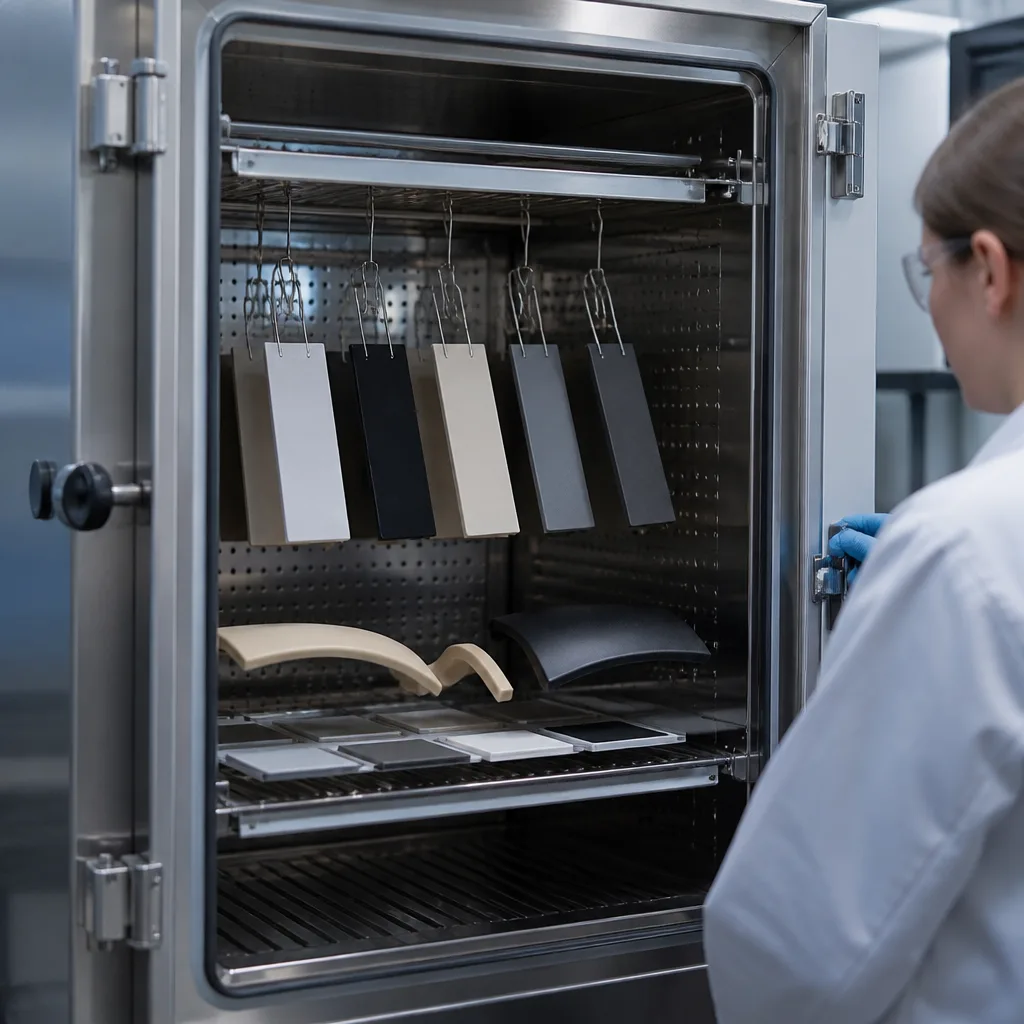
The purpose of this standard is to define the methods and equipment for environmental testing and to specify the application areas of various environmental tests. This standard supersedes standards 50472, 50474, and 50514 and replaces standard 50413.
This method is commonly used in the characterization of automotive interior and upholstery materials, particularly where resistance to environmental or mechanical aging needs to be verified before production approval. The primary purpose of this method is to evaluate how a material or component behaves under a defined test condition.
Depending on the component family and revision level, Method A is generally associated with the following evaluations:
This method helps determine whether a component can maintain its required properties throughout the expected service life of the vehicle.
Fiat 50184 Method A is applicable to the following:
These tests are particularly important for the following factors to which passenger compartment components are exposed:
Sample preparation: This standard specifies sample dimensions, conditioning requirements, cleaning procedures, pre-aging requirements, and the number of samples. Conditioning is typically performed in a controlled laboratory environment, such as:
Test procedure: Method A generally describes the following:
Depending on the application, the procedure includes the following:
Evaluation criteria: After the test, the components are examined in terms of the following:
Measurements include the following:
This method is used to evaluate the durability and performance of automotive materials, coatings, trim components, or parts under specific environmental and operational conditions. The primary objective of this method is to determine whether a material or component can maintain its properties after being subjected to specified stress conditions.
This method helps identify components that may fail prematurely in real vehicle service environments.
Fiat 50184 Method B is applicable to the following:
This method can assess resistance to the following:
Method B is designed to simulate more severe or alternative working conditions than Method A.
Before testing, samples are prepared in a controlled laboratory environment, usually under the following conditions:
This method typically exposes samples to controlled stress conditions such as the following:
Exposure times can vary from a few hours to several days, depending on the type of component.
Following exposure, the components are evaluated in terms of the following aspects:
Measurements include the following:
The aim of this method is to verify that automotive materials or components can withstand specified environmental and operational stresses without unacceptable degradation. This method is designed to evaluate the following characteristics:
Method C is often used when components need to be validated under more demanding or alternative test conditions than those defined in Methods A or B.
Method C is applicable to a wide variety of automotive interior and trim materials, including:
Automotive components are constantly exposed to harsh environmental conditions during vehicle operation. This method is designed to simulate the following conditions:
These simulations help engineers predict real-world service behavior.
For the sample preparation process, this standard generally specifies the following:
Conditioning is generally carried out under the following laboratory conditions:
Method C involves one or more of the following stress conditions:
Exposure time depends on the component category and requirements.
After testing, the components are examined for signs of deterioration such as:
Assessment methods include the following:
The purpose of this method is to verify that a material or component maintains acceptable performance and appearance after being subjected to specified test conditions. This method is designed to evaluate the following aspects:
This method is typically used when components need to be validated under conditions that simulate long-term vehicle use environments. This method can be applied to numerous automotive interior and trim components, including:
Method D is designed to reproduce the following types of stresses:
These conditions help engineers predict the long-term durability of materials before production begins.
This standard typically describes the following for the sample preparation process:
Conditioning usually takes place under the following conditions:
This ensures the consistency and reproducibility of the results.
This method involves exposure to one or more controlled stress conditions, such as:
Exposure time and intensity depend on the component category and requirements.
After testing, samples are examined for signs of deterioration such as:
Assessment methods include the following:
For many years, our organization, with its competent and experienced staff, has been understanding the needs of its customers, providing the advanced testing services they require, and assisting them in the establishment, implementation, and improvement of management systems. Within this framework, we also provide testing services in accordance with the Fiat 50184 standard.
To get an appointment, to get more detailed information or to request an evaluation, you can ask us to fill in our form and reach you.

