

The standard “LP-463KC-04-02 Soiling test for interior upholstery”, developed by Fiat Chrysler Automobiles (FCA), an Italian-American automotive company, describes methods for testing the ability of fabrics, vinyl-coated fabrics, pile, carpets, elastomers and other trim materials to absorb soil and be cleaned afterwards.
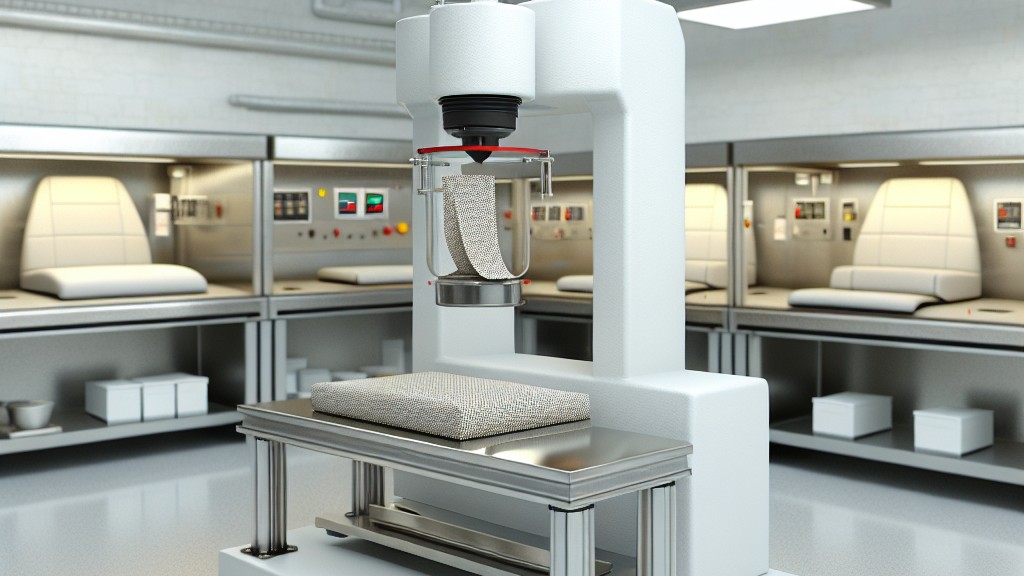
The test results stated herein are based on material conditioned in a controlled atmosphere of 24 degrees plus/minus 23 degrees and 2 percent plus/minus 50 percent relative humidity for at least 5 hours prior to testing and tested under the same conditions, unless otherwise stated.
Synthetic soil is prepared by mixing the substances listed in the table given in the standard. Peat moss should be dry and free of lumps. Portland cement should also be dry. If the cement contains lumps, discard it and use a new source. All dry ingredients are mixed and then mineral oil is added. Dry at 50 degrees for 6-8 hours.
The test methods are:
Unless otherwise stated, a sample is cut from the material to be tested using the abrasion test template with the long dimension in the warp direction. It is important that the samples are cut parallel to the threads, otherwise the samples will distort during the test and give erroneous results. For this procedure, the term warp is used to refer to the machine direction for coated fabrics and the long direction of the leather (front and back on chamois) for leathers. For testing, samples should not be taken closer to the salvaged edge than 1/1 of the width of the material.
For all materials other than rigid, rigid materials, the back of the test specimen should be completely covered with 76 mm wide masking tape. Some materials may over-stretch the specimen in the clamps of the precision abrasion tester, causing it to stretch. This can cause wrinkles, which will reduce the width of the test area, which will produce erroneous results.
The duck strip number 8 (with the cotton soil test cloth attached by staples) is clamped to the drum of the precision abrasion tester. The synthetic soil strip should be centered in relation to the duck strip number 8. It is important that the duck and soil test cloth are clamped very tightly to the machine to prevent wrinkles that could cause erroneous results. When the duck is clamped to the drum of the precision abrasion tester, it should have the lower counting direction in the direct swing of the drum.
The clamps of the precision abrasion tester are spaced 152 mm apart and the test specimen is placed face down for testing. A tension of 31 N is applied to the specimen. The specimen is lowered into position against the cotton contamination test cloth. The closure screw in the clamp is turned until the specimen is held securely in place. The bent end of the specimen is placed in the other moisture, 152 mm is measured between the moistures and the closure screw in the clamp is tightened.
The abrasion tester is started and run at 90 rpm or 100 total cycles unless otherwise specified. The specimen is removed from the abrasion tester. A measurement of the soil resistivity rating is made by comparing the color change due to contamination accumulation with the AATCC gray scale to assess staining. The specimen is stored for cleanability testing. The lower the soil resistivity rating of the specimen, the lower the rating.
According to Procedure 1, the contaminated sample is placed on a clean, colourless paper towel for cleaning and a natural bristle hand brush is used. ½ of the sample is cleaned for 1 minute. The sample is wiped with a clean, dry piece of cheesecloth and allowed to dry overnight. A measurement of the degree of cleanability is made by comparing the colour change resulting from the remaining contamination deposit with the ISO grey scale to assess the staining. The lower the degree of cleanability of the sample, the lower the rating.
Advanced performance carpet soiling can be accomplished using one of the two methods listed below:
The report to be prepared should include visual inspection comments and scale ratings. Tested samples are added to the report.
Our organization, which has been trying to support businesses from every sector with its wide range of testing, measurement, analysis and evaluation studies for years, has a strong staff that closely follows the developments in the world in the field of science and technology and constantly improves itself. In this context, testing services in accordance with the "LP-463KC-04-02 Contamination test for interior upholstery" standard are also provided to businesses.
To get an appointment, to get more detailed information or to request an evaluation, you can ask us to fill in our form and reach you.

