

Developed by BMW, a multinational vehicle manufacturer, the “BMW PR 102 Headliner with Additional Parts” standard is an internal test specification or performance requirement primarily used for the verification and qualification of interior and exterior trim parts, materials, and components within the automotive supply chain.
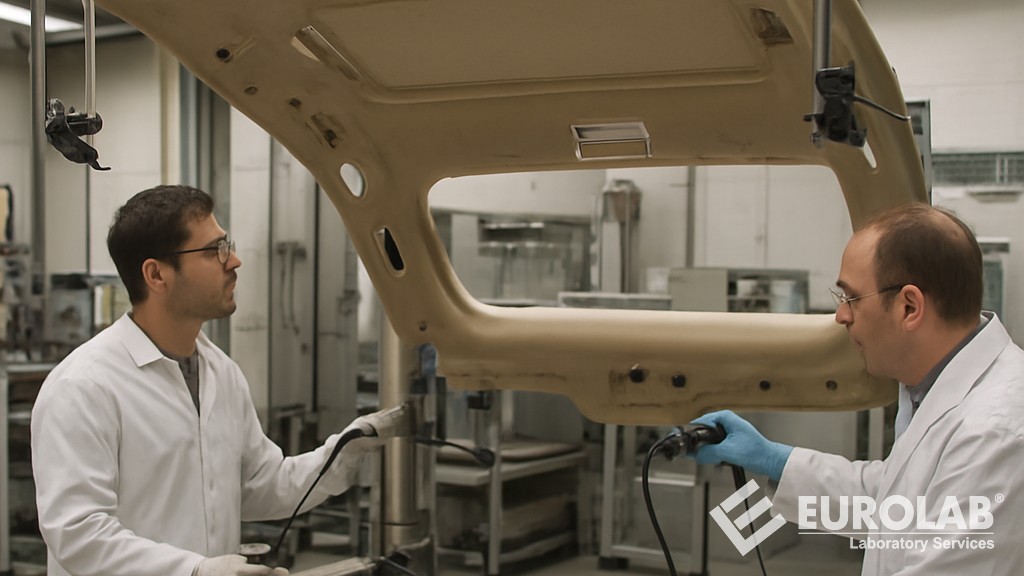
Headliner, including accessories, refers to the complete automotive headliner assembly, which is the interior ceiling lining of a vehicle. This includes all additional or integrated components mounted on or running through it. Headliner is the soft, fabric-covered panel that covers the entire ceiling inside the vehicle. It provides a finished, premium look while concealing the bare metal ceiling structure, wiring, and insulation. The term accessories refers to the various parts and features that are fixed onto the headliner and are tested and approved in conjunction with the headliner.
A typical modern car headliner is a multi-layered composite:
The components are functional and decorative elements that are attached to the headliner (via clips, screws, adhesives, or hooks). According to the BMW PR 102 standard, all components (headliner and these parts) must withstand environmental stresses and not fail.
Common examples of additional parts include: grab handles, sunshades, interior ceiling lights and ceiling brackets, microphone mounts, hangers, sunroof frames or rings, antenna bases or cable harness clips, airbag covers or opening ducts.
This standard incorporates a test method documented within BMW’s supplier quality assurance system. This method is used to evaluate how materials or parts perform under defined stress conditions. Generally, this method is listed in the following areas:
Suppliers (for example, seats, instrument panels, plastics, textiles, coatings) must pass the relevant process requirement tests before parts can be certified.
This standard is generally placed alongside similar standards such as BMW PR 303 (climate control components) and BMW PR 306 (solar simulation).
In short, the BMW PR 102 standard focuses on ensuring that parts withstand automotive environmental stresses throughout the vehicle's lifespan.
The importance of the BMW PR 102 standard stems from BMW's commitment to superior vehicle quality, long-term reliability, and customer satisfaction in a highly competitive environment. The main reasons why this standard is considered important are as follows:
The testing method simulates real-world environmental aging and stress to prevent premature material degradation, avoiding issues such as sagging, cracking, discoloration, odor formation, separation, or loss of structural integrity. A faulty ceiling panel can compromise aesthetics, acoustics, safety (e.g., in the case of loose connections), or even lead to costly warranty claims.
Passing these tests is essential for the production part approval process and for transitioning to mass production. Non-conformity can result in parts being rejected, supply delays, or disqualification from BMW's supply chain. This control mechanism ensures that only sound, verified materials enter the vehicles.
In hot and humid markets, these tests are particularly vital to prevent climate-related malfunctions.
In conclusion, the BMW PR 102 standard is crucial because it directly guarantees the superior quality, longevity, and reliability of essential interior elements that customers recognize and value over time. This standard is a cornerstone of BMW's zero-defect philosophy and supplier quality management.
For many years, our organization, with its competent and experienced staff, has been understanding the needs of its customers, providing the advanced testing services they require, and assisting in the establishment, implementation, and improvement of management systems. Within this framework, we also provide testing services to businesses in accordance with the "BMW PR 102 Headliner with Accessories" standard.
To get an appointment, to get more detailed information or to request an evaluation, you can ask us to fill in our form and reach you.

