GMW 16443 Adhesion Performance Requirements for Adhesive Backed Foam
The standard “GMW 16443 Adhesion performance requirements for adhesive-backed foam” developed by General Motors describes the adhesion performance requirements for adhesive-backed foam bonded to painted or unpainted metal, plastic or glass. It also applies to other lightweight trim bonded with pressure-sensitive adhesives. Additional notes may be needed to specifically describe the bonding application.
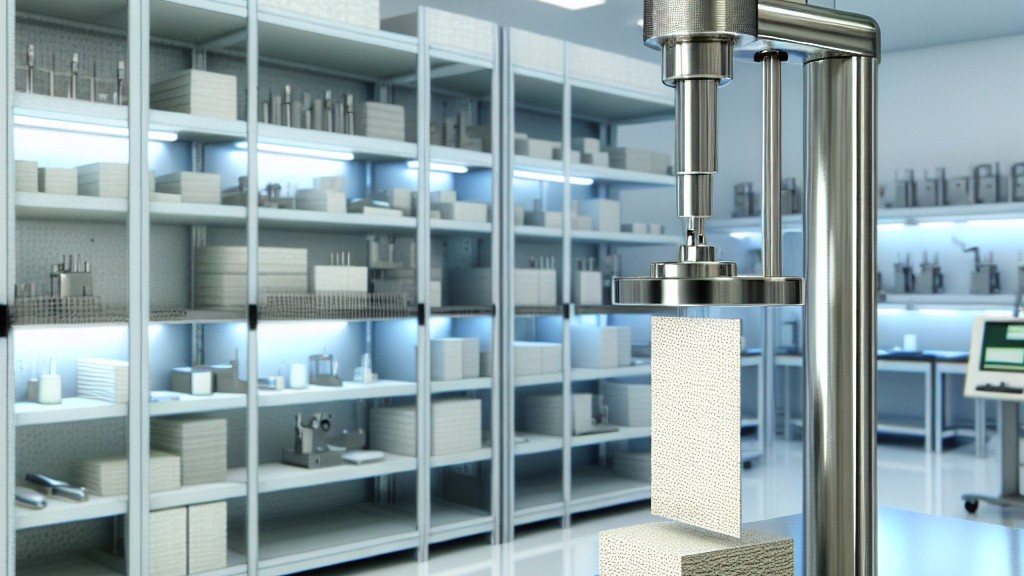
Foams can be open or closed cell of various polymer technologies. The adhesives for these adhesives are pressure sensitive with a release liner. The structure can be applied to a component and shipped as an assembly part or delivered as a separate part for installation at a General Motors assembly center. The following types of bonding performance are addressed in this standard for adhesive-backed foam.
Typical applications include foam underlays, bonnet dams, foam dams for windshields and air intake panels, and general weather, dust and water seals such as seals and seals in lighting. For specific definition and release of foam technology see GMW 15473.
The following types are based on adhesive performance:
- Type I. Adhesive-backed foam composite that is compressed or mechanically retained for the life of the vehicle. This type of adhesive is functional prior to and during installation or until the foam is compressed or mechanically retained downward from the installed position.
- Type II. Adhesive-backed foam composite held by the adhesive for the life of the vehicle.
The requirements in this standard are specified as follows:
- All samples must be conditioned before each requirement test according to the standard “GMW 3221 Standard conditioning of organic materials”, Code A.
- The proposed specific foam/adhesive combination must be tested on the substrate intended for production. The test report is included in the production part approval process package. The test report must clearly state that all requirements of the specification have been met.
- During and after the environmental exposures required by this standard, the edges of the bonded composite shall not show signs of lifting or separation from the bonded substrate. During exposure to heat, the adhesive shall not flow from the bonding joint.
- In accordance with “ISO 8510-2 Adhesives - Peel test for a flexible-bonded-rigid test specimen assembly - Part 2: 180 degree peel”, the adhesive-backed foam shall exhibit a minimum width or foam tear of 180 N/m when peeled at a 300 degree angle and a speed of 525 mm per minute. After environmental exposures, 23 hours of recovery is allowed at 50 degrees Celsius and 24 percent relative humidity.
- For environmental exposure, Type I systems shall be subject to environmental exposures in accordance with this standard and shall be edge bonded only. The adhesive/foam system shall be securely bonded and shall not exhibit curling or lifting from the application substrate. For Type II systems, environmental exposures in accordance with this standard shall be subject to edge and 180 degree peel bonding. For outdoor exposed applications only, shall be subjected to accelerated weathering.
- For heat resistance, samples should be exposed for 188 hours at 80 degrees plus/minus 2 degrees in an air circulating oven according to the standard “ISO 168 Rubber, vulcanized or thermoplastics - Accelerated ageing and heat resistance tests”.
- Samples for humidity, “GMW 14729 In accordance with the “High humidity test procedures” standard, it shall be exposed in a condensing humidity chamber for 168 hours. Option B is used for Type I performance, and option A is used for Type II performance.
- For cycling exposure, samples should be exposed according to the standard “GMW 14124 External moisture thermal cycling”. The table provided in the standard defines specific cycling environments and times according to the application location.
- For accelerated weathering, test specimens shall be subjected to 2412 kJ/m2500 according to SAE J2 or 14162 MJ/m38 and 2 degrees according to Cycle C of GMW 115.
- For cold shock, after 54 hours at 2 degrees plus/minus 72 degrees, the samples are conditioned at minus 30 degrees plus/minus 2 degrees for 4 hours. With no recovery, the samples shall withstand 0,6 free impacts when dropped from a height of 2 m onto a cement floor. After impact and 23 hours recovery at 50 degrees temperature and 24 percent relative humidity, the samples shall meet the above peel adhesion requirement. No further exposure is required.
- Adhesively bonded assemblies must demonstrate a minimum of 15851 percent tape wetting when tested in accordance with the GMW 85 standard.
- For storage stability, adhesive-backed foam must meet the requirements of this standard after being subjected to the storage conditions of GMW 15735. Shelf life begins upon receipt from the manufacturer.
- The release liner must meet the following requirements only after exposure to storage stability environments:
- The release liner must always make 100 percent contact with the adhesive before the adhesive-backed foam is attached to the vehicle or component. A visual inspection is performed after the required exposures.
- The release liner must be easily removed with a force not exceeding 300 N/m when peeled at a 180 degree angle at 65 mm/min. Any tearing or distortion of the liner constitutes a failure.
All materials supplied in accordance with this standard must comply with the requirements of the standards “GMW 3001 Rules and regulations for material specifications” and “GMW 3059 Restricted and reportable substances”.
Our organization has a strong staff that closely follows the developments in the world in the field of science and technology and constantly improves itself. Among the numerous test, measurement, analysis and evaluation studies provided for businesses in various sectors, there are also test services in accordance with the standard "GMW 16443 Adhesion performance requirements for adhesive-backed foam".



