

The “BMW PR 231 Seal System for Doors and Lids” standard, developed by BMW, a leading German multinational company in the automotive industry, describes the procedures for defining the slip-adhesion behavior of automotive seals. In the automotive sector, BMW maintains strict material and component specifications to ensure high quality, durability, comfort, and low noise levels in vehicles. A key specification, the BMW PR 231 standard covers the requirements and test methods for seals used around doors, hoods, trunk lids, and other closing mechanisms. A critical performance aspect addressed in this standard is slip-adhesion behavior, a tribological (friction-related) phenomenon that directly affects perceived quality.
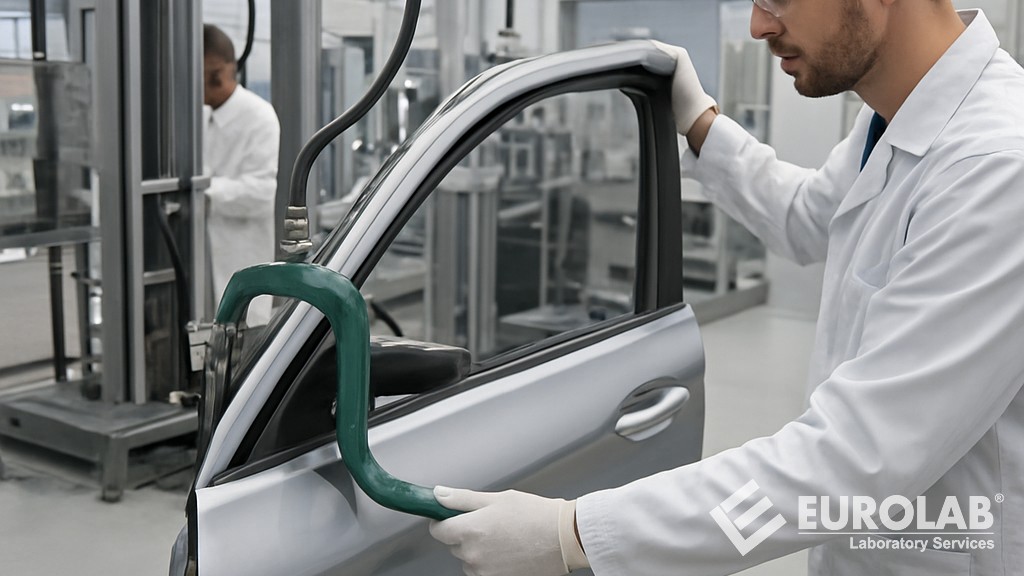
Slip-on refers to an unstable sliding motion between two contacting surfaces (e.g., a rubber door seal and a painted metal frame). Instead of a smooth, continuous slide as the door opens and closes, the motion varies between the following states:
This jerky movement produces audible squeaking or rattling noises, especially in newer vehicles or under certain temperature and humidity conditions. Customers perceive these sounds as low-quality squeaks and clicks, and can lead to complaints even if the seal is functioning mechanically.
Section 3.2.1.1 of this standard, entitled “BMW PR 231 § 3.2.1.1 Adhesion-slip test”, specifically addresses adhesion-slip behavior (usually labeled as adhesion-slip test 2D). This test evaluates, under controlled conditions, the friction properties of sealing materials (typically elastomers, rubbers, or coated surfaces) against opposing surfaces such as vehicle paint or glass.
Typically, the basic elements are as follows:
Smooth and quiet door closing and opening is a hallmark of a premium vehicle experience. Slip-stick problems in seals contribute to NVH (noise, vibration, harshness) complaints. Therefore, BMW requires seal suppliers to comply with the strict limits in the BMW PR 231 standard:
To achieve good adhesion-slip performance, gasket manufacturers typically apply the following:
These reduce the difference between static and dynamic friction, promoting smooth gliding instead of abrupt grip-slip transitions.
In short, the BMW PR 231 § 3.2.1.1 standard represents a targeted effort to control stick-slip in door and lid sealing systems. This is a small but significant detail that substantially impacts customer satisfaction and long-term perception of quality.
The BMW PR 231 standard is considered important for the following reasons:
In conclusion, while slip-and-stick seals may seem like a minor tribological detail, their uncontrollable nature creates disproportionately negative impressions. The slip-and-stick requirement of the BMW PR 231 standard is a proactive quality control point that protects brand image and reduces after-sales costs.
For many years, our organization, with its competent and experienced staff, has been understanding the needs of its customers, providing the advanced testing services they require, and assisting in the establishment, implementation, and improvement of management systems. Within this framework, we also provide testing services to businesses in accordance with the "BMW PR 231 Seal system for doors and covers" standard.
To get an appointment, to get more detailed information or to request an evaluation, you can ask us to fill in our form and reach you.

