

The “BMW GS 97036 Dynamic Mechanical Analysis (DMA) on Polymers and Adhesives” standard, developed by BMW, a multinational vehicle manufacturer, describes the requirements and test procedures for performing dynamic mechanical analysis (DMA) or dynamic mechanical thermal analysis (DMTA) on polymeric materials, elastomers, plastics, adhesives, and related components used in BMW vehicles.
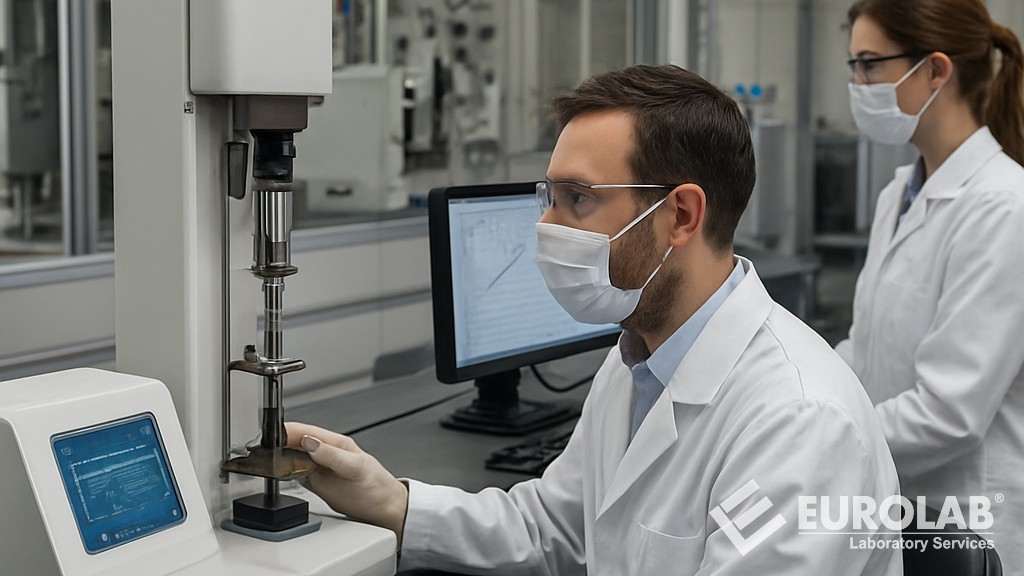
Dynamic mechanical analysis (DMA) is a widely used materials testing technique that measures the viscoelastic properties of a material as it deforms under periodic (oscillating) stress. Performed by applying a sinusoidal force (or stress) while varying temperature, frequency, or time, the test reveals the following fundamental properties:
These properties are critical for automotive applications because polymers in vehicles must withstand temperature fluctuations, vibrations, mechanical loads, and environmental influences while maintaining their performance (e.g., in seals, interior trim, adhesives, damping elements, hoses, or fasteners).
The BMW GS 97036 standard is closely aligned with international norms such as the “ISO 6721 Plastics – Determination of dynamic mechanical properties” standard developed by the International Organization for Standardization (ISO).
Test methods typically involve tensile, compressive, shear, bending, or torsional modes. Torsion is frequently mentioned in laboratory descriptions for BMW qualification tests. Typical measured parameters include:
Material adequacy is used for incoming goods inspection, defect analysis, and approval of polymer compounds (e.g., EPDM rubber seals, interior plastics, structural adhesives) from suppliers.
Many independent testing laboratories offer authorization or accreditation to perform testing according to the BMW GS 97036 standard. This is part of BMW’s supplier quality assurance process, and materials must meet this standard to be approved for use in production tools.
Material data sheets for compounds such as flame-retardant EPDM or other elastomers often list compliance with this standard, citing values such as glass transition temperature values around minus 64 degrees for specific low-temperature classes.
The BMW GS 97036 standard is necessary because modern vehicles rely heavily on polymeric materials (plastics, elastomers/rubbers, adhesives, composites, damping elements, seals, interior trim, hoses, fasteners) that must function reliably under a wide range of demanding real-world conditions.
Unlike simple static tests (e.g., tensile strength at room temperature), dynamic mechanical analysis (DMA), the method described in this standard, provides critical information about viscoelastic behavior as a function of time, temperature, and frequency. This directly addresses fundamental challenges in automotive engineering and reliability.
The main reasons for developing and implementing this standard are as follows:
This is essential for NVH (noise, vibration, harshness) performance, durability of vibration isolators and fasteners, adhesive bonds under fatigue, and prevention of resonance problems.
A material that appears acceptable in static tests may produce poor results in real-world use if its viscoelastic properties fall outside acceptable limits.
In short, static mechanical tests alone are insufficient for polymers in the automotive environment. Dynamic mechanical analysis (DMA) provides BMW with the data needed to select, qualify, and control materials that deliver safety, comfort, NVH quality, durability, and low warranty risk.
In conclusion, the BMW GS 97036 standard is a specific material testing specification that helps ensure the reliability and durability of plastic and rubber components in BMW automobiles. This standard is an important reference for characterizing viscoelastic behavior under realistic operating conditions.
For many years, our organization, with its competent and experienced team, has been understanding the needs of its clients, providing the advanced testing services they require, and assisting them in the establishment, implementation, and improvement of management systems. Within this framework, we also provide testing services in accordance with the BMW GS 97036 standard.
To get an appointment, to get more detailed information or to request an evaluation, you can ask us to fill in our form and reach you.

