

The “BMW PR 557 Resistance of Unpainted Thermoplastic Surfaces to Environmental Conditions” standard, developed by BMW, a leading German multinational company in the automotive sector, describes a method for determining the chemical resistance (or environmental resistance) of unpainted thermoplastic surfaces used specifically on the exterior of BMW vehicles. This method is intended to determine the resistance of exterior unpainted thermoplastic surfaces to various environments (chemicals, liquids, and environmental substances).
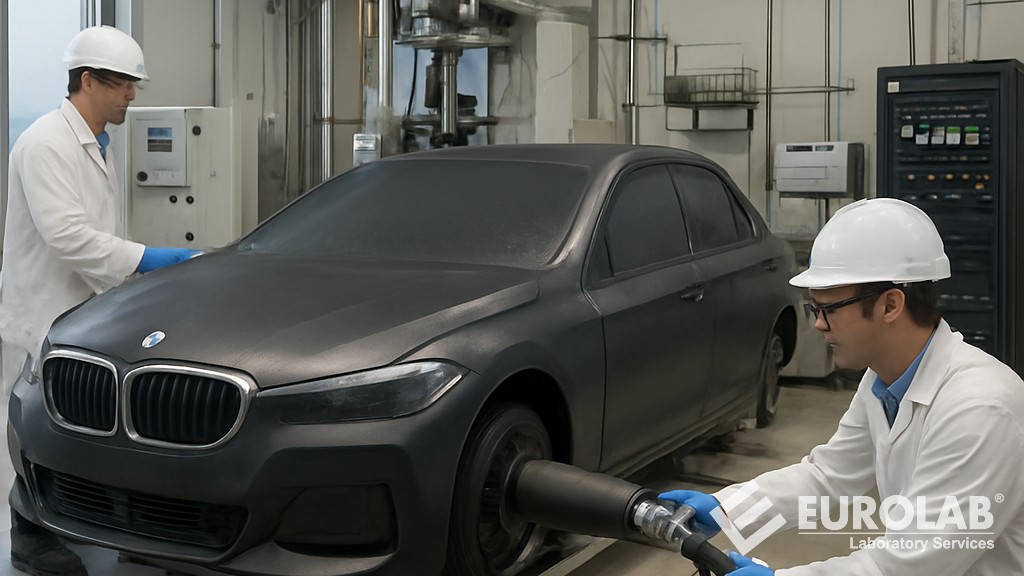
This standard includes test methods to evaluate how well exterior plastic parts, such as bumpers, trim pieces, mirror housings, grilles, and other unpainted thermoplastic components, withstand a variety of chemicals and environments commonly encountered in automotive use. These include fuels, oils, cleaning agents, road salts, bird droppings, tree resins, brake fluids, coolants, and other environmental contaminants.
This method is primarily applied to unpainted plastics (polypropylene (PP), polycarbonate/acrylonitrile butadiene styrene (PC/ABS) blends, and similar thermoplastics). This method provides long-term durability and prevents deterioration, cracking, swelling, discoloration, or loss of mechanical properties.
The BMW PR 557 standard involves immersion, wiping, or contact tests with specified media under controlled conditions (temperature, duration, concentration). It includes evaluation criteria for visual changes, mechanical performance, and other characteristics after exposure.
This standard is used as part of broader standards for suppliers and internal quality assurance. Plastic exterior parts must pass this test (along with other tests for compatibility with adhesives or coatings) before being approved for mass production.
In short, the BMW PR 557 standard plays a crucial role in ensuring the resistance of visible, unpainted exterior plastics to everyday chemical attacks, which is a vital factor in maintaining the superior appearance and longevity of vehicles exposed to harsh conditions.
The BMW PR 557 standard is deemed necessary because unpainted thermoplastic exterior components in modern vehicles are constantly exposed to a wide variety of aggressive chemicals and environmental conditions in real-world use. Without a standardized chemical resistance requirement like this, these parts can fail prematurely, leading to quality issues, safety risks, higher warranty costs, and damage to brand reputation.
Unpainted exterior thermoplastics (such as bumpers, side skirts, wheel arch covers, mirror housings, grilles, and trims made from materials like polypropylene (PP) or polycarbonate/acrylonitrile butadiene styrene (PC/ABS)) are exposed directly to harsh materials on a daily basis. Common environments include:
These substances can cause the following:
Such damage not only affects the appearance of the vehicle but can also compromise its functional performance; for example, a cracked bumper reduces energy absorption in minor collisions, or damaged interior trim affects aerodynamics and noise levels.
This standard is considered important for the following reasons:
In conclusion, the BMW PR 557 standard is not just a test procedure, but a proactive engineering measure that ensures unpainted exterior plastics remain attractive, functional, and reliable throughout the vehicle's lifespan, even under challenging climate and usage scenarios.
For many years, our organization, with its competent and experienced team, has been understanding the needs of its clients, providing the advanced testing services they require, and assisting them in the establishment, implementation, and improvement of management systems. Within this framework, we also provide testing services in accordance with the BMW PR 557 standard.
To get an appointment, to get more detailed information or to request an evaluation, you can ask us to fill in our form and reach you.

