

The “GMW 14695 Determination of Adhesion Strength of Felts and Similar Materials” standard, developed by General Motors Worldwide (GMW), is a test method used to determine the adhesion strength of felts and similar fibrous materials. This method is particularly important for automotive materials such as nonwoven fabrics, fiber felts, acoustic materials, insulation layers, and other fibrous structures used in vehicle interiors and components.
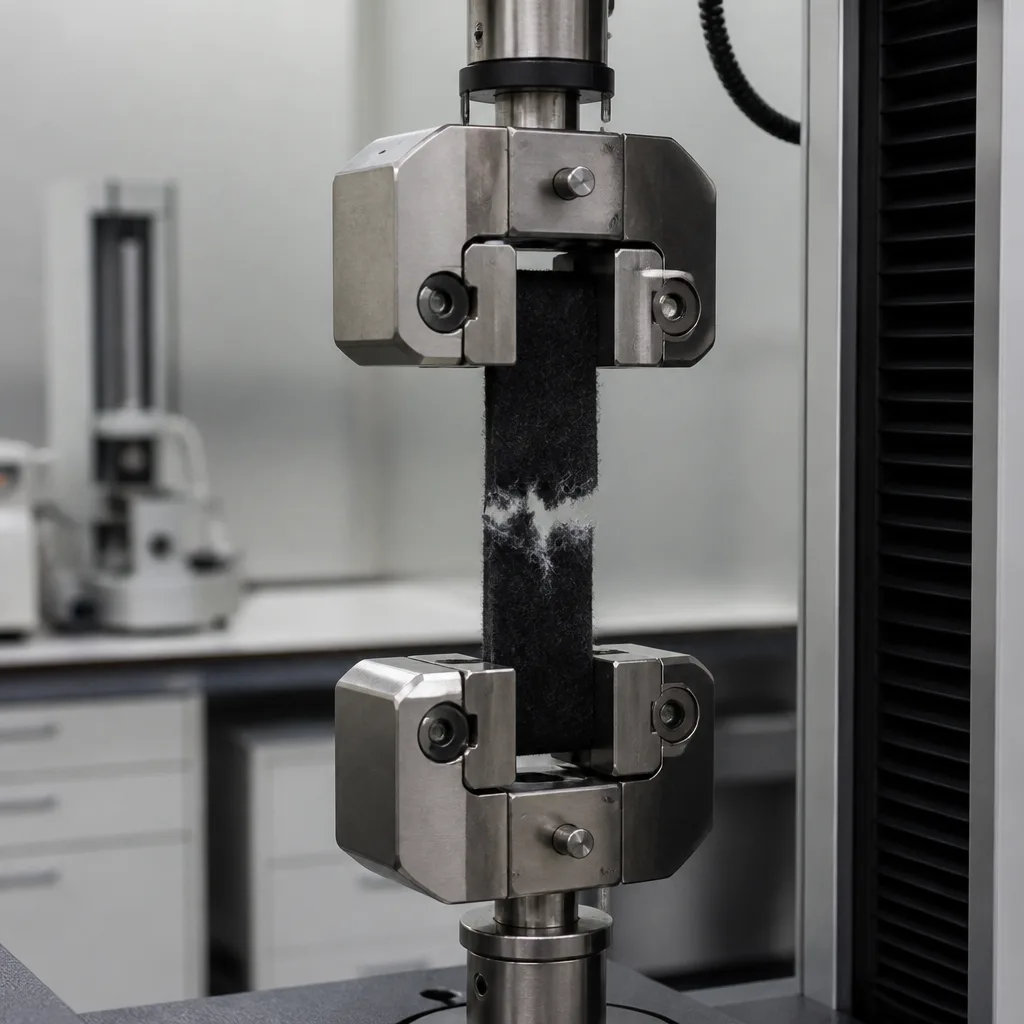
The test evaluates how strongly the fibers within a material hold together when subjected to tensile force. This differs from testing adhesion between two separate materials: the GMW 14695 standard primarily assesses the internal integrity or cohesion of the material itself.
The primary purpose of the GMW 14695 standard is to determine whether a felt or similar fibrous material possesses sufficient internal bond strength to withstand the mechanical stresses encountered during manufacturing, assembly, and vehicle servicing. A material may have an acceptable appearance and thickness but still have poor internal cohesion. If the fibers separate too easily, the material may lead to the following problems:
The GMW 14695 standard provides a controlled method for measuring this behavior.
Adhesion strength is the force required to break down the internal structure of a material. For example, in felt, numerous fibers are mechanically intertwined and/or bonded together. When tensile force is applied, the fibers resist separation. The higher the force required to cause internal failure, the higher the adhesion strength of the material.
This distinction is important for the following reasons:
The GMW 14695 standard specifically relates to the cohesive strength of materials such as felt.
This method is primarily associated with felt and similar fibrous materials. Examples may include:
Laboratory accreditation records also define the GMW 14695 standard for testing materials such as polyurethane cellular plastics, polyesters, fiber fillers, and composites.
The basic principle is relatively simple. A test specimen is prepared from the material and fixed in such a way that a tensile load can be applied to the surfaces of the material. The specimen is then pulled under controlled conditions until the internal fiber structure breaks. For example, it defines pulling two surfaces of a fiber network at a speed of 25 mm/min and recording the maximum load at which the cohesion breaks. The maximum force obtained provides an indication of the cohesive strength of the material. Depending on the material being evaluated, specimen dimensions, conditioning, equipment configuration, and reporting requirements should be taken directly from the relevant controlled copy of the standard.
Generally, the following steps are followed in the tests:
Generally, the test setup includes the following:
The tensile testing machine must be able to apply the specified loading speed and accurately record the force at the moment of fracture.
The most important result is the force required to cause internal adhesion fracture. However, a higher numerical result is not automatically better for every application. The required value depends on the component design and the relevant General Motors material specification.
The GMW 14695 standard is important because automotive fiber materials can be subjected to significant mechanical load-bearing and service stresses. In vehicle manufacturing, materials may be subjected to:
Low cohesive strength can lead to damage during these processes. During service, the material may also be subjected to vibration, compression, temperature variations, and repeated mechanical loading. Consequently, sufficient cohesive strength helps ensure the material remains sound throughout its intended service life.
The GMW 14695 standard is particularly important for materials used in NVH (noise, vibration, and harshness) control. Fibrous materials are commonly used in the following areas:
If a fibrous acoustic material loses its internal integrity, its physical and acoustic properties may change. Therefore, cohesive strength testing can be part of a broader material validation program.
Cohesion strength and adhesion separation are particularly important when interpreting test reports. When an automotive seal is laminated to a plastic film, there are two different possible failures:
The GMW 14695 standard deals with the second type of behavior, namely the internal cohesion of the felt or similar material. Therefore, this method is often classified alongside other mechanical and adhesive strength tests in automotive laboratory settings.
Several factors can affect cohesion strength measurements:
For many years, our organization, with its competent and experienced staff, has been understanding the needs of its clients, providing the advanced testing services they require, and assisting them in the establishment, implementation, and improvement of management systems. Within this framework, we also provide testing services in accordance with the GMW 14695 standard.
To get an appointment, to get more detailed information or to request an evaluation, you can ask us to fill in our form and reach you.

