

Developed by General Motors Europe (GME), the “GME 60368 Determination of Abrasion Resistance of Synthetic Leather” standard is a material testing standard that specifies a method for determining the abrasion resistance of synthetic leather used in automotive interiors. This standard helps manufacturers ensure that interior components maintain their appearance and functionality throughout a vehicle's lifespan by evaluating how well synthetic leather surfaces withstand repeated mechanical wear.
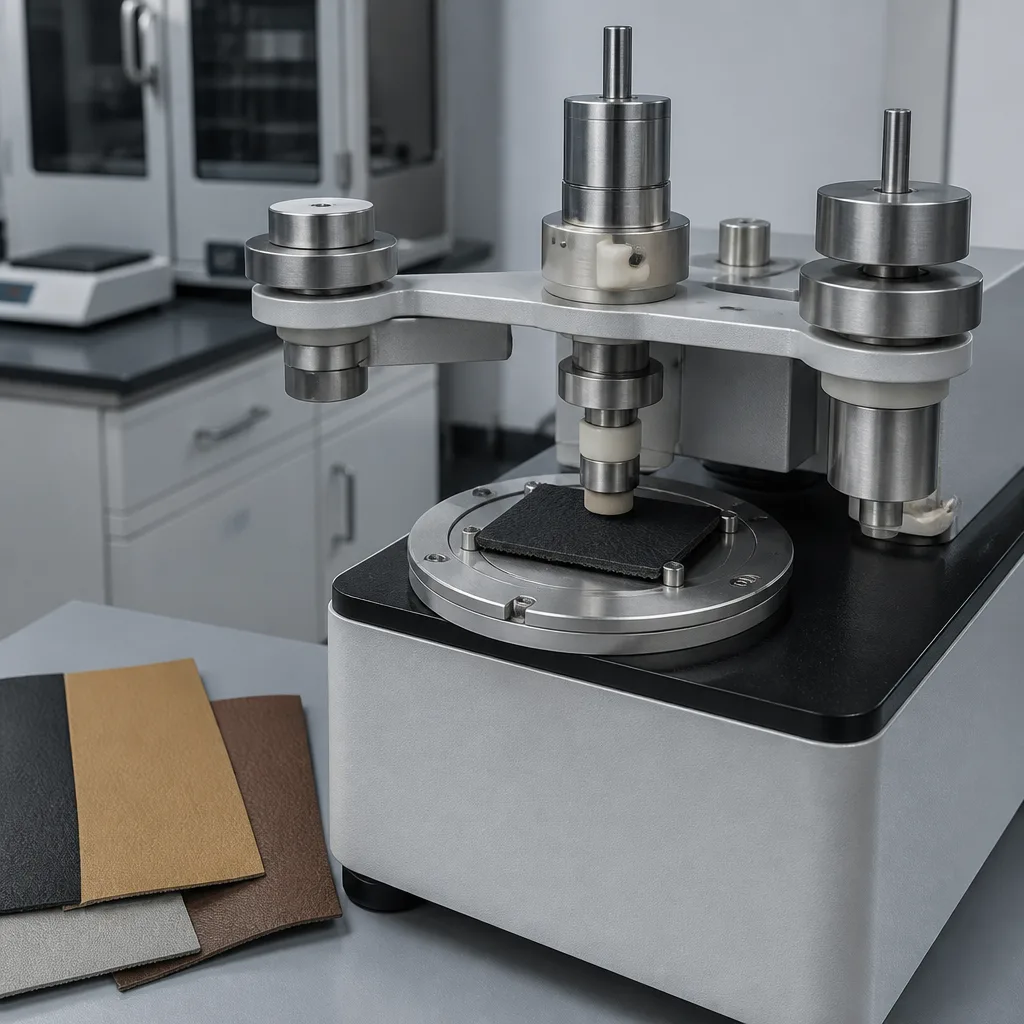
Artificial leather is commonly used in automotive seats, door panels, armrests, steering wheel covers, center consoles, and other decorative interior parts. Because these components are subject to frequent passenger contact, wear resistance is one of the most important performance characteristics.
The primary purpose of the GME 60368 standard is to provide a standardized laboratory procedure for measuring the abrasion resistance of synthetic leather surfaces. This test enables manufacturers to:
Using a standardized method ensures that wear resistance results obtained by different laboratories can be directly compared.
The GME 60368 standard primarily applies to the following:
Although developed for General Motors Europe vehicles, the described test method is also accepted by independent automotive testing laboratories that conduct original equipment manufacturer (OEM) qualification tests.
In principle, the GME 60368 standard determines the abrasion resistance of an artificial leather sample by repeatedly rubbing its surface against a specific abrasive material under controlled laboratory conditions. During these tests,
The amount of wear indicates the material's resistance to long-term mechanical use.
After testing, the sample is evaluated for changes. Typical evaluation criteria include:
Acceptance criteria depend on the specific General Motors material specification applicable to the component being tested.
The equipment used in these tests generally includes the following:
Modern wear testing equipment is generally configured to apply the GME 60368 standard along with related automotive wear standards.
In general, the testing process follows these steps:
This standardized procedure minimizes variability between laboratories.
The GME 60368 standard is commonly used in the automotive industry for testing the following materials:
These components are repeatedly touched by the vehicle's occupants throughout the vehicle's lifespan.
Wear resistance directly affects the customer's perception of vehicle quality. Poor performance materials can quickly lead to the following problems:
Testing according to the GME 60368 standard helps manufacturers reduce warranty claims and increase long-term customer satisfaction by providing durable interior materials.
Using GME 60368 offers several advantages:
The GME 60368 standard complements many other automotive material testing standards that evaluate different performance characteristics, including:
Together, these tests provide a comprehensive evaluation of artificial leather performance under automotive service conditions.
In conclusion, the GME 60368 standard is a crucial material testing standard for evaluating the abrasion resistance of synthetic leather used in automotive interiors. By providing a consistent laboratory method for assessing abrasion resistance, this standard helps manufacturers select durable materials, qualify suppliers, and maintain high-quality interior trim. Although it has undergone numerous revisions since its publication, its core objective remains the same: to ensure that synthetic leather components maintain their appearance and performance throughout the vehicle's lifespan.
For many years, our organization, with its competent and experienced staff, has been understanding the needs of its clients, providing the advanced testing services they require, and assisting them in the establishment, implementation, and improvement of management systems. Within this framework, we also provide testing services compliant with the GME 60368 standard.
To get an appointment, to get more detailed information or to request an evaluation, you can ask us to fill in our form and reach you.

