

Developed by BMW, a leading German multinational company in the automotive industry, the “BMW PR 303 Climate Cycle Test” standard describes test methods that simulate extreme climatic conditions to evaluate the durability, aging effects, material stability, and functional reliability of trim parts, interior components, equipment parts, and adhesive bonds, especially those exposed to temperature and humidity fluctuations.
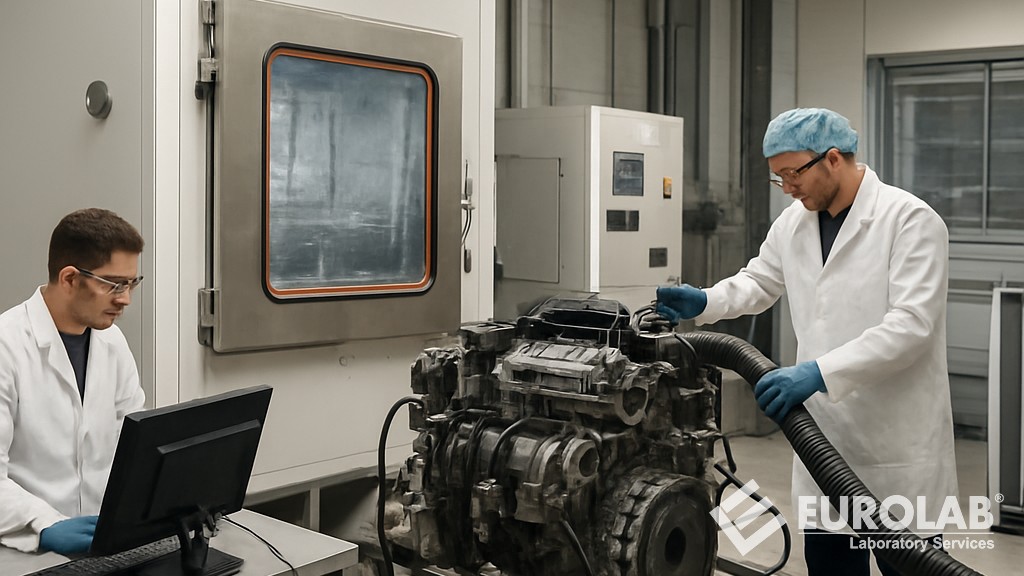
The primary aim of the BMW PR 303 standard is to accelerate aging and reveal potential weaknesses in materials and assemblies that may result from:
This standard ensures that BMW parts maintain their appearance, structural integrity, and performance without cracking, deformation, delamination, fading, or loss of functionality. It is particularly important for interior trim (e.g., instrument panels, door panels), exterior connections, and bonded components.
This standard has evolved over time, and new variants have emerged. For example,
The main purpose of this standard is as follows:
This standard is particularly important for interior and some exterior trim that is exposed to conditions in the cabin or under the hood.
This standard is an internal testing specification that specifically defines climate change testing (climate change testing / alternative climate testing / climate cycle testing) for equipment parts and trim parts (equipment components). This includes interior components such as instrument panels, door panels, consoles, coated textiles, plastics, leather, and other non-structural vehicle equipment exposed to cabin environmental stresses.
This standard serves as an updated or replacement version of the earlier BMW PR 303.4 standard. The test accelerates material aging to simulate prolonged exposure (equivalent to the vehicle's service life) under repeated temperature and humidity changes, ensuring that there is no unacceptable deterioration in appearance, function, or durability.
The main purpose of this standard is as follows:
Essentially, the tests performed follow these steps:
According to BMW criteria, unacceptable deterioration is not permitted.
These tests are compatible with broader automotive environmental simulation applications, similar to VW PV 1200, PV 2005, or other original equipment manufacturer specifications.
This test is also known as a variable climate test or climate change test. It specifically targets interior components, including instrument panels, door panels, consoles, headliners, plastics, coated fabrics, leather, and other non-structural cabin elements.
The BMW PR 303.6 standard is more precisely tailored to trim components. It accelerates aging to simulate prolonged exposure to extreme climatic conditions, ensuring materials and components resist degradation in a variety of global environments. This is critical for vehicles in locations with hot, humid summers and cold winters.
The main purpose of this standard is as follows:
The BMW PR 303 standard series is essential in modern automotive production for many critical reasons, especially for a premium brand like BMW, which emphasizes long-term quality, reliability, and customer satisfaction.
For many years, our organization, with its competent and experienced team, has been understanding the needs of its clients, providing the advanced testing services they require, and assisting them in the establishment, implementation, and improvement of management systems. Within this framework, we also provide testing services to businesses in accordance with the "BMW PR 303 Climate Cycle Test" standard.
To get an appointment, to get more detailed information or to request an evaluation, you can ask us to fill in our form and reach you.

