

The “Renault D49 3256 Xenon exposure (for exterior parts)” standard, developed by the French automobile company Renault, describes a test method used to determine the effects of weathering on the exterior components of vehicles.
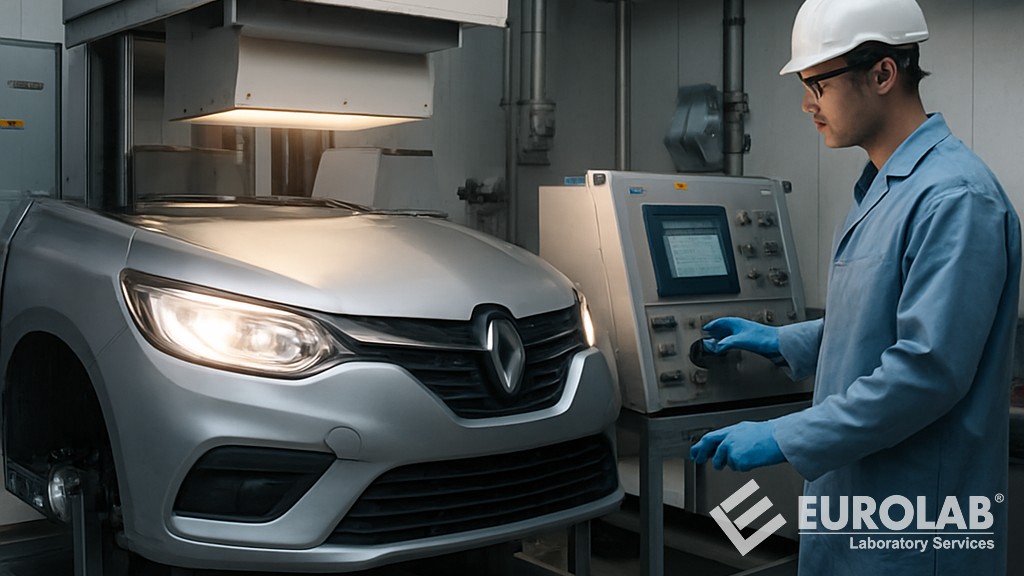
Xenon arc exposure testing is a key accelerated weather resistance testing method used in the automotive industry to simulate the harmful effects of natural sunlight on vehicle exterior parts such as painted body panels, plastic trims, bumpers, mirrors, and headlights. This test evaluates material resistance to UV radiation, heat, humidity, and temperature variations that can cause fading, chalking, cracking, loss of gloss, or discoloration over time.
Xenon exposure refers to accelerated weather resistance tests that use xenon arc lamps to simulate the harmful effects of sunlight, heat, and humidity on automotive exterior parts. Because xenon lamps closely match the entire solar spectrum (including UV), this method is widely accepted for evaluating the long-term durability of materials used outdoors.
Outdoor components are exposed to prolonged sunlight, especially in harsh climates (e.g., high UV levels in subtropical regions). This test uses a xenon arc lamp that more accurately mimics the full spectrum of sunlight (UV, visible, and infrared) than UV fluorescent lamps. When combined with water spraying and humidity cycling, this standard simulates real-world weather conditions, reducing years of outdoor exposure to weeks or months.
Exterior components such as bumpers, trims, mirrors, grilles, lights, coatings, and gaskets are constantly exposed to sunlight and environmental stress. Xenon testing helps manufacturers in the following areas:
During testing, a xenon weather resistance testing device recreates outdoor conditions in a controlled laboratory environment:
While the exact requirements depend on the specification, common test parameters include:
After xenon testing, external components are evaluated according to the following criteria:
Only parts that remain within the defined tolerances are approved for use in production.
Weather resistance testing methods (xenon exposure testing) for exterior parts and materials are critical for the following reasons:
Xenon exposure for exterior parts is a cornerstone of automotive material qualification. By accurately simulating sunlight, heat, and humidity, it allows manufacturers to verify that exterior components maintain their appearance, performance, and durability throughout the vehicle's lifespan.
This type of test simulates prolonged exposure to sunlight, heat, humidity, and sometimes water spray to evaluate the durability, color fastness, gloss retention, and degradation resistance of automotive materials (e.g., exterior paints, plastics, coatings, interiors). This test is common in the automotive industry for weather resistance simulation and is generally compliant with international standards.
The Renault D49 3256 standard specifies methods for exposing samples to xenon arc light in the presence of moisture to reproduce weathering effects (temperature, humidity, or wetting) that occur when materials are exposed to daylight or daylight filtered through window glass in their actual end-use environments.
In the tests, a xenon arc lamp equipped with filters is used to simulate the relative spectral radiation of daylight in the ultraviolet (UV) and visible regions of the spectrum. Samples are exposed to various light, heat, and relative humidity levels under controlled environmental conditions. The exposure conditions are varied by selecting the following:
The procedure involves measuring UV radiation and UV radiation exposure in the plane of the samples.
For many years, our organization, with its competent and experienced staff, has been understanding the needs of its customers, providing the advanced testing services they require, and assisting in the establishment, implementation, and improvement of management systems. Within this framework, we also provide testing services to businesses in accordance with the "Renault D49 3256 Xenon exposure (for external parts)" standard.
To get an appointment, to get more detailed information or to request an evaluation, you can ask us to fill in our form and reach you.

