

The “Renault 37-00-081H Passenger compartment – Material and component emissions” standard, developed by the French automobile company Renault, is designed to:
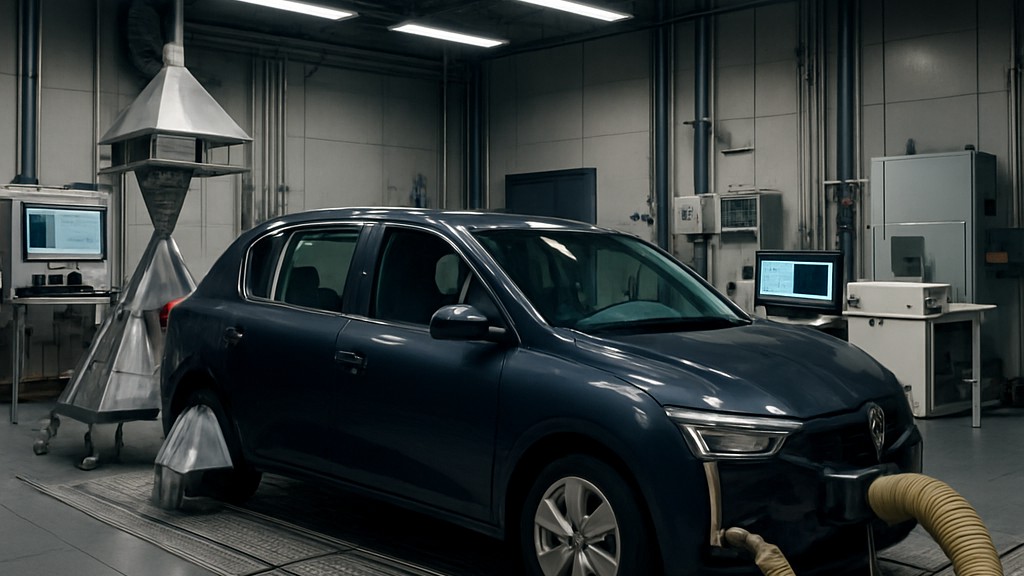
This standard covers all materials and parts located inside the vehicle (interior and luggage compartment) with a total weight greater than 100 grams. This standard focuses specifically on:
It can also be applied to pasty or liquid products such as:
The provisions of standard "Renault 00-10-415 Manufacture and supply of products - General requirements" are fully applicable to this standard, unless express written indications to the contrary are given. The provisions defined in the standards relevant to each of the relevant parts may be applied.
The requirements for volatile organic compounds are specified in this standard as follows:
The list of all compounds to be measured and all elements that must be presented in the test report is included in the annex of the standard (Annex 1).
Only original test reports from a Renault accredited laboratory are accepted.
Sampling protocols (sample preparation, conditions, storage time, etc.) by material family are available in the following Renault methods. However, the samples must be representative of vehicle parts:
Samples should be prepared as follows:
Tests must be carried out in laboratories accredited by Renault.
Methods for measuring the concentrations of these compounds are listed in the table titled “List of test methods used for VOCs.”
The main families of volatile organic compounds (VOCs) are: aldehydes, ketones, amines, nitrosamines, glycol ethers, phthalates, phenols, alcohols, esters, halogenated hydrocarbons and aromatic hydrocarbons BTEXS (benzene, toluene, ethylbenzene, xylene, and styrene) and total VOCs.
Testing is carried out on a complete part or a full function according to methods recognised by Renault (see table entitled List of test methods recognised by Renault for VOCs). The term full function refers to a batch of several parts that provide the same service (e.g., boot lining with right and left linings, floor lining with front and rear linings).
The parts must be representative of what will equip the final vehicle. Additionally, the parts must be prepared as follows:
These parts must then be forwarded to Renault-accredited laboratories, which will perform the analysis. Validation plans are consulted to determine the level of the parts to be analyzed. By default, the highest-selling level is selected.
Total VOC, formaldehyde, and odor emission levels for each trim material must meet the requirements shown in the table within the standard in µg/g. The term "material" refers to all materials used for passenger compartment functions, such as thermoplastics, sheet molding compound, fabrics, foam, natural leather, synthetic leather, wood, and paint.
Measurements are required for materials used outside the cabin (gaskets, weather strips, slides, wax, adhesives, PVC mastics).
The concentration limit levels for each family of compounds, as well as for the odor, are defined in the table provided within the standard for each part or function.
Our organization, which has been supporting businesses across all sectors for years through a wide range of testing, measurement, analysis, and evaluation activities, has a strong team of employees who closely follow global developments in science and technology and are constantly improving themselves. In this context, we also provide testing services in accordance with the "Renault 37-00-081H Passenger compartment - Material and component emissions" standard.
To get an appointment, to get more detailed information or to request an evaluation, you can ask us to fill in our form and reach you.

