

The structure defined in the “Ford WSS-M15P45-D Assembly performance, instrument panel, door and soft components, flexible trim material” standard developed by Ford Motor Company (Ford) is an instrument panel assembly, instrument panel component, floor console armrest, valance panel, steering wheel airbag cover, door panel component, wrapped pillar or similar component that uses a flexible (soft) trim material with or without foam or interlayer fabric on a rigid substrate.
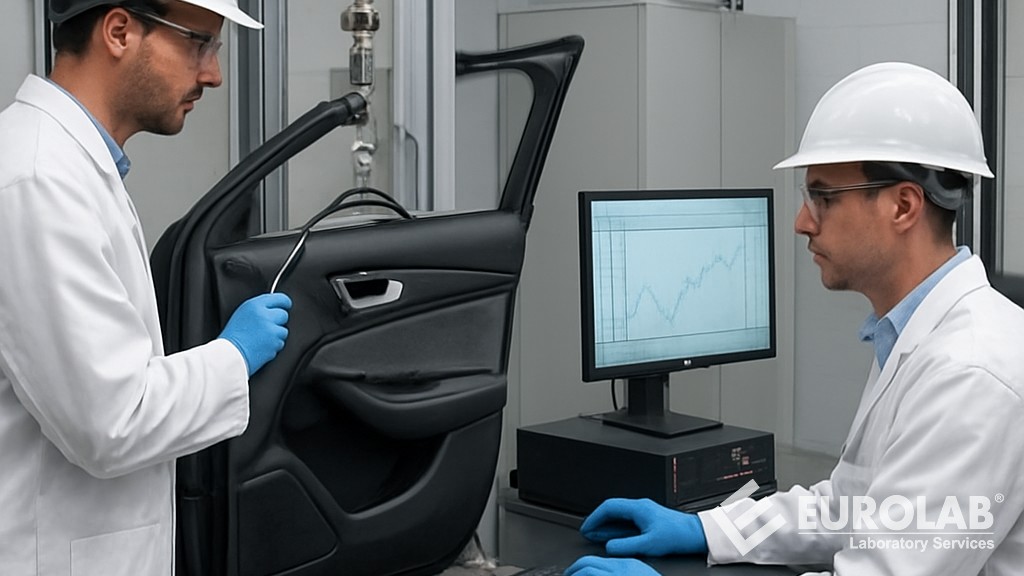
This standard was initially published for materials used in all soft interior components. All painted flexible coatings (by a secondary process) must meet the requirements of the Ford WSS-M2P188-B1 standard in addition to these requirements. This standard does not cover repairs; all paint-related repair procedures must be reviewed and approved by Ford materials engineering. In-mold coatings are not compliant with this standard. Laminated systems using flexible open-cell foam must also meet the Ford WSS-M8P30-A1 standard. Applicable coatings or fabrics must meet the requirements of Ford WSS-M8P3-F1 (flexible polymeric films), Ford WSS-M99P43-E1 (leather), or Ford WSS-M8P18-C1/C2 (fabrics). Rigid molding requirements for colored components are addressed in the Ford WSS-M15P4-l standard. Instrument panels containing integrated airbag systems must also meet all additional requirements/specifications documented in FEDE.
Leather/interwoven systems harden permanently when compressed. These systems are not recommended for areas that may be subjected to any localized loads.
In the competitive world of automotive manufacturing, where every detail contributes to driver comfort and vehicle longevity, material properties play a crucial role. Ford Motor Company, a pioneer in automotive innovation, has long set rigorous standards for components that define the interior experience. Among these, the Ford WSS-M15P45 standard series stands out as a cornerstone for soft-touch interior elements. Specifically, the Ford WSS-M15P45-D standard represents a reiteration of Ford's guidelines for assembly performance in instrument panels and soft interior components featuring flexible trim materials.
The Ford WSS-M15P45-D standard is part of a broader ecosystem of material performance standards designed to provide consistency, durability, and safety in vehicle interiors. The M15P45 designation falls under Ford’s materials engineering category for interior trim and focuses on assemblies that combine rigid substrates with flexible and resilient coatings. These standards are continuously updated to encompass advancements in material science, environmental regulations, and consumer demands for premium feel and sustainability.
The Ford WSS-M15P45-D standard builds upon previous models by improving performance criteria for flexible coating materials. It is explicitly stated that it should be used in conjunction with the Ford WSS-M99P1111-A standard, a fundamental specification for general material testing protocols such as environmental aging, chemical resistance, and mechanical integrity. This synergy ensures that components not only meet specific criteria but also demonstrate holistic performance within the vehicle ecosystem.
The Ford WSS-M15P45-D standard essentially defines material and assembly requirements for instrument panel assemblies, instrument panel components, floor console armrests, valance panels, sound insulation panels, door panels, or wrapped pillars. These elements utilize a flexible (soft) covering material layered onto a rigid substrate and optionally incorporate foam, interfacing, or a top coating for enhanced aesthetics and tactile feel.
This standard emphasizes a first-class, user-centric design philosophy, targeting soft interior components. The instrument panel's comfortable tilt to the touch, the door panels' effective reduction of road noise, or the console armrest providing a comfortable resting area on long journeys are tangible results of adhering to this standard.
The main applications are:
By standardizing these features, Ford ensures uniformity across various models and enhances brand credibility.
Typical requirements for the Ford WSS-M15P45-D standard include the following:
Tests are performed on completed assemblies conditioned in controlled environments (e.g., at a temperature of plus/minus 2 degrees Celsius and 50 percent plus/minus 5 percent relative humidity for at least 24 hours). Suppliers must submit materials for approval, and a request for supplier engineering approval is required for any changes. For automotive suppliers, compliance with the Ford WSS-M15P45-D standard is mandatory to bid on Ford interior contracts.
For many years, our organization, with its competent and experienced staff, has been understanding the needs of its customers, providing the advanced testing services they require, and assisting in the establishment, implementation, and improvement of management systems. Within this framework, we also provide testing services to businesses in accordance with the “Ford WSS-M15P45-D Assembly performance, instrument panel, door and soft components, flexible trim material” standard.
To get an appointment, to get more detailed information or to request an evaluation, you can ask us to fill in our form and reach you.

