

The materials defined in the “Ford WSS-M16J19 B1 Paint, single-component monocoat, for hard surfaces, exterior / B2 Paint, two-component monocoat, for hard surfaces, exterior” standards, developed by Ford Motor Company (Ford), are monocoat paints applied using a baked-on process.
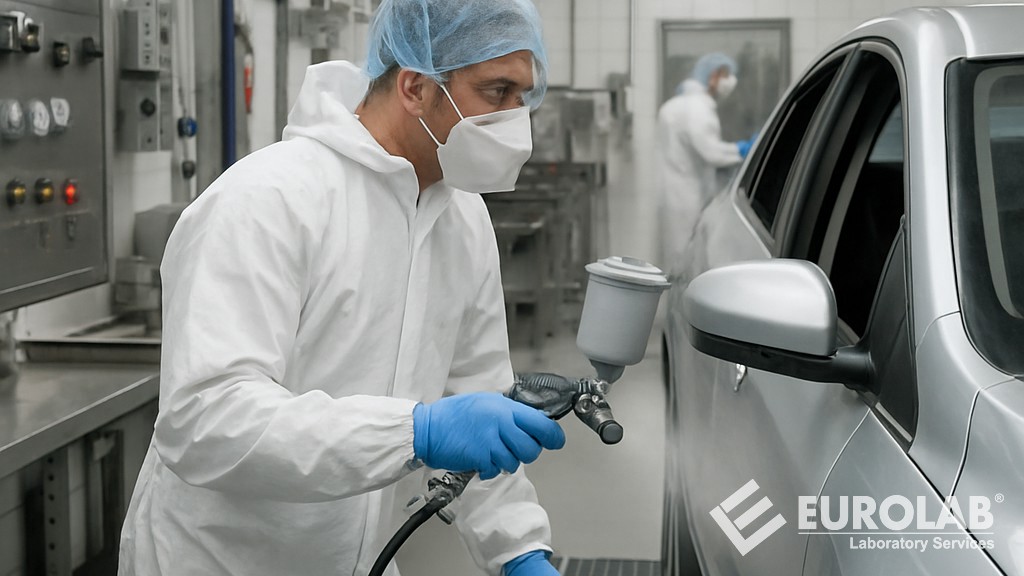
These specifications were originally published for paints used as a topcoat on exterior trim components made from hard surfaces, such as spoilers, appliques, mirror housings, handles, grilles, and emblems. They are suitable for use over specified primers or pre-baked enamel, as in paint repair or tacking processes.
The firing temperature must not exceed the softening temperature of the surface material as determined by Ford Materials Engineering.
In the automotive manufacturing industry, material specifications are critical to ensuring quality, durability, and consistency throughout production lines. Ford Motor Company, one of the world's leading automakers, strives to standardize the components and surfaces used in its vehicles. Among these is the Ford WSS-M16J19 standard, which outlines requirements for single-coat paint systems applied to hard surfaces for exterior applications. Specifically, the Ford WSS-M16J19-B1 and Ford WSS-M16J19-B2 standards define single-component and two-component single-coat paints, respectively. These standards are vital for suppliers producing painted parts such as bumpers, trim, and body panels, ensuring these parts can withstand environmental impacts such as UV exposure, weathering, and mechanical wear.
These standards are part of Ford’s broader materials engineering framework and should be used in conjunction with the company’s standard requirements for manufacturing materials (WSS-M99P1111-A).
Traditional automotive paints typically involve a multi-layer system: primer, base coat, and varnish. However, monocoat systems combine color and protection in a single layer, reducing production steps, material costs, and application time. Ford's WSS-M16J19 standard series targets oven-cured monocoat paints ideal for hard surfaces such as metal or engineering plastics used on exterior components.
The "B1" and "B2" designations refer to revisions of this standard. Revision B1 focuses on a single-component formulation (ready-to-use, no mixing required), while revision B2 focuses on a two-component system (base resin mixed with hardener for improved performance). Both are designed for outdoor durability, comply with Ford's color standards, and meet stringent emissions regulations during application.
The Ford WSS-M16J19-B1 standard specifies a single-component, single-coat paint for exterior use on hard surfaces. This system is suitable for high-volume production as it does not require on-site mixing.
In this standard, the composition and materials are defined as follows:
In terms of performance, B1 class paint must meet Ford's approved production sample criteria. The basic tests are as follows:
Suppliers must prove compliance through laboratory testing with variations based on the original approved sample. This ensures batch-to-batch consistency across Ford’s global supply chain.
The Ford WSS-M16J19-B2 standard extends the monocoat concept to a two-component system where a base coat is combined with a curing agent (isocyanate or similar) immediately prior to application. This provides superior chemical resistance and mechanical strength, making it suitable for high-stress exterior parts.
In this standard, the composition and materials are defined as follows:
In terms of performance, B1 class paint is based on B1 standards, developed for demanding applications:
Approval, such as B1 class, depends on matching the original production sample, which Ford materials engineering oversees the verification process for.
In short, while both specifications target exterior monocoat paints on hard surfaces, the differences between them lie in their formulation and performance balance.
These features are an integral part of Ford's exterior bodywork processes. For example,
During production, these paints are baked at 120-150 degrees Celsius to form a durable 50-80 micron thick film.
For many years, our organization, with its competent and experienced staff, has been understanding the needs of its customers, providing the advanced testing services they require, and assisting in the establishment, implementation, and improvement of management systems. Within this framework, we also provide testing services to businesses in accordance with the “Ford WSS-M16J19 B1 Paint, single-component monocoat, on hard surfaces, exterior / B2 Paint, two-component monocoat, on hard surfaces, exterior” standard.
To get an appointment, to get more detailed information or to request an evaluation, you can ask us to fill in our form and reach you.

