

The “TOGG PVE.0.01.08.0024 Flammability (component and material)” standard, developed by Turkey’s Automobile Enterprise Group (TOGG), describes procedures for determining the flammability of interior and exterior components of a complete vehicle, including:
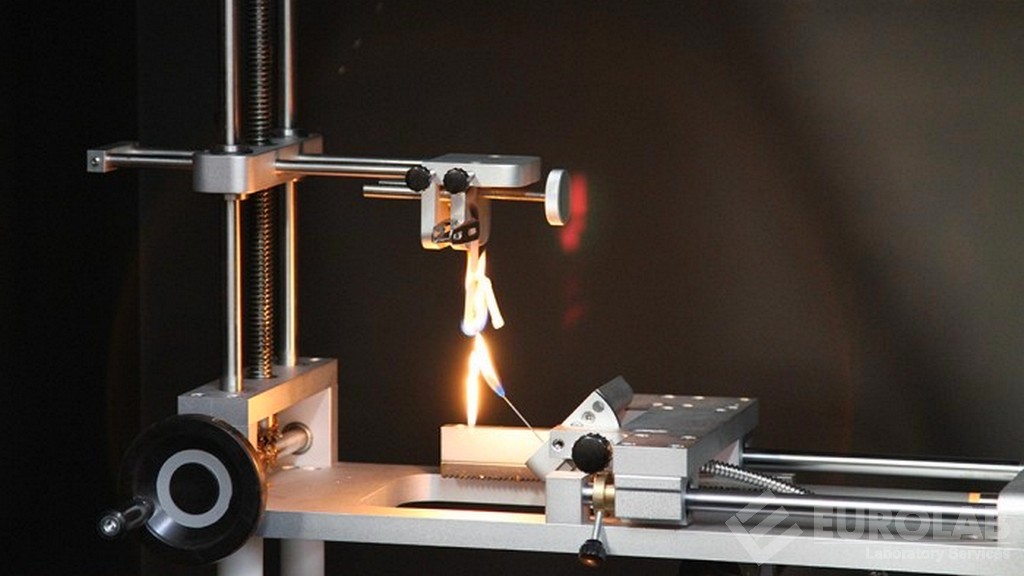
Depending on the legal requirements, this is either a component or material test. In some cases, both can be selected.
This test specification applies to all complete vehicle verification programs, regardless of vehicle type. In some cases, for example with vehicle type-specific target values or tests, corresponding descriptions are recorded.
The descriptions of this test procedure are binding. Deviations from this standard are only permitted with prior approval. Deviations must be documented in test reports and reasons and details must be stated.
The test parameters and target values included in this standard serve as a guide and should be decided and adapted for each project.
Most plastics are derived from the same raw material that powers the majority of vehicles: petroleum. However, plastic is a highly flammable material when exposed to the right conditions.
Flammability is the ease with which a material ignites, the intensity with which it burns and releases heat after ignition, its tendency to spread fire, and the rate at which it produces smoke and toxic combustion products during gasification and combustion. A comprehensive assessment of the overall flammability of a material may require data from several laboratory tests combined with some form of analysis or modeling to properly interpret the results. Several of the fire properties, such as flammability, can be determined from laboratory-scale flammability tests.
The flammability of a material can often limit its use, and the smoke-producing properties of composite materials are important factors in determining the end use of the products. The flammability of a composite is often found to be different from the flammability of its constituent materials. Flame retardant resins can improve fire performance. However, additives used to increase fire resistance can have a negative impact on processing techniques and mechanical performance. Fire resistance can be achieved with flame retardant additives, flame retardant polyester compounds and flame retardant vinyl monomers.
The FMVSS 302 standard is designed to control the burning rate of materials used in automotive interiors. The purpose of this standard is to slow the burning rate of interior materials to allow occupants to evacuate in the event of a fire. According to this standard, automobile manufacturers must prove that interior materials will burn at a rate of 102 mm/min or slower. This test must be performed on actual parts. If the part is not large enough to allow the required sample for testing, surrogate testing on test plates is permitted.
The TOGG PVE.0.01.08.0024 standard is a test method developed to follow the FMVSS 302 methodology but allows the tester to validate the results. As part of the ISO documentation procedures, almost all automobile manufacturers have developed test versions. The TOGG PVE.0.01.08.0024 standard is one of them.
Electric vehicles are like any other vehicle and must have FMVSS 302 certification. However, these components that are in contact with the electrical network usually have other requirements. The requirements of the “UL 94 Flammability Tests of Plastic Materials for Parts in Appliances and Instruments” standard are generally used in this regard. Most components need at least a UL 94 standard V-0 rating.
Among the numerous tests, measurements, analyses and evaluation studies that our organization has carried out for businesses in various sectors, it also provides certification and testing services defined in the “TOGG PVE.0.01.08.0024 Flammability (component and material)” standard with its trained and expert staff and advanced technological equipment.
To get an appointment, to get more detailed information or to request an evaluation, you can ask us to fill in our form and reach you.

