

The “PSA D45 5210 Plastics - Measurement of Electrostatic Charge Dissipation” standard, developed by the French car manufacturer PSA Group, now part of Stellantis, describes a test method for measuring the ability of a thermoplastic or heat-resistant material to dissipate accumulated electrostatic charges. The material's capacity to dissipate these charges makes it possible to assess its resistance to dust applications.
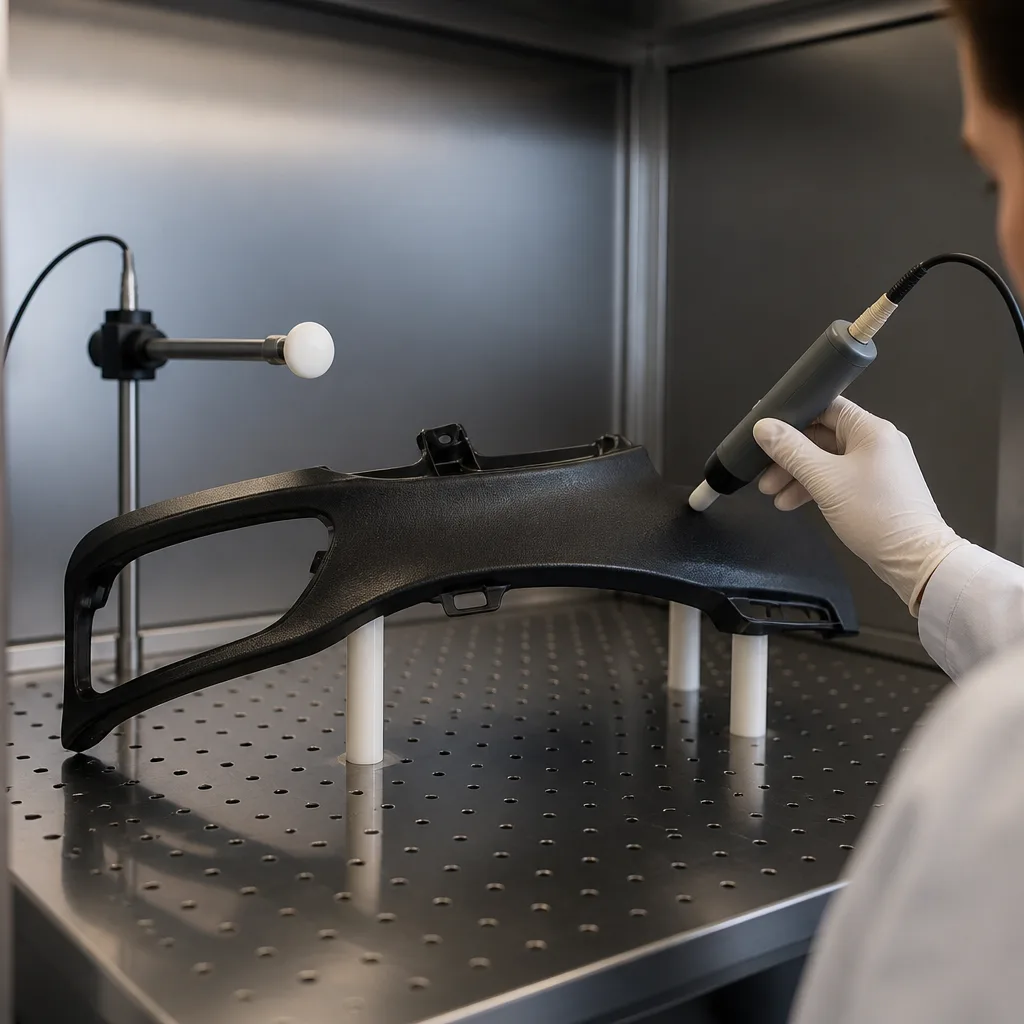
This test consists of determining the ability of a test specimen or part to dissipate electrostatic charges in ambient air by measuring the range remaining after a phase of artificial or natural exposure.
The equipment used in these tests includes:
Samples must be representative of the size to be characterized. To ensure this representativeness, it is necessary to know the basic characteristics of the population being studied. The sample selection criteria should be stated in the test report, the content of which is defined in the PSA A10 0156 standard. In case of doubt regarding the cutting procedure, the relevant PSA service should be contacted.
Samples to be tested may be vehicle parts, injection molds, or multiple whole parts. The grain size of the part must, in all cases, conform to the acceptable dimensions of the charging bench (electrode spacing and cylinder surface width). Test samples must be free of dust, scratches, or other surface defects that could impair the measurement. If necessary, they are degreased with compressed air. They must be pre-packaged in the test chamber for 16 hours before any measurement. Tests on cast parts are performed 7 to 28 days after injection. Measurements are taken on sample plates measuring 110 mm x 360 mm or standard plates measuring 90 mm x 165 mm.
The PSA D45 5210 standard defines a test method for measuring how quickly electrostatic charges dissipate from the surface of plastic materials used in vehicles. It belongs to the PSA D45 series of standards, which covers various tests for polymers, elastomers, textiles, and vehicle interior and exterior parts.
In automotive applications, plastic components (such as instrument panels, seats, door panels, trim pieces, or other interior and exterior parts) can accumulate static electricity due to friction, dry conditions, or passenger movement. This often leads to problems such as:
This testing method evaluates the antistatic properties of materials by measuring the load distribution velocity. This helps ensure that the materials meet PSA's requirements in terms of comfort, durability, and aesthetics in passenger compartments.
Passing materials typically contain antistatic additives or conductive fillers to allow charges to seep into the ground more quickly.
In general, this method follows these steps:
This standard is often referenced in broader PSA material classification documents such as “B62 0300 Thermoplastics, thermosets, thermoplastic elastomers and rubbers - Classification and Specification”. In these specifications, compliance with the PSA D45 5210 standard is a requirement or evaluation criterion for specific interior materials.
The PSA D45 5210 standard is one of many electrical and environmental tests, along with standards for color fastness, scratch resistance, heat aging, flammability, and mechanical properties. It is particularly important for interior trim and cabin equipment where passenger contact or visibility is high.
In short, the main objectives of the PSA D45 5210 standard are as follows:
Electrostatic charge buildup can cause surfaces to attract dust and particles, which is particularly problematic in the following areas:
This standard applies primarily to:
This is especially important for parts exposed to the following areas:
The PSA D45 5210 standard evaluates how quickly and effectively a material can dissipate an electrostatic charge after being exposed to it. The faster the charge dissipates, the lower its tendency to attract dust.
Typical parameters evaluated include:
Humidity is particularly critical because dry air increases static electricity buildup.
For many years, our organization, with its competent and experienced team, has been understanding the needs of its clients, providing the advanced testing services they require, and assisting them in the establishment, implementation, and improvement of management systems. Within this framework, we also provide testing services compliant with the PSA D45 5210 standard.
To get an appointment, to get more detailed information or to request an evaluation, you can ask us to fill in our form and reach you.

