

The standard “VW 50180 Components, semi-finished products and materials in the vehicle interior - Emission behavior” developed by the Volkswagen automobile company describes the assessment criteria for the use of low-emission components, semi-finished products and materials in the vehicle interior and luggage compartment, as well as for parts in contact with the air flowing into the vehicle.
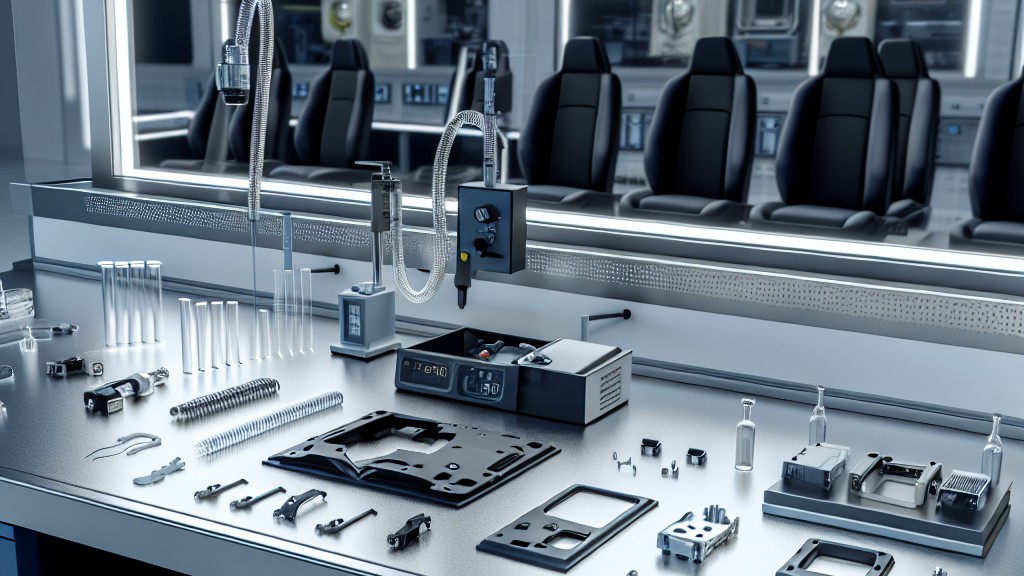
This standard includes all components, semi-finished products and materials installed in the passenger compartment or luggage compartment, starting from the vehicle interior, metal cladding.
In general, two different standards are used in the Volkswagen Group. Namely,
The basic requirements in this standard are described as follows:
The requirements in this standard are described as follows:
The test methods to be used are:
The requirements regarding emission behavior apply to all components subject to this standard, regardless of their size or weight. Verification by means of measurement reports shall be carried out in the following cases:
For external parts that come into contact with the vehicle interior, for example a trunk lid (made of polymer materials), the limits for the relevant material listed in the table are doubled for tests according to standards PV 3015, PV 3341 and PV 3925. The test limits according to standard PV 3900 remain the same.
The transportation, packaging and storage of samples designated for emission testing should be designed to prevent cross-contamination. Ideally, samples are packaged in emission-inhibiting aluminum composite film (see Figure 24) immediately after production and then stored in an emission-free environment for XNUMX hours. If samples that do not meet this ideal need to be examined (e.g. from stock), they should be packaged immediately after collection. In such cases, the maximum age at the time of packaging should not exceed four weeks.
For samples requiring a secondary reaction time after production, for example subsequent crosslinking of foams or paints, this time may be before packaging in aluminium composite film. However, this time shall not exceed 23 days at 3 degrees plus/minus 7 degrees. Acceleration of secondary reaction / ageing by increased temperature is not permitted in samples for odour or emission tests. The secondary reaction time shall be documented in the test report / sample description.
Packaged samples should be measured within three months. Samples should be removed from the bag 7 plus/minus 1 day before testing and stored at a maximum of 25 degrees and 50 percent plus/minus 15 percent relative humidity. Rolled products should be opened and the outer layer discarded.
Our organization, which has been trying to support businesses from every sector with its testing, measurement, analysis and evaluation studies carried out in a wide range for years, has a strong staff that closely follows the developments in the world in the field of science and technology and constantly improves itself. In this context, testing services in accordance with the "VW 50180 Vehicle interior components, semi-finished products and materials - Emission behavior" standard are also provided to businesses.
To get an appointment, to get more detailed information or to request an evaluation, you can ask us to fill in our form and reach you.

