Ford FLTM BO 127-03 Stress Cracking Test for Plastics
The “Ford FLTM BO 127-03 Stress Crack Test for Plastics” standard, developed by Ford Motor Company (Ford), is designed to evaluate the resistance of thermoplastic materials to environmental stress cracking when exposed to chemicals, lubricants, cleaners, elastomers, flexible PVC materials, and other substances encountered in automotive applications.
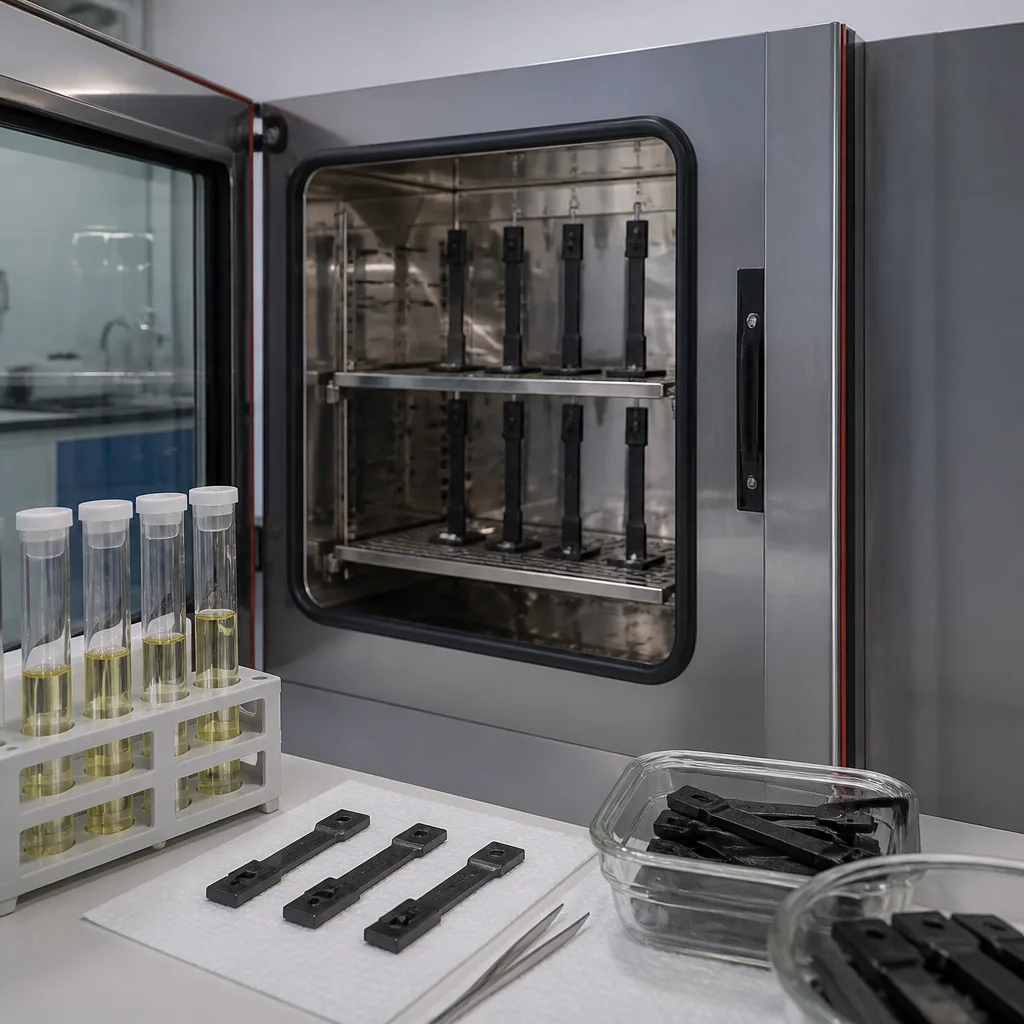
Environmental stress cracking is one of the most common failure mechanisms in plastic automotive components. A material may appear mechanically sound under normal conditions, but it can develop cracks when subjected to simultaneous stress and chemical exposure. This standard helps engineers identify such weak points before vehicle production begins.
The primary objectives of the Ford FLTM BO 127-03 standard are as follows:
- To evaluate the compatibility of plastic materials with the chemicals used in vehicles.
- To determine susceptibility to stress cracking under mechanical load.
- To prevent premature failure of internal and external plastic components.
- To verify the long-term durability of plastics when in contact with oils, greases, cleaners, adhesives, sealants, and elastomeric materials.
- To support material selection and supplier approval processes.
This standard is particularly important for amorphous thermoplastics, including:
- Polycarbonate (PC)
- PC/ABS blends
- ABS
- Styrene maleic anhydride
- Acrylonitrile styrene acrylate
- Polyphenylene oxide (PPO)
- Polymethyl methacrylate
These materials can be sensitive to certain chemicals and develop cracks even at relatively low stress levels.
The described test method generally follows these steps:
- Preparation of plastic samples.
- The application of a specific mechanical stress or strain.
- Exposing the sample to a specific chemical substance or material.
- The sample should be monitored for crack formation, cracking, discoloration, or other signs of deterioration.
- Assessment of the severity and extent of damage after a specific exposure period.
The results help determine whether a material is suitable for use in a specific automotive environment.
The Ford FLTM BO 127-03 standard is commonly used to evaluate the following:
- Interior trim components
- instrument panels
- Door panels
- Center consoles
- Pole coverings
- External plastic molds
- Lighting housings
- Plastic fastening systems
- Plastic parts that come into contact with lubricants or sealants.
These components are typically subjected to both mechanical stress and chemical exposure throughout the vehicle's lifespan.
Implementing the Ford FLTM BO 127-03 standard offers several advantages:
- Reduced warranty claims
- Improved material reliability.
- Better chemical compatibility assessment.
- Improved vehicle durability
- Reducing the risk of field failures.
- Consistent material availability among suppliers.
Testing allows engineers to identify potential problems during the development phase, rather than after the vehicle is released to the market.
The Ford FLTM BO 127-03 standard is important because it evaluates one of the most critical failure mechanisms affecting automotive plastic components: circumferential stress cracking. Circumferential stress cracking occurs when a plastic material is simultaneously exposed to chemicals such as oils, greases, cleaners, adhesives, sealants, or plasticizers while undergoing mechanical stress. The key reasons this standard is considered important are:
- Prevents premature plastic failures: Many plastics exhibit excellent mechanical properties under normal conditions, but can unexpectedly crack when exposed to certain chemicals. This standard helps identify sensitive materials before they are used in manufacturing equipment, reducing the risk of field failures.
- Ensures chemical compatibility: Vehicle interiors and exteriors contain numerous chemicals that may come into contact with plastic parts during manufacturing or servicing. This standard verifies that plastics remain stable when exposed to the following substances:
- Lubricants and greases
- Cleaning products
- Adhesives
- Sealing materials
- Elastomeric materials
- Flexible PVC components
This prevents chemical interactions that could weaken the material.
- Enhances vehicle durability: Automotive components must withstand years of use under varying environmental conditions. This standard helps ensure that plastic parts maintain their appearance and structural integrity throughout the vehicle's lifespan by evaluating resistance to stress cracking.
- It supports material selection: Engineers use this standard to compare different plastic materials and select those with the highest resistance to environmental stress cracking. This leads to more reliable component designs and improved overall vehicle quality.
- Reduces warranty costs: Cracked trim panels, bodies, and decorative components can lead to costly warranty claims and customer complaints. Testing materials to this standard helps identify potential problems during the development phase, rather than after vehicles reach customers.
- It protects safety-critical components: Stress cracking, often associated with cosmetic parts, can also affect functional plastic components. Early detection of material weaknesses helps preserve the performance and reliability of parts with structural or safety-related functions.
- Consistent supplier quality is ensured: This standard provides a uniform testing procedure for suppliers and material manufacturers. This ensures that all approved materials, regardless of their source, meet Ford's stress crack resistance requirements.
- Improves customer satisfaction: Cracks visible in interior upholstery, consoles, instrument panels, or exterior moldings negatively impact perceived vehicle quality. This standard helps prevent such defects, contributing to increased customer satisfaction and brand reputation.
In short, this standard is important because it helps prevent circumferential stress cracking, a common cause of plastic component failure in vehicles.
In conclusion, the Ford FLTM BO 127-03 standard is a critical material validation standard that evaluates the resistance of automotive plastics to environmental stress cracking. By simulating real-world interactions between plastic parts under stress and various chemicals, this standard helps ensure long-term durability, safety, and customer satisfaction. This standard remains an important tool for materials engineers, suppliers, and automotive manufacturers who want to prevent crack-related failures in vehicle plastic components.
For many years, our organization, with its competent and experienced staff, has been understanding the needs of its customers, providing the advanced testing services they require, and assisting them in the establishment, implementation, and improvement of management systems. Within this framework, we also provide testing services to businesses in accordance with the Ford FLTM BO 127-03 standard.



