

The “GM 4486P Ozone Resistance Test of Elastomer Compounds” standard, published by General Motors (GM), was developed to evaluate the resistance of rubber and synthetic elastomer materials to ozone-induced degradation when exposed to controlled environmental conditions. While this specification was later deactivated and largely replaced by newer GM Worldwide (GMW) standards, it remains an important historical reference and is still used in the technical data sheets of many elastomeric products.
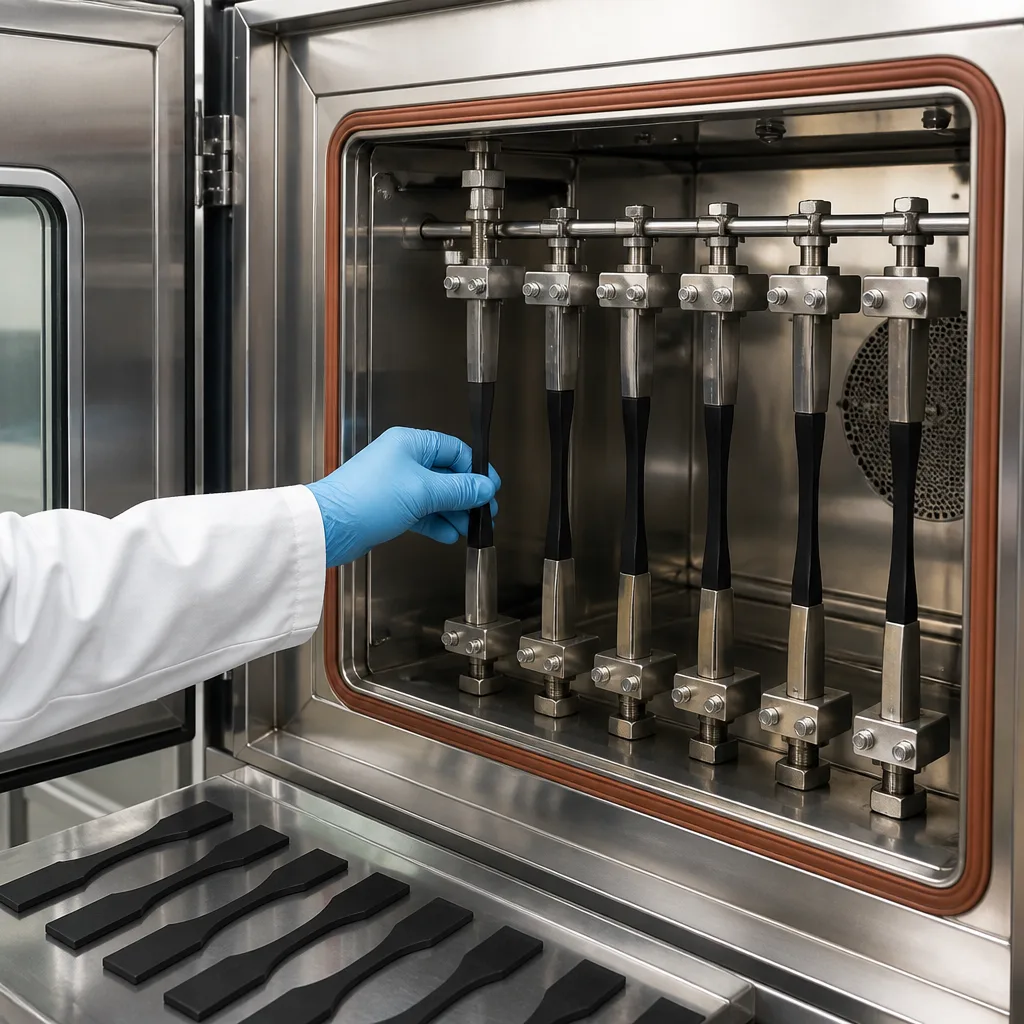
Ozone resistance is one of the most critical durability properties for automotive rubber components, as even very low concentrations of atmospheric ozone can cause cracking and premature failure in elastomer materials subjected to tensile stress.
The primary purpose of GM 4486P is to determine the relative resistance of elastomer compounds to ozone attack under accelerated laboratory conditions. This test allows engineers to:
By exposing samples to high ozone concentrations under controlled voltage, the test accelerates the aging process that would normally occur over several years of service.
Ozone occurs naturally in the atmosphere and is also produced by:
Although ozone concentrations are relatively low, ozone reacts aggressively with the double bonds found in many elastomers. For example,
This reaction produces microscopic surface cracks that gradually spread throughout the material. Typical consequences include:
In principle, the test method described in the GM 4486P standard exposes elastomer samples to the following:
Unlike simple weather resistance tests, the samples are stretched during exposure because rubber components in real vehicles typically operate under tension. At the end of the exposure, the samples are visually inspected for ozone cracking.
Although the exact parameters depend on the material specification, the general test method follows these steps:
The appearance, size, and number of cracks determine the ozone resistance of the material.
The GM 4486P standard is applicable to numerous automotive elastomer materials, including those listed below:
Among these, EPDM rubber generally exhibits exceptional ozone resistance, making it the preferred material for airtight strips and external sealing systems.
Many automotive rubber products can be evaluated using the GM 4486P standard. These include:
These components are constantly exposed to sunlight, oxygen, ozone, and changing weather conditions.
The GM 4486P standard offers several important advantages:
Manufacturers can prevent costly field failures by identifying weak rubber compounds before the production stage.
Although developed by General Motors, ozone resistance testing is valuable in many sectors:
Any rubber component exposed to outdoor environments would benefit from an ozone resistance assessment.
The GM 4486P standard is now considered an outdated GM North American specification and has been replaced by newer standards in GM's global standards system. However, its test principles are consistent with internationally accepted ozone aging methods such as:
Many current GM material specifications continue to require ozone resistance verification using updated GMW standards or equivalent international methods.
Although no longer active, the GM 4486P standard is still used as a reference in technical literature and product data sheets. For example, manufacturers of polyurethane foam and elastomeric sealants report successful performance against the GM 4486P standard as proof of ozone resistance. This demonstrates the test's continued recognition within the automotive supply chain.
In conclusion, the GM 4486P standard played a significant role in establishing consistent methods for evaluating the ozone resistance of automotive elastomer compounds. By simulating long-term environmental exposure under controlled laboratory conditions, this standard helped manufacturers develop rubber materials that could maintain flexibility, sealing performance, and structural integrity throughout a vehicle's service life. While newer GMW specifications have superseded GM 4486P, its test philosophy remains highly relevant, and its methodology continues to influence modern rubber durability testing in the automotive industry.
For many years, our organization, with its competent and experienced staff, has been understanding the needs of its clients, providing the advanced testing services they require, and assisting them in the establishment, implementation, and improvement of management systems. Within this framework, we also provide testing services compliant with the GM 4486P standard.
To get an appointment, to get more detailed information or to request an evaluation, you can ask us to fill in our form and reach you.

