

The “Ford WSS-M2P181-D Paint Performance, Flexible Surfaces, Exterior” standard, developed by Ford Motor Company (Ford), describes the performance requirements for a painted part for all exterior body parts where optimal appearance, high flexibility, high durability, and impact resistance are required. This system is specified for component suppliers, covering all processes including in-department and pre-delivery repairs.
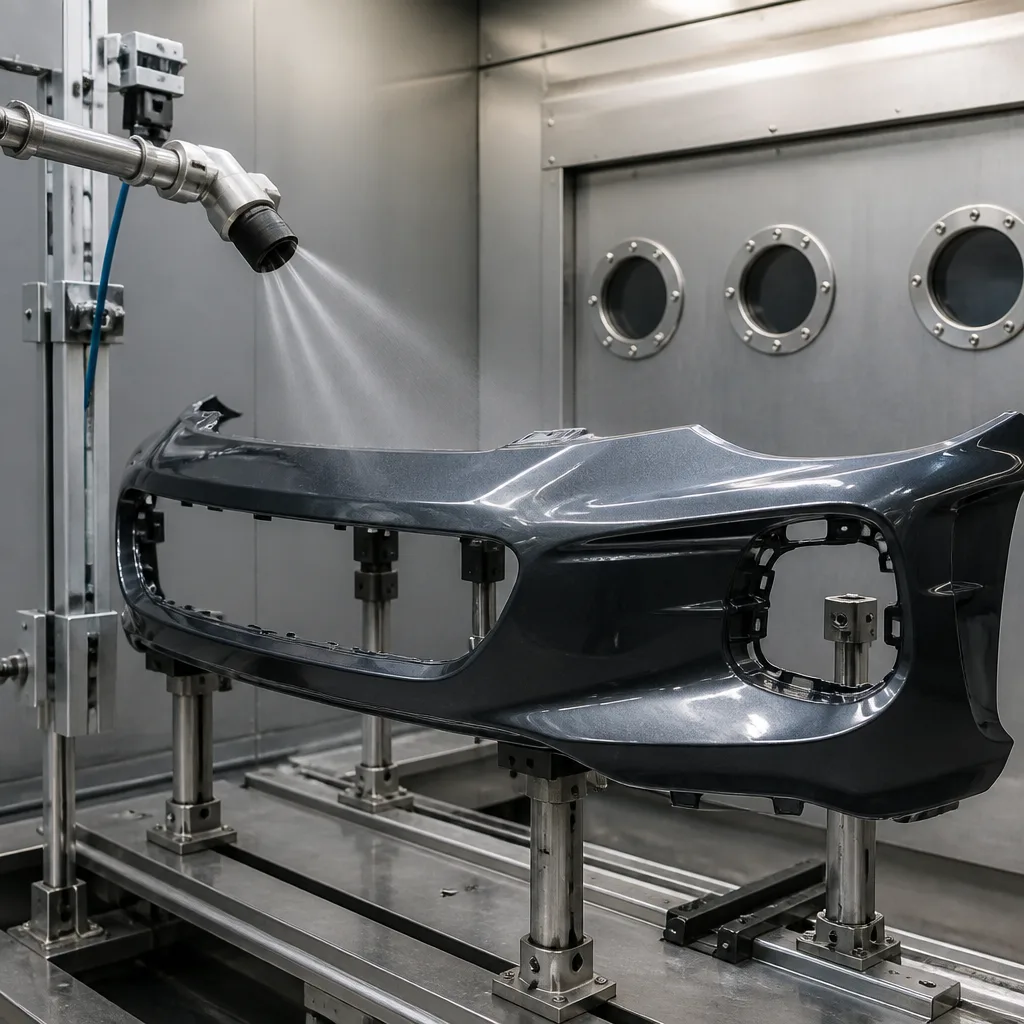
This specification is published to define the paint performance of exterior painted surfaces. It is specified for vehicle bumpers, claddings, body side moldings, and other parts visible after assembly.
The Ford WSS-M2P181-D standard is an engineering material specification that defines performance requirements for painted exterior plastics and other flexible surface components. This standard is designed for exterior vehicle parts that require excellent cosmetic appearance while providing high flexibility, durability, and resistance to mechanical and environmental damage throughout the vehicle's lifespan.
This specification is used in conjunction with the Ford WSS-M99P1111-A standard, which defines general engineering requirements applicable to Ford material specifications. The WSS-M2P181-D standard applies to component suppliers responsible for the production of painted exterior parts and covers both manufacturing processes and approved repair procedures.
Modern vehicles increasingly use lightweight polymer materials instead of steel for exterior components. These materials reduce vehicle weight, but present new challenges as they undergo significantly greater expansion, stretching, and deformation than metal parts.
The purpose of the Ford WSS-M2P181-D standard is to ensure that painted flexible components meet the following requirements:
This specification generally applies to painted exterior plastic components, including:
These components are typically manufactured from the following types of flexible engineering plastics:
Rather than specifying a particular paint formulation, the Ford WSS-M2P181-D standard defines the required performance of a complete painted system. Typical performance categories include:
Loss of adhesion, blistering, or peeling are unacceptable.
The paint system, together with the substrate, must be flexible enough to have the following characteristics:
This flexibility requirement sets this specification apart from paint standards designed for rigid metal panels.
The coating system must resist and, where necessary, prevent corrosion or cosmetic deterioration:
The coating must provide protection against prolonged environmental exposure to the following:
The coating should not soften, change color, blister, or lose its adhesive properties after exposure.
The paint system must absorb deformation without significant cracking or peeling.
Proficiency typically requires the performance and evaluation of the following validation tests:
These tests confirm that the complete body system meets Ford's durability and appearance requirements.
Suppliers conforming to the WSS-M2P181-D standard typically check the following:
This standard also covers approved in-house and pre-delivery paint repair processes to ensure repaired parts achieve performance equivalent to their original manufacturing finishes.
Complying with the Ford WSS-M2P181-D standard offers several advantages:
In short, exterior plastic components are exposed to far harsher conditions than many other automotive parts. They must withstand constant sunlight, rain, road salt, stone chips, vibration, temperature fluctuations, and repeated bending while maintaining a high-quality painted surface.
The Ford WSS-M2P181-D standard establishes a comprehensive set of performance requirements to ensure that paint systems applied to flexible exterior surfaces remain attractive, durable, and mechanically sound throughout the vehicle's lifespan. By qualifying coating systems to this specification, Ford and its suppliers achieve consistent appearance, reliable long-term performance, and improved customer satisfaction across global vehicle production.
For many years, our organization, with its competent and experienced staff, has been understanding the needs of its customers, providing the advanced testing services they require, and assisting them in the establishment, implementation, and improvement of management systems. Within this framework, we also provide testing services compliant with the Ford WSS-M2P181-D standard.
To get an appointment, to get more detailed information or to request an evaluation, you can ask us to fill in our form and reach you.

