Toyota TSL5704G Foam Type Floor Mat
A Toyota engineering standard, “Toyota TSL5704G Foam type floor mat”, specifies requirements for foam type mat materials to be used on the floor of vehicles. Parts made from materials provided by this standard must comply with the prohibitions and restrictions for substances of environmental concern in the TSZ0001G standard. Exempt uses specified by the end-of-life vehicles directive (ELV directive) must comply with the latest version of the directive.
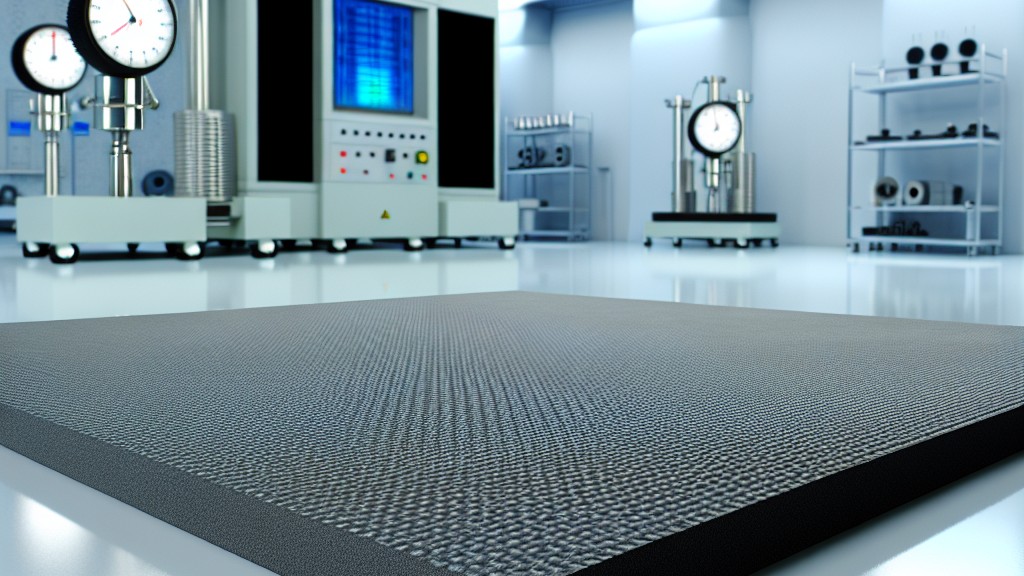
The mats should be foam type mats with outer surface layers mainly composed of natural or synthetic rubber and vinyl chloride, and should be processed by vacuum foaming or similar methods.
Mats are classified into types shown in the table according to their material composition and cold resistance:
- Class 1: Natural or synthetic rubber
- Class 2A: Vinyl chloride, cold resistant class minus 25 degrees
- Class 2B: Vinyl chloride, normal class minus 15 degrees
- Class 3: Olefin
In terms of appearance, color, texture, gloss, pattern and similar features are specified separately. The outer surface should not have uneven color, dirt, wrinkles, scratches, hardness, roughness or foreign matter mixture or other defects that impair the usability of the mat.
Mats must be tested for quality according to this standard and meet the requirements in the tables.
The test specimens should be kept in a laboratory at a temperature of 3 degrees plus/minus 20 degrees, 2 percent plus/minus 65 percent relative humidity for at least 5 hours before testing, and the test should be performed in the same laboratory. However, if these conditions cannot be met, the actual test conditions should be noted.
As a rule, test pieces should be cut from a flat section of foam mat material. The cutting position can be specified by the parties concerned.
The test methods described in this standard are:
- Hardness test: This test is carried out according to the standard of This JIS K 6253 or ISO 48. The mat is stacked to a thickness of 12 mm or more and its hardness is measured at ten or so points on other surface layers. The average hardness is stated.
- Heating loss test: A 100 mm x 100 mm test piece is cut and its mass is measured accurately. The test piece is hung in an aging tester at 100 degrees plus/minus 80 degrees for 2 hours. It is removed from the tester and kept at 1 degrees plus/minus 20 C and 2 percent plus/minus 65 percent relative humidity for 5 hour or more, then its mass is measured again. The heating loss is calculated by the equation given as a percentage. The results are expressed by measuring the heating loss of three test pieces and averaging the values.
- Tensile strength test: For the tensile test specified in JIS K 6251, the barbell test piece is punched from the longitudinal direction and lateral direction of the mat with No. 1 die, respectively. Then, bench marks are marked at the center of the test piece at 40 mm intervals. A test piece is pulled with a tensile testing machine at a speed of 200 mm/min. The maximum load required to break the test piece is measured, and the distance between the bench marks when the test piece breaks is measured, then the tensile strength and elongation are calculated using the equations given in the standard. The standard value is indicated by the lower of the values obtained by cutting the test piece in the longitudinal direction and cutting the test piece in the lateral direction. The test result is indicated by both values. The longitudinal and transverse directions of the mat are indicated by the directions parallel and perpendicular to the calendar direction, respectively.
- Tear strength test: As specified in JIS K 6252 or ISO 34-1, a non-slotted angle type tear strength test piece is pierced from the longitudinal direction and lateral direction of the mat. The test piece is pulled by a tensile tester at a speed of 200 mm/min. The maximum load required to tear the test piece is measured, and then the measured value is expressed as the tear strength. The standard value is indicated by the lower of the values obtained by the longitudinal cut test piece and the lateral cut test piece. The test result is indicated by both values.
- Tensile strength test after heat aging: The same test pieces as those used for tensile strength tests are prepared. The test pieces are hung in an aging tester controlled at 400 degrees plus/minus 80 degrees for 2 hours. They are removed from the tester and kept at room temperature. After 16 to 96 hours of heat aging, the tensile strength and elongation of the test pieces are measured in the same manner as the tensile strength test.
- Heat shrinkage ratio test: A 120 mm x 120 mm test piece is prepared and 100 mm reference marks are placed on them in both longitudinal and lateral directions. They are kept in an oven aging tester controlled at 100 degrees plus/minus 80 degrees for 2 hours. It is removed from the tester to cool below room temperature. The size of the test piece is measured again and the heat shrinkage ratio is determined according to the given equation. The standard value is indicated by the larger of the values obtained by the longitudinal reference mark and the lateral reference mark. The test result is indicated by both values.
This standard also describes the following test methods:
- Cold resistance test
- Color fastness test to light
- Adhesion test
- Fogging test
- Wear resistance test
- Flammability test
- Bending recovery test
- Odor test
Our organization, which has been trying to support businesses from every sector with its testing, measurement, analysis and evaluation studies carried out in a wide range for years, has a strong staff that closely follows the developments in the world in the field of science and technology and constantly improves itself. In this context, testing services in accordance with the "Toyota TSL5704G Foam type floor mat" standard are also provided to businesses.



