

The “GM 9540P Accelerated, Cyclic Corrosion Test” standard, published by General Motors (GM), describes a procedure that helps engineers predict and prevent cosmetic and structural corrosion by simulating real-world environmental attacks in a controlled laboratory environment.
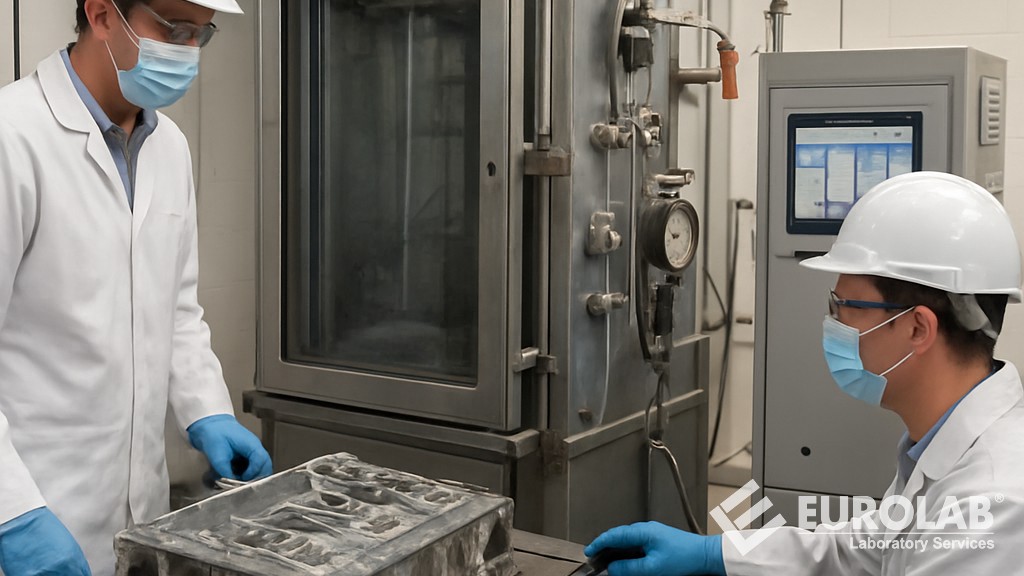
In the high-risk automotive manufacturing world, where vehicles must withstand all kinds of challenges from coastal salt spray to freezing winters, long-term durability is paramount. The GM 9540P standard incorporates an accelerated corrosion testing method that has become the gold standard for evaluating how resistant materials, coatings, and assemblies are to degradation over time.
The GMW14872 standard has largely superseded this standard, but the GM 9540P standard still exists and influences standards across the industry.
Initially, a collaboration between the Society of Automotive Engineers (SAE) and the American Iron and Steel Institute (AISI) aimed to compare various accelerated corrosion tests. A comprehensive evaluation of options ranging from salt spray chambers to moisture cycling resulted in the GM 9540P standard. Researchers found that the GM 9540P standard most accurately predicted cosmetic corrosion on cold-rolled steel, a material commonly found in vehicle bodies. This validation led to the widespread adoption of the standard. The design of the described method emphasizes cyclical exposure by mimicking the intermittent nature of environmental stressors far better than conventional stationary tests such as the ASTM B117 standard salt spray.
Over the years, as materials science advanced (with the rise of galvanized steels, advanced primers, and environmentally friendly coatings), this standard was updated. It was eventually superseded by the GMW14872 standard, which maintained virtually the same conditions but included fine-tuning for modern alloys and paints. Nevertheless, references to this standard persist, and advanced laboratories continue to use this test for comparative or historical data.
The GM 9540P standard is essentially a cyclic corrosion test, a multi-stage method that alternates between wet, dry, and salt-loaded phases to accelerate corrosion without oversimplifying real-world exposure. Unlike linear tests, this cyclic approach gradually increases the damage, revealing otherwise undetectable weaknesses in protective layers.
The standard process typically runs for 20 to 50 cycles (or more, depending on the component), with each cycle lasting approximately 24 hours. The steps of a typical cycle are as follows:
Panels or parts (typically marked with cross-hatching to simulate manufacturing scratches) are exposed and then inspected for criteria such as scratch trace (rust passing through cuts), blistering, or base metal damage. Measurements conform to the ASTM D1654 standard, which specifies backlash in millimeters. Advanced installations utilize automated chambers capable of handling everything from small coupons to full door panels.
The test is extremely balanced: aggressive enough to reveal flaws in weeks rather than years, but also correlated with field performance. Studies have shown that 10 cycles are equivalent to an average of 2-3 years of driving exposure.
The GM 9540P standard stands out for its versatility, encompassing not only automotive bodies but also aerospace, home appliances, and even marine equipment. In the automotive sector, it is indispensable for the following:
In addition to automobiles, this testing has also influenced military specifications, such as the evaluation of armor plating corrosion. Advanced laboratories have specialized in this area, offering services in every aspect from salt spray testing to thermal cycling testing.
As electric vehicles become more widespread and lightweight composites challenge the dominance of steel, the GM 9540P standard is becoming increasingly robust. Evolving standards are incorporating electrochemical impedance spectroscopy for real-time monitoring and AI-powered predictions to further shorten cycles. Yet, the cyclical nature of this standard and the fundamental principles of multifaceted exposure remain vital.
For many years, our organization, with its competent and experienced staff, has been understanding the needs of its clients, providing the advanced testing services they require, and assisting in the establishment, implementation, and improvement of management systems. Within this framework, we also provide testing services to businesses in accordance with the "GM 9540P Accelerated, cyclic corrosion test" standard.
To get an appointment, to get more detailed information or to request an evaluation, you can ask us to fill in our form and reach you.

