

Bond Strength and Thermal Aging Test of Ford FLTM BN 113 Trim Parts

Bond Strength and Thermal Aging Test of Ford FLTM BN 113 Trim Parts

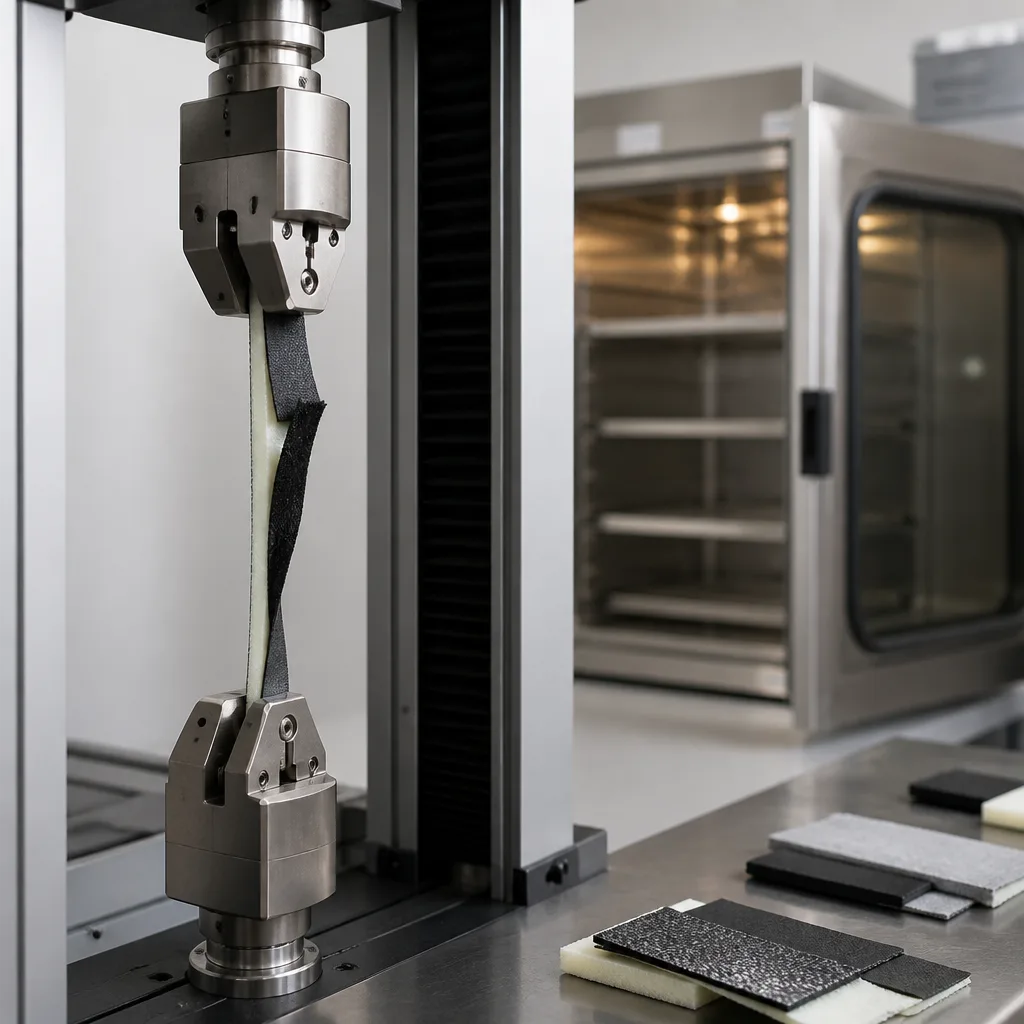
The “Ford FLTM BN 113 Bond Strength and Thermal Aging Test of Upholstery Parts” standard, developed by Ford Motor Company (Ford), is a series of test methods used to evaluate the bond strength and adhesion performance of automotive upholstery parts. This standard focuses on the strength of bonds formed between decorative and functional interior materials such as textiles, foams, polymer-coated fabrics, leather substitutes, and backing materials used in vehicle seats, door panels, headliners, and other upholstery components.
Bond Strength and Thermal Aging Test of Ford FLTM BN 113 Trim Parts

Ford FLTM BN 113 standards are particularly important because modern automotive interiors rely heavily on laminated and heat-bonded structures. If these bonds fail, manufacturers may experience separation, wrinkling, blistering, loss of appearance, reduced comfort, and customer dissatisfaction.

This standard series includes various sub-sections:

  • Ford FLTM BN 113-01 Bond Strength of Upholstery Assemblies: This standard defines a test method used to evaluate the bond strength of automotive upholstery assemblies manufactured using heat-bonding processes. The aim of this standard is to determine whether laminated interior materials possess sufficient bond integrity to withstand vehicle manufacturing, service conditions, and long-term use.

Modern automotive interiors frequently utilize multi-layered structures made from the following materials:

    • Textile fabrics
    • polyurethane foams
    • Vinyl coated fabrics
    • Faux Leather
    • Decorative laminates
    • Support materials

These layers are typically bonded together by heated lamination or adhesive. This standard measures the force required to separate the bonded layers and evaluates the quality of the bond. This standard applies to flooring components used in the following areas:

    • Seat upholstery
    • Door trim panels
    • Ceiling tiles
    • Pole laying components
    • Interior decorative laminates
    • Other glued interior materials

This procedure evaluates the original adhesive strength of the components before any additional environmental aging or durability tests.

This test method determines the following:

    • Adhesion strength
    • Peel resistance
    • Fault characteristics
    • Adhesive performance
    • Production consistency

The force required to separate the bonded layers is recorded and compared to Ford's acceptance requirements.

During testing, engineers evaluate the type of failure that occurred:

    • Adhesion failure: The bond separates at the interface between the materials, indicating poor adhesion.
    • Cohesive failure: The failure occurs in the adhesive or foam itself, usually indicating a stronger bond than the substrate.
    • Substrate failure: The material tears before the bond separates, indicating excellent bonding performance.

These observations help engineers understand the quality and durability of the bonding system.

Various variants of the Ford FLTM BN 113-01 standard are used to evaluate adhesion strength under different conditions:

    • Ford FLTM BN 113-01-O Original adhesion strength
    • Ford FLTM BN 113-01-W Wet adhesion strength
    • Ford FLTM BN 113-01-S Vapor deposition strength.
    • Ford FLTM BN 113-01-C Loop Binding Strength

These variants evaluate how humidity, vapor exposure, and specific build types affect adhesion performance.

The Ford FLTM BN 113-01 standard is typically used in the following situations:

    • Material qualification test
    • Supplier approval
    • Product development
    • Production validation
    • Quality control inspections
    • Investigating layer separation problems
  • Ford FLTM BN 113-02 Heat Aging Resistance of Bonded Trim Assemblies: This standard defines a test method used to evaluate the durability of bonded interior trim materials after exposure to high temperatures. This standard is designed to determine whether laminated trim structures can maintain their adhesion and appearance after prolonged thermal aging simulating years of vehicle service in hot climates.
  • Vehicle interiors can reach temperatures exceeding 80 degrees Celsius when exposed to intense sunlight. These temperatures can cause the following:

      • Adhesive degradation
      • Separating the laminates
      • Foam breakdown
      • Formation of wrinkles on the surface
      • Blisters or fluid accumulation
      • Loss of adhesive strength

    This standard evaluates whether bonded trim pieces can withstand such thermal stresses without significant degradation. This method applies to heat-bonded or adhesive-bonded trim components used in automotive interiors and includes:

      • Seat upholstery laminates
      • Door panel coverings
      • Ceiling flooring materials
      • Armrest covers
      • Pole laying materials
      • Vinyl-foam structures
      • Fabric-foam laminates
      • Polymer-coated fabrics bonded to support materials.

    This test is typically performed after the initial adhesion strength qualification test, which is conducted according to the Ford FLTM BN 113-01 standard.

    After heat aging, the material is evaluated in the following aspects:

      • Removed adhesion strength
      • Resistance to delamination
      • Dimensional stability
      • Visual appearance
      • Surface degradation
      • Adhesive degradation

    In many qualification programs, the aged sample is then subjected to an adhesion strength test, comparing the post-aging performance to the original values. This allows engineers to determine how much adhesion is retained after thermal exposure.

    During the evaluation, engineers may observe the following:

      • Adhesive failure: The adhesive loses its bonding properties, causing separation between the layers.
      • Cohesion failure: The failure occurs in the adhesive or foam structure itself.
      • Layer separation: The complete or partial separation of laminate layers.
      • Surface degradation: Wrinkling, blistering, or deformation caused by heat exposure.

    These failure modes provide valuable information about the long-term durability of the coating assembly.

    The Ford FLTM BN 113-02 standard is frequently used in the following situations:

      • Materials development
      • Adhesive selection
      • Supplier approval
      • Production verification
      • Interior upholstery durability test
      • Fault analysis investigations

    This method is particularly important for vehicles sold in regions with high solar loads and high ambient temperatures.

    • Ford FLTM BN 113-03 Long-term heat aging of polymer-coated fabrics: This standard defines a test method for evaluating the long-term thermal resistance of polymer-coated fabrics when simultaneously exposed to high temperatures and constant tensile loads. This standard aims to simulate the combined effects of heat and mechanical stress experienced by automotive interior materials during years of vehicle use.

    Polymer-coated fabrics used in vehicle interiors can gradually degrade when exposed to prolonged heat and stress. Typical applications include:

      • Seat upholstery
      • Artificial leather coverings
      • Vinyl coated fabrics
      • Polyurethane coated textiles
      • Door trim panels
      • Interior decorative laminates

    This standard evaluates whether these materials can maintain their appearance, strength, flexibility, and dimensional stability after prolonged thermal aging.

    After aging, samples are typically examined in terms of the following aspects:

      • Surface cracking
      • Coating deterioration
      • Permanent lengthening
      • Maintaining tensile strength.
      • Dimensional stability
      • Layer separation
      • Color and appearance changes
      • Maintaining flexibility

    The results help determine whether a material is suitable for long-term automotive interior applications.

    Typical failure modes include:

      • Coating cracking: Heat and stress can cause polymer coatings to become brittle and crack.
      • Permanent stretching: The material may stretch excessively and not regain its original dimensions.
      • Layer separation: After prolonged aging, coated layers may separate from the textile backing.
      • Loss of mechanical strength: The fabric may exhibit reduced tensile strength and durability.
      • Surface degradation: Discoloration, hardening, or textural changes may occur after thermal exposure.

    The methods described evaluate both the initial bonding strength and long-term durability of glued trim systems when exposed to high temperatures and aging conditions.

    For many years, our organization, with its competent and experienced team, has been understanding the needs of its customers, providing the advanced testing services they require, and assisting them in the establishment, implementation, and improvement of management systems. Within this framework, we also provide testing services in accordance with Ford FL™ BN 113 standards.

    WhatsApp

