

The “GMW 3217 Automotive Seat Fabric Abrasion Resistance Test” standard, developed by General Motors Worldwide (GMW), includes a test method used to evaluate the resistance of automotive seat fabrics to tearing and thread slippage. Abrasion occurs when threads begin to pull or loosen from the fabric structure in a cut, seam, or mechanically stretched area.
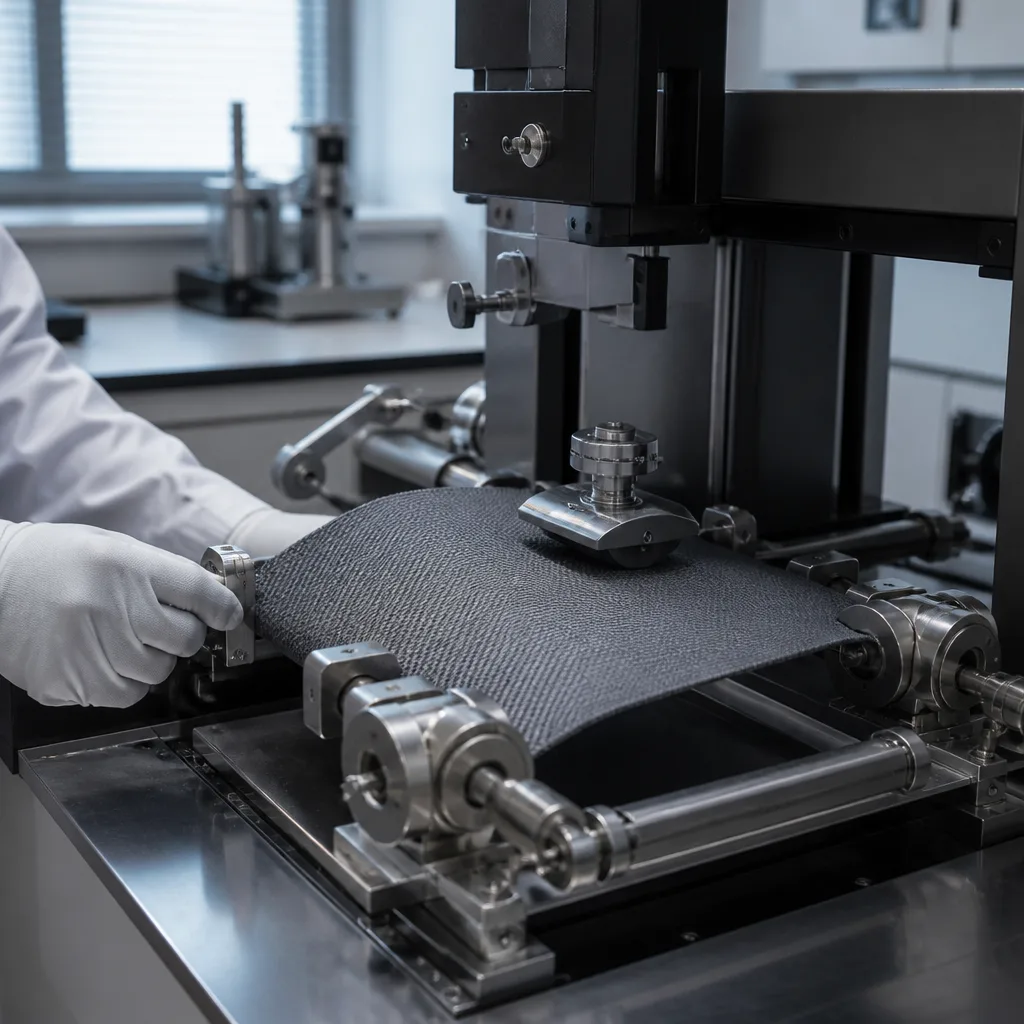
This standard is particularly important for woven automotive seat covers, as these materials are subjected to repeated mechanical stresses during seat cover manufacturing and throughout the vehicle's lifespan. The procedure is primarily designed for woven fabrics that are not laminated or contain laminate up to approximately 5 mm thick.
The primary purpose of the GMW 3217 standard is to determine whether a seat fabric can maintain its structural integrity when subjected to repeated bending and friction. A fabric with poor wear resistance may exhibit the following:
These effects can become particularly significant during the manufacture of seat covers, where the fabric is cut, sewn, folded, and processed, and during normal vehicle use.
The GMW 3217 standard, in principle, uses the Scott-type wrinkle-stretch abrasion pattern. The test equipment designed for this standard is specifically the Scott wrinkle-stretch tester, and laboratory accreditation documents define the GMW 3217 standard as a method for abrasion resistance.
The test sample is mounted on opposing fixtures. The fixtures bring sections of the fabric together and subject the material to repeated opposing motion. This produces a combination of folding, twisting, and friction that can cause the threads to move relative to each other. After a specified number of cycles, the fabric is visually evaluated for unraveling and thread slippage.
The exact dimensions of the sample, conditioning requirements, loading, and acceptance criteria are specified in the GMW 3217 standard. Generally, the testing process follows these steps:
Generally, a configuration is used with approximately 30 mm plus/minus 3 mm fixture separation, 50 mm stroke, 120 cycles/minute, and 1.000 cycles.
The primary assessment is the amount of apparent yarn movement or yarn breakage produced by the test. The rating is generally as follows:
The grading system offers a practical way to distinguish fabrics exhibiting excellent resistance from those that may have unacceptable structural degradation.
The GMW 3217 standard is primarily related to automotive seat fabrics, particularly woven textile structures. The stated applicability of this standard covers woven fabrics without lamination and fabrics containing laminate up to 5 mm thick. Therefore, the method is useful in the following cases:
Abrasion resistance is an important property because a seat fabric can have acceptable tensile strength and abrasion resistance while still being susceptible to thread slippage and edge fraying. The GMW 3217 standard addresses this particular failure mode. This standard is considered important for the following reasons:
Testing utilizes a Scott-type wrinkle-elasticity tester or equivalent device. Commercial equipment manufacturers specifically list the GMW 3217 standard among the standards supported by wrinkle-elasticity testers. These device specifications typically include:
This equipment must be verified and calibrated according to the laboratory's quality system and relevant General Motors requirements.
The GMW 3217 standard should not be confused with other textile durability tests. Automotive seat fabrics are normally evaluated using a series of complementary tests. For example,
These methods address different potential failure mechanisms and together provide a broader assessment of automotive textile performance.
The results are interpreted as follows:
The acceptance limit may not be the same for every application. Therefore, the required result should be obtained not only from the test method but also from the relevant material specification, drawing, engineering requirement, or customer-specific requirement.
In conclusion, the GMW 3217 standard is an important automotive textile testing method for evaluating the tear and yarn slippage resistance of woven seat fabrics. The described method simulates repeated mechanical stretching and friction using a Scott-type wrinkle-elasticity tester and evaluates the resulting fabric degradation.
This test is valuable for automotive seat manufacturers and material suppliers because it helps identify fabrics that may deteriorate during seat cover production or prolonged vehicle use. Combined with abrasion, tensile, tear, seam, stretch, and other textile durability tests, this standard contributes to a comprehensive assessment of the quality and durability of automotive seat fabrics.
For many years, our organization, with its competent and experienced staff, has been understanding the needs of its clients, providing the advanced testing services they require, and assisting them in the establishment, implementation, and improvement of management systems. Within this framework, we also provide testing services in accordance with the GMW 3217 standard.
To get an appointment, to get more detailed information or to request an evaluation, you can ask us to fill in our form and reach you.

