

The standard “VW TL 52668 Heat-shrinkable abrasion protection hose – Material requirements and functional requirements” developed by the Volkswagen automobile company describes the requirements for abrasion protection hoses for use with lines and hoses.
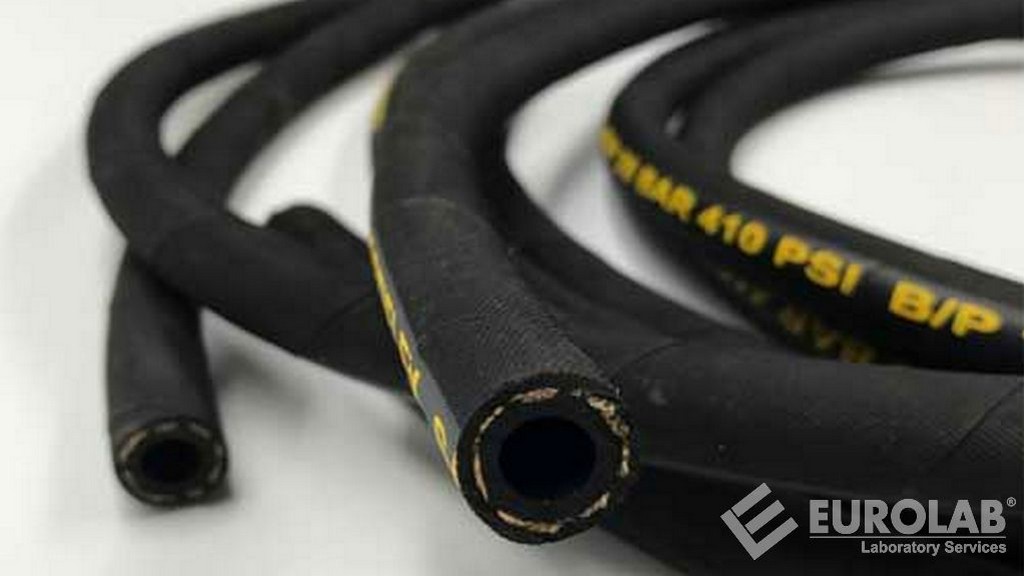
Braided hoses are mainly used for hoses that are subjected to high dynamic loads (e.g. pressure pulsation testing) and have extensive requirements on abrasion resistance.
Straight heat shrink tubing is often used for hard lines and tubing with low radial extension (inside diameter < 12 mm). Straight heat shrink tubing can also provide protection against unwanted substances by completely enclosing the component.
In the VW TL 52668 standard, hose tubes are defined as follows:
An example of a description of abrasion protection hose with shrink fabric for use cases where dynamic loads are applied and for an operating range between minus 35 degrees and 140 degrees is: Heat shrinkable braided hose in accordance with standard TL 52668-A.
An example of a description of extruded flat heat shrinkable hose used as abrasion protection hose for use cases where dynamic loads are applied and for an operating range of minus 35 degrees to 80 degrees is: Flat heat shrinkable hose in accordance with standard TL 52668-C.
In order for a hose to be put into production, the requirements specified in this standard must be met and the durability road test must be successfully completed. The test methods to be performed within this scope are as follows:
Chemical resistance tests are performed on coolant, engine oil, engine cleaner, gasoline, diesel, and road salt. The table provided within the standard contains specification and source information for these chemicals. This table includes definitions of manufacturers of suitable products. This information is for informational purposes only for users of this internal standard. Equivalent products may be used if it is verified that they produce the same results and approved by the relevant department. A minimum of three samples is required for each chemical test.
The samples are stored at 24 degrees Celsius for 23 hours after being immersed in the relevant chemicals, and then the samples are dried at room temperature. There should be no deterioration on the surface of the anti-wear hose (i.e. no cracks or swelling, no discoloration visible to the naked eye).
In the thermal stability test method, the test hose is prepared according to the VW 78007 standard, 20 mm × 3,5 mm. Five samples should be used for each test. A test hose with a shrink protective hose is subjected to aging as follows:
After cooling to room temperature according to the VW 50554-2 standard, a bending test is performed on the sample (bending radius 30 mm and bending angle 180 degrees). The sample is then cooled to minus 35 degrees and stored at this temperature for 22 hours. Then a bending test is performed in the cold state.
In the cold bending test, the bending radius is 30 mm and the bending angle is 180 degrees. Prerequisite: there should be no visible cracks in the protective hose. Then,
Among the numerous tests, measurements, analyses and evaluation studies carried out for businesses in various sectors, our organization also provides testing services defined in the standard “VW TL 52668 Heat shrinkable abrasion protection hose - Material requirements and functional requirements” with its trained and expert staff and advanced technological equipment.
To get an appointment, to get more detailed information or to request an evaluation, you can ask us to fill in our form and reach you.

