

The “GMW 14458 Copper Accelerated Acetic Acid Salt Spray (CASS) Test” standard, developed by General Motors Worldwide (GMW), describes a test method primarily used to evaluate the corrosion resistance and durability of decorative coatings and some anodized coatings.
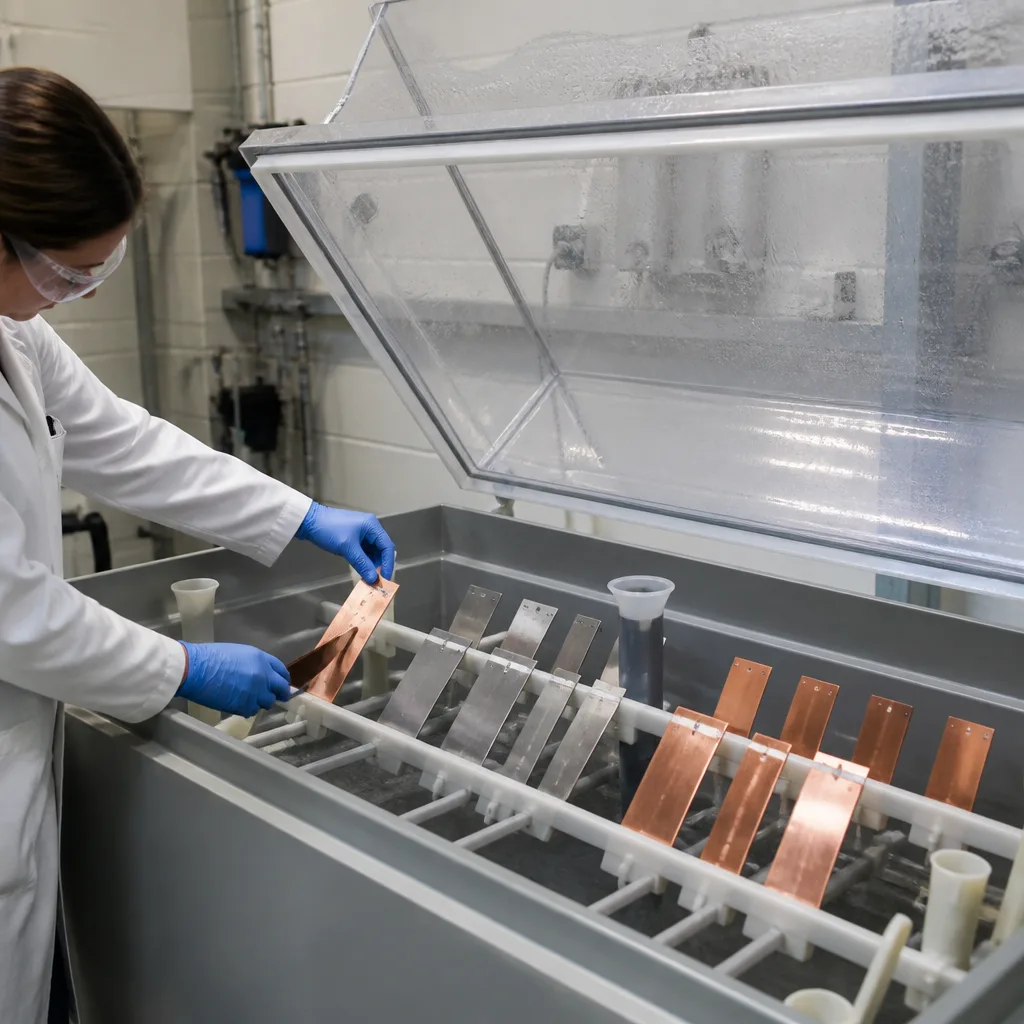
The primary objective of GMW 14458 is to provide a controlled and accelerated laboratory method for evaluating the corrosion performance of coated or electroplated components. This standard is particularly relevant to:
The GMW 14458 standard is primarily designed for quality control and process control assessments, rather than being a direct simulation of long-term field exposure.
The copper-accelerated acetic acid salt spray test (CASS) is an intensified version of the salt spray corrosion test. Unlike the conventional neutral salt spray test, CASS uses an acidic salt solution containing a small amount of copper salt. This creates a much more aggressive corrosive environment, allowing for the faster detection of weaknesses in protective coating systems.
The test equipment and room operation specified in GMW 14458 standard are based on the “ISO 9227 Corrosion tests in artificial environments - Salt spray tests” standard, along with General Motors-specific specifications and requirements.
During CASS testing, test specimens are placed in a controlled corrosion chamber. An abrasive solution is sprayed into the chamber to create a fine, continuous salt mist. This aggressive medium attacks exposed or defective areas of the coating system. Depending on the component and the relevant product specification, the test may reveal:
The exact test duration and acceptance criteria are generally determined according to the relevant material, component, drawing, or product specification, not the GMW 14458 standard. The GMW 14458 standard explicitly states that performance requirements and rating methods are generally provided in the relevant specifications or drawings.
The CASS test uses a salt solution containing sodium chloride and copper chloride in deionized water, maintained under acidic conditions. A commonly used reference CASS condition is approximately as follows:
These values are also included in applications that refer to GMW 14458 and ISO 9227 standards. However, laboratories use the GMW 14458 standard and the relevant General Motors component specification when determining actual test parameters.
The GMW 14458 standard is applicable to components and samples representing an actual coating or plating system. Depending on the application, samples may include:
Sample preparation is important because scratches, exposed substrate areas, edges, and other discontinuities can significantly affect corrosion behavior. For some coating investigations, a deliberate scratch may be made from the coating to the substrate so that corrosion propagation through a controlled defect can be evaluated. Such scratched samples are used for corrosion assessment in GMW 14458 standard applications.
After testing, the evaluation depends on the requirements of the relevant General Motors specification. Possible evaluations include:
The GMW 14458 standard applies specifically to automotive decorative and cosmetic components. Examples include:
For example, General Motors' GMW 14668 standard, a specification for decorative chrome-plated plastic parts, refers to the GMW 14458 standard as one of the applicable corrosion-related standards. This demonstrates how the GMW 14458 standard can function as a test method supporting a separate product/material specification.
One of the most important aspects of the GMW 14458 standard is its relationship to the ISO 9227 standard. The GMW 14458 standard not only establishes a completely independent corrosion test, but while the chamber work and test procedure are based on the CASS provisions of the ISO 9227 standard, General Motors adds requirements and explanations appropriate to automotive applications. Therefore,
This distinction is important when a supplier determines which test procedures and acceptance criteria will be applied to a General Motors component.
Salt spray tests can generally be categorized as follows:
CASS is particularly useful when the aim is to reveal weaknesses in decorative coatings relatively quickly.
The GMW 14458 standard is important because automotive decorative finishes must maintain their appearance and protective function despite exposure to moisture, salts, and corrosive contaminants. A coating system may look perfect immediately after production but still contain weak points such as:
CASS testing accelerates the corrosion process, allowing manufacturers and suppliers to identify such weak points before components enter vehicle production. Its main benefits include:
For many years, our organization, with its competent and experienced staff, has been understanding the needs of its clients, providing the advanced testing services they require, and assisting them in the establishment, implementation, and improvement of management systems. Within this framework, we also provide testing services in accordance with the GMW 14458 standard.
To get an appointment, to get more detailed information or to request an evaluation, you can ask us to fill in our form and reach you.

