

Developed by BMW, a leading German multinational company in the automotive sector, the “BMW PR 524 Standard for the Evaluation of Adhesion of PUR Foams to Internal Layers of Foam Composite Parts” specifically addresses the adhesion of polyurethane foams to additional components of foam composite parts and describes procedures for evaluating bond strength, durability, and reliability in production environments. This standard is essential to ensure that composite parts withstand daily use, environmental stresses, and safety demands in vehicles.
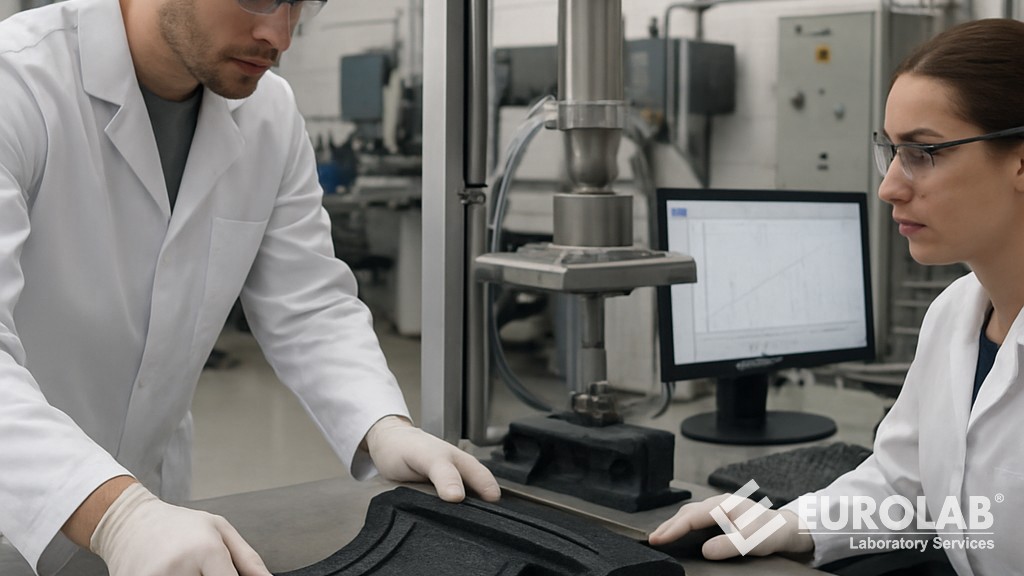
In the automotive industry, polyurethane (PUR) foams play a critical role in the production of lightweight, durable, and comfortable components such as seats, headrests, instrument panels, and other interior elements. These materials are often integrated into composite parts where the PUR foam is bonded to various additional parts such as metal, plastic, or fabric reinforcements. To maintain high quality and performance standards, manufacturers use this standard to test and verify these bonds.
This standard is consistent with broader industry applications for foam adhesion testing. It helps prevent problems such as delamination, which can compromise component integrity over time.
Polyurethane foams are preferred in automotive design due to their versatility. They can be formulated as rigid, semi-rigid, or flexible foams and offer properties such as cushioning, insulation, and shock absorption. In composite parts, PUR foams are often molded around inserts, which are structural elements that provide reinforcement or connection points. For example, in vehicle seats, a foam core can surround metal frames or plastic inserts to create a cohesive assembly.
Composite panels, such as those made from PUR foam cores between nonwoven surfaces, are increasingly used for three-dimensional automotive parts due to their lightweight construction and high-volume production potential. These structures reduce vehicle weight, improving fuel efficiency and handling while maintaining strength. However, adhesion between the foam and the components is extremely important. Poor adhesion can lead to failures under mechanical stress, temperature fluctuations, or humidity, potentially impacting passenger comfort and safety.
The BMW PR 524 standard is implemented to ensure these composites meet rigorous criteria. This is particularly important for interior applications where PUR foams need to adhere reliably to thermoplastics or other substrates.
The key features of the BMW PR 524 standard are as follows:
Adhesion tests under the BMW PR 524 standard typically follow a structured approach:
These tests are performed at controlled temperatures because adhesion can vary significantly (for example, foams are tested at 60 degrees for printing behavior).
Challenges in adhesion include surface preparation (additional parts may require priming or plasma treatment to improve adhesion) and material variability. PUR foams can be sensitive to moisture during curing, which can affect cell structure and adhesion. This standard addresses these issues by specifying minimum performance criteria.
BMW PR 524 uses PUR foams in components such as seats, where they provide cushioning around additional parts for ergonomic support. They are also important for electric vehicles, where composites reduce weight to extend range. For example, the fiberglass matte thermoplastics in the spare wheel wells of BMW models highlight the use of foam composites.
Looking to the future, sustainability is key. Recycling PUR foam from end-of-life vehicles presents challenges, but advances in re-bonding techniques are enabling the transformation of waste foam into new products. Biopolymer-based composites derived from agricultural waste offer environmentally friendly alternatives that can be integrated into processes compliant with the BMW PR 524 standard.
In addition, EU regulations are pushing for a higher content of recycled plastics in vehicles, including PUR foams.
In conclusion, the BMW PR 524 standard is a fundamental element in ensuring the reliability of PUR foam bonds in composite parts, contributing to high safety and quality standards in vehicles. By addressing bond integrity through rigorous testing, it supports innovation in lightweight materials while reducing the risk of failure.
For many years, our organization, with its competent and experienced team, has been understanding the needs of its clients, providing the advanced testing services they require, and assisting them in the establishment, implementation, and improvement of management systems. Within this framework, we also provide testing services in accordance with the BMW PR 524 standard.
To get an appointment, to get more detailed information or to request an evaluation, you can ask us to fill in our form and reach you.

