Nissan 28120NDS00 Speaker Features
The standard “Nissan 28120NDS00 Speaker specifications” developed by Nissan automobile company describes the requirements for the performance tests of automotive speakers used in vehicles, including a speaker with a built-in amplifier. This Nissan design specification standard stipulates the performance requirements for speakers for automobiles.
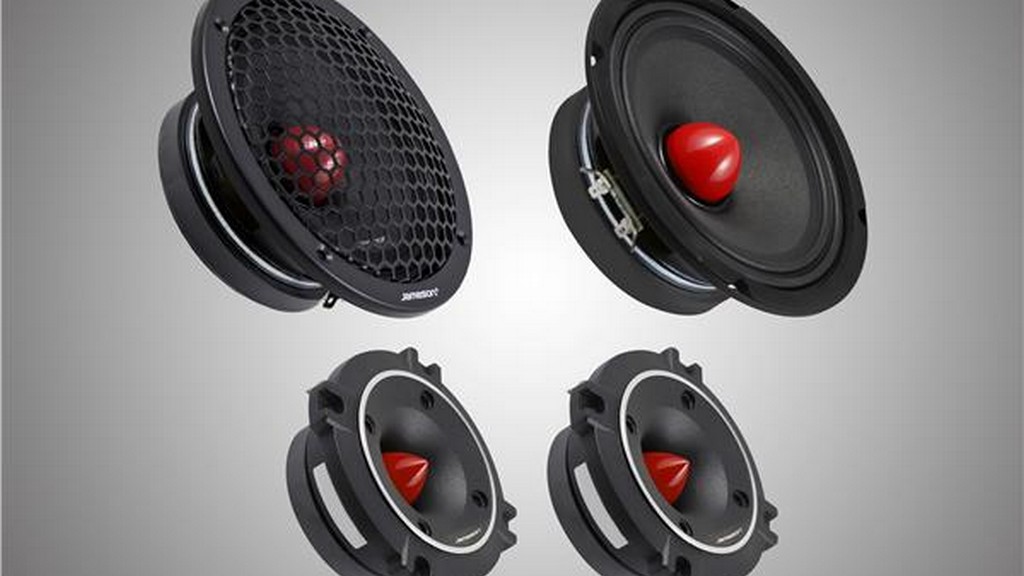
For the purposes of this standard, loudspeaker means both loudspeaker unit and loudspeaker system. A loudspeaker system consists of one or more loudspeaker units, including baffles, enclosures, internal crossover mesh, and other passive elements. Rated values and measured data are obtained under meteorological and standard measurement conditions according to the “JIS C 5532 Loudspeakers for sound system equipment” standard published under Japanese Industrial Standards, excluding environmental resistance testing. If the supplier changes the conditions, these should be included in the tender drawings.
In the Nissan 28120NDS00 standard, the nominal values are described as follows:
- Nominal impedance: The value is selected from the R8601 series according to the JIS Z 10 standard and included in the bid drawings. The minimum impedance of a loudspeaker is 80 percent or more of the nominal value in the nominal frequency band. Tolerances are plus/minus 15 percent.
- Nominal and maximum inputs: The supplier shall include in the bid drawings the values to be specified by the responsible Nissan design department. The nominal input is one third or more of the maximum input.
- Output sound pressure level: The value is 88 dB/W/m or more and is included in the quotation drawings. The measuring frequency is specified according to the part number, and the tolerances are plus/minus 2 dB.
- Lowest resonant frequency: The value is specified by part number and included in the quote drawings.
- Higher and lower threshold frequencies (effective frequency range): The values shall be in accordance with the table given in the standard. Unless otherwise stated, the lower threshold is the lowest resonant frequency and the higher threshold shall be 10 dB lower than the output sound pressure level. The effective frequency range shall be between the threshold and that included in the bid drawings.
- Output sound pressure frequency characteristics: The value is determined by the part number and is included in the quotation drawings.
- Output sound pressure characteristics: The values are the output sound pressure frequency characteristics described above and should form angles of 30 degrees and 60 degrees with respect to the speaker axis. In addition, the value on the reference axis should be obtained in the same measurement series and the measured data should be submitted separately to the Nissan design department together with the output sound pressure frequency characteristics. For oval-shaped speakers, the values on the longitudinal and lateral axes should be specified respectively.
- Deviation of output sound pressure frequency characteristics: Deviation should be maximum 25dB for effective frequency range.
- Harmonic distortion: Second and third order values should be measured and the data should be submitted separately to the Nissan design department.
- Polarity: When the sound pressure on the front surface of the loudspeaker increases, the terminal to which a positive voltage is applied should be designated as the positive terminal, and the other should be negative. When using a connector, the right (or top) terminal should be the positive terminal with the connector lock facing up. The connector should meet the following standards: “24014 NDS00 Direct-connect connectors” and “24014 NDS01 Specification of direct-connect connector type 91”.
Electrical performance tests defined in the Nissan 28120NDS00 standard include:
- Working test
- Abnormal noise test
- Maximum input voltage test
- Electrical impedance test (lowest resonance frequency test)
- Output sound pressure level test
- 2nd or 3rd order harmonic distortion testing
- Continuous load testing
- Abnormal noise test at maximum input voltage
Environmental resistance tests defined in the Nissan 28120NDS00 standard include:
- High temperature operation test
- Low temperature operation test
- High humidity operation test
- High temperature exposure test
- Low temperature exposure test
- High humidity exposure test
- Thermal cycling test
- Light resistance test
- Vibration resistance test
- Impact resistance test (applicable to door-mounted speakers)
- Compound corrosion test (applicable to door-mounted speakers)
- Water resistance test (applicable to door-mounted speakers)
- Chemical resistance test (applies to speakers with plastic frame)
- Side impact resistance test
Among the numerous tests, measurements, analyses and evaluation studies that our organization has carried out for businesses in various sectors, it also provides testing services defined in the “Nissan 28120NDS00 Speaker Specifications” standard with its trained and expert staff and advanced technological equipment.



