

The “Daimler PAPP PWT 3640 Determination of tensile shear strength of single shear lap joint (tensile shear test according to DIN EN 1465 standard)” standard, developed by the Daimler-Benz automotive company, defines a laboratory testing method focusing on the tensile shear strength of adhesive joints. Daimler uses numerous internal engineering and quality standards to verify the materials, adhesives, coatings, and components used in vehicle manufacturing.
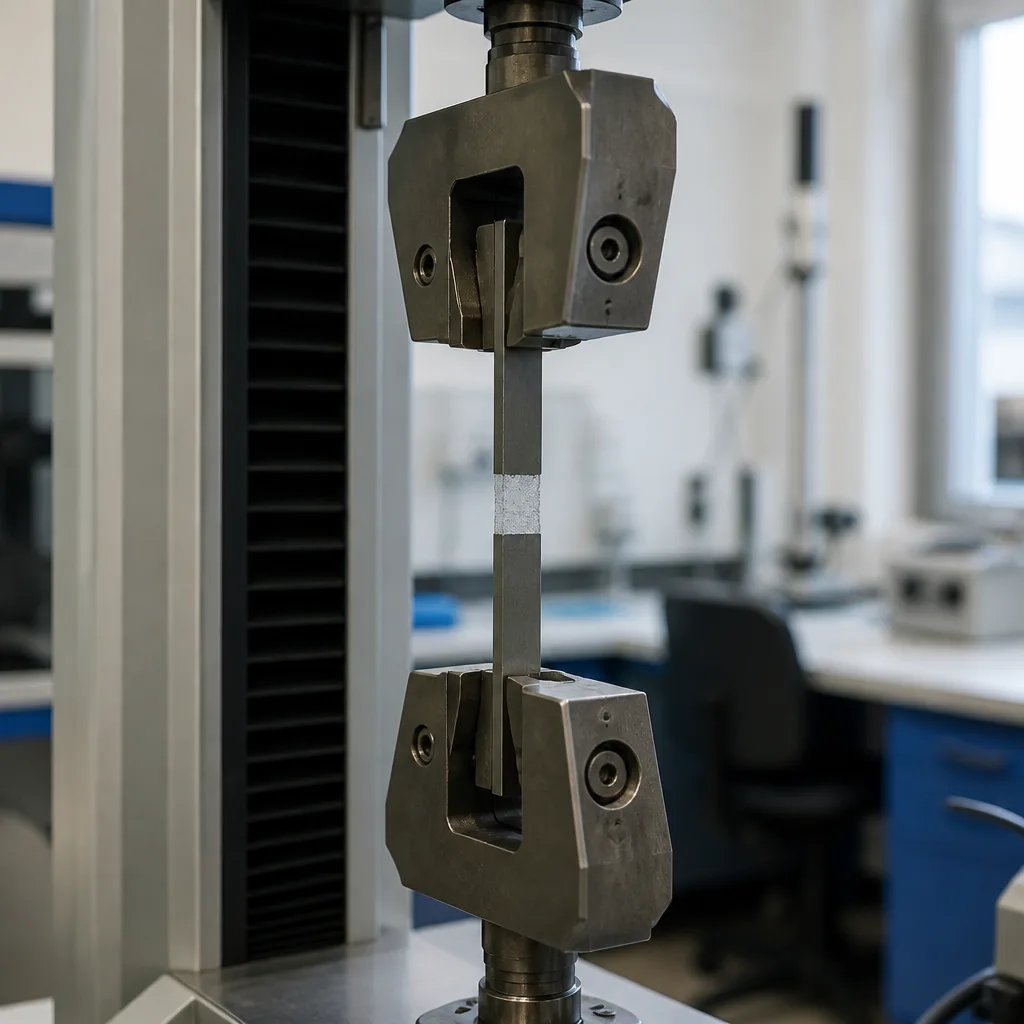
The Daimler PAPP PWT 3640 standard is a material testing procedure designed to determine the tensile shear strength of a single-layer bonded joint. The method is closely aligned with the “EN 1465 Adhesives – Determination of tensile shear strength of bonded assemblies” standard, which is widely used in testing structural adhesives. The EN 1465 standard, which forms the basis of the PAPP PWT 3640 standard, defines methods for measuring the tensile shear strength of rigidly bonded assemblies.
The PAPP PWT 3640 standard test method evaluates how strongly two bonded materials remain connected when subjected to a tensile force that creates shear stress across the adhesive layer.
Modern commercial vehicles and passenger cars increasingly rely on adhesives instead of traditional joining methods such as welding or riveting. Adhesive bonding helps manufacturers in the following areas:
The Daimler PAPP PWT 3640 standard helps engineers verify that adhesive systems meet durability and safety requirements before being approved for use in manufacturing.
The procedure typically follows these steps:
This standard also examines the following:
Automotive manufacturers require highly reliable bonding systems because of the factors that adhesive failure can affect:
By implementing the Daimler PAPP PWT 3640 standard, suppliers can demonstrate that their adhesive products meet Daimler's engineering requirements for automotive manufacturing environments. This standard may include:
The Daimler PAPP PWT 3640 standard is applicable to the following tests:
The Daimler PAPP PWT 3640 standard is widely used by automotive original equipment manufacturers such as:
Compliance with this standard is required for a material to be approved for series production on Daimler vehicle platforms.
Determining the tensile shear strength of a single-shear overlap bond refers to a standard adhesive bond test used to evaluate how strong an adhesive bond is when subjected to shear forces. This test is necessary because adhesive bonds in vehicles and industrial products must remain reliable under real operating conditions. This test is considered important for the following reasons:
Therefore, the test reflects realistic service conditions.
For original equipment manufacturers like Daimler, standardized test methods such as PAPP PWT 3640 are necessary because suppliers must demonstrate that their adhesive systems meet stringent engineering specifications before receiving approval for vehicle production.
In a single-shear overlap bonding process, two materials are bonded together by overlapping them. When pulled in opposite directions, the adhesive layer between them is subjected to shear force. This test measures the maximum stress the adhesive can withstand before the bond breaks. A higher value indicates a stronger adhesive bond.
In short, this test is necessary to ensure that bonded structures are strong, durable, safe, and suitable for demanding automotive and industrial applications.
In conclusion, the Daimler PAPP PWT 3640 standard is a key automotive adhesive testing specification focused on measuring tensile shear strength in bonded joints. Based on the DIN EN 1465 methodology, it supports the development of lightweight, durable, and safe vehicle structures by ensuring adhesives perform reliably under mechanical stress. As adhesive bonding becomes increasingly critical in modern vehicle engineering, PWT 3640 and similar standards remain indispensable for quality assurance and product validation.
For many years, our organization, with its competent and experienced team, has been understanding the needs of its clients, providing the advanced testing services they require, and assisting them in the establishment, implementation, and improvement of management systems. Within this framework, we also provide testing services compliant with the Daimler PAPP PWT 3640 standard.
To get an appointment, to get more detailed information or to request an evaluation, you can ask us to fill in our form and reach you.

